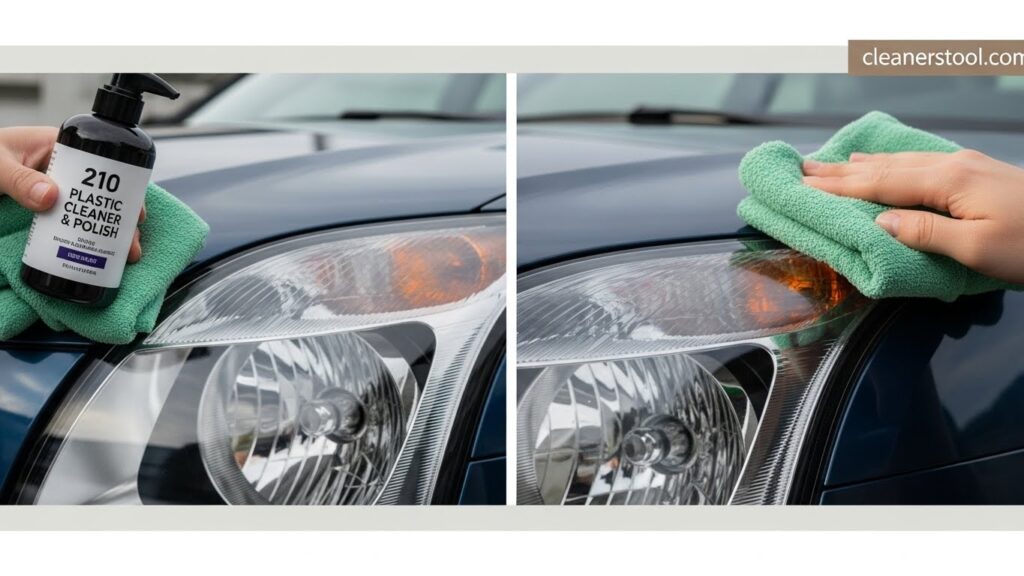
Maintaining the clarity and structural integrity of plastic surfaces is a challenge that spans multiple industries, from aviation and marine to powersports and home maintenance. Unlike glass, plastics like acrylic, polycarbonate, and Lucite are porous and highly susceptible to micro-scratching and UV degradation. Sumner Laboratories 210 has long been the professional’s secret for managing these surfaces. Often compared to high-end alternatives like Plexus plastic Cleaner, the 210 formula offers a unique blend of cleaning power and protective coating.
In this Comprehensive guide, we will explore the chemical properties of this cleaner, analyze the community consensus in 210 plastic cleaner/Polish reviews, and help you locate the product via searches for 210 plastic cleaner and polish where to buy.
1. The Heritage of Clarity: Sumner Laboratories 210
Sumner Laboratories 210 was originally engineered for the aerospace industry, where clear vision through aircraft windscreens is a matter of safety. The product is a “one-step” solution, meaning it cleans and polishes simultaneously.
What Sets It Apart?
Unlike many household sprays, the 210 formula is an anti-static, anti-fog, and non-abrasive solution. It creates a protective chemical bond on the surface that seals the pores of the plastic. This barrier makes future cleaning easier by preventing dust, salt spray, and grime from adhering to the material.
While it is frequently marketed under the parent name, many consumers recognize it as Camco 210 Plastic Cleaner due to Camco’s extensive distribution network in the RV and marine sectors. Whether it is labeled as Sumner or Camco, the formula inside remains the high-performance sealant that professionals trust.
2. Safety and Composition: 210 Plastic Cleaner and Polish SDS
Before using any industrial-strength aerosol, it is vital to consult the 210 Plastic Cleaner and Polish SDS (Safety Data Sheet). This document provides critical information regarding the chemical makeup and handling requirements of the product.
Key Insights from the SDS:
- Aerosol Format: The product is pressurized, typically using a butane/propane propellant blend. The 210 Plastic Cleaner and Polish SDS warns that the container should never be stored in temperatures exceeding 120°F ($49$°C).
- Chemical Profile: The formula contains a mixture of aliphatic hydrocarbons and silicone-based polymers. The hydrocarbons act as solvents to dissolve oils and grease, while the polymers provide the “polish” that fills in micro-scratches.
- Toxicity: It is generally classified as a non-irritant for skin in small amounts, but the SDS emphasizes using the product in well-ventilated areas to avoid inhaling the aerosolized vapors.
3. Product Comparison: 210 vs. Plexus Plastic Cleaner
In the world of premium plastic care, the most frequent comparison is between Sumner’s 210 and Plexus plastic Cleaner. Both products were birthed in the aviation industry, and both utilize an aerosol delivery system.
The Differences:
- Consistency: Plexus plastic Cleaner is often noted for a slightly thicker foam that dwells on the surface longer. 210 tends to be a lighter mist that evaporates faster, leaving a “slicker” feel.
- Value: Many 210 plastic cleaner/Polish reviews point out that the 210 formula is often more cost-effective per ounce than Plexus, making it the preferred choice for large-scale applications like boat enclosures or greenhouse panels.
- Finish: Both products are excellent at hiding “swirl marks,” but 210 is specifically lauded for its anti-static properties, which are superior at repelling lint and dust in dry environments.
4. Performance Analysis: 210 Plastic cleaner/Polish reviews
User feedback is the ultimate test of any maintenance product. A deep dive into 210 plastic cleaner/Polish reviews reveals a high level of satisfaction across diverse use cases.
Common Praise:
- Motorcycle Gear: Riders frequently use Camco 210 Plastic Cleaner on helmet visors. Reviews highlight that it doesn’t leave streaks and makes it much easier to wipe away bugs after a long ride.
- Marine Enclosures: Boaters dealing with “Isinglass” (clear vinyl windows) find that 210 prevents the yellowing and “clouding” that usually occurs due to salt air and sun exposure.
- Household Use: From computer screens to granite-look laminate countertops, users appreciate the “silky” finish it leaves behind.
Common Critiques:
In some 210 plastic cleaner/Polish reviews, users note that if the plastic is already severely yellowed or deeply scratched, this product cannot “restore” it to new. It is a cleaner and a light polish; for heavy damage, a multi-step restoration kit involving sandpaper would be required before finishing with the 210 spray.
5. Procurement: 210 Plastic Cleaner and Polish Where to Buy
If you are ready to try the product, you might start by searching for 210 plastic cleaner and polish near me. Because of its niche Professional roots, it isn’t always sitting on the shelf at your local grocery store.
Retail Availability:
- Specialty Outlets: The most reliable places to find the cleaner are marine supply stores (like West Marine) or motorcycle dealerships.
- 210 plastic cleaner and polish Home Depot: While Home Depot carries a wide variety of cleaners, they primarily stock 210 through their online “Pro” portal rather than in-store aisles. If you are looking for 210 plastic cleaner and polish Home Depot options, check their website for ship-to-store availability.
- Online Marketplaces: For the widest selection of sizes (from 7oz to 14oz cans), searching for 210 plastic cleaner and polish where to buy on large e-commerce platforms remains the most convenient route for most consumers.
6. Application Masterclass: How to Use 210
To achieve the results mentioned in the best 210 plastic cleaner/Polish reviews, follow these steps:
- Shake Well: Because the polymers and solvents can separate, shake the can for at least 10 seconds.
- Mist Lightly: You do not need much. A light mist across the surface is sufficient.
- Wipe: Use a clean, dry microfiber cloth. Avoid paper towels, as wood-based fibers can actually create the micro-scratches you are trying to avoid.
- Buff: Flip the cloth to a dry side and buff the surface to a high-gloss, static-free shine.