When it comes to cutting through stubborn grime, few things match the power of citrus. Orange cleaner has become a household and industrial staple because it leverages the natural solvency of d-limonene—a compound found in orange peels—to dissolve oils and fats.1 Whether you are looking for a Fast Orange cleaner for your hands or an Orange cleaner industrial grade for a machine shop, this versatile solution offers a safer, more pleasant-smelling alternative to harsh petroleum-based chemicals.2
In this guide, we will explore the best orange cleaner options, provide a foolproof orange cleaner recipe, and detail how to use Orange Cleaner Concentrate to keep your surfaces pristine.
1. The Science of Citrus: Why Orange Works
The effectiveness of an Orange Cleaner Degreaser lies in its chemical profile.3 Unlike many synthetic cleaners that rely on caustic acids or ammonia, orange-based cleaners use citrus enzymes and oils.
Key Components:
- D-Limonene: This is the “secret sauce.” It is a powerful natural solvent that penetrates and breaks down the chemical bonds in grease, adhesives, and tar.4
- Citric Acid: Often present in orange cleaner natural formulations, this helps dissolve mineral deposits and soap scum.5
- Surfactants: These ingredients lower the surface tension of water, allowing the Orange Cleaner Spray to lift dirt away from the surface so it can be wiped clean without leaving a sticky residue.6
2. Professional and Heavy-Duty Use
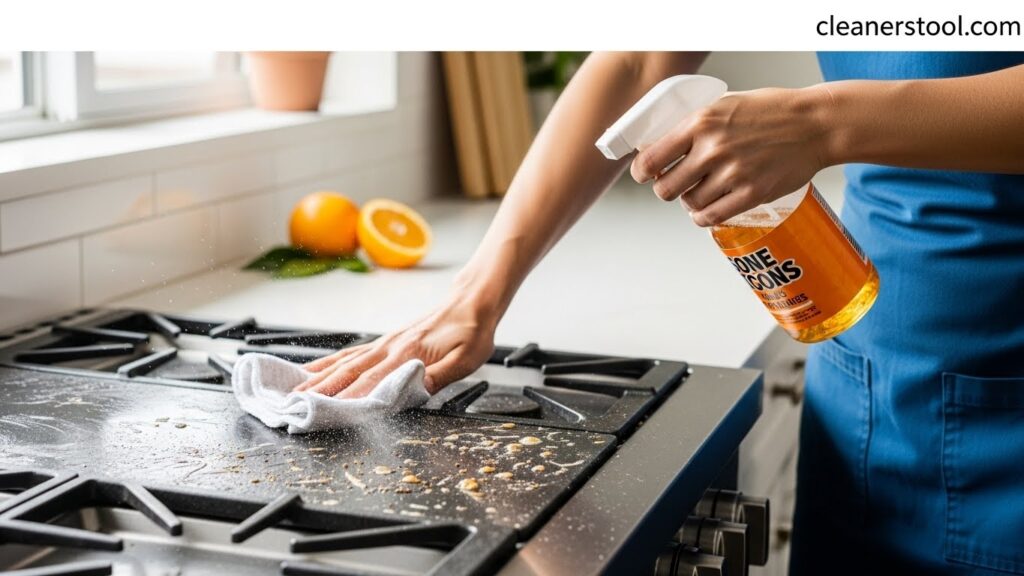
For environments that deal with high-volume oil and grime, a standard kitchen spray isn’t enough. You need the strength of an Orange cleaner industrial solution.
Orange Cleaner Degreaser vs. Industrial Grade
In automotive and manufacturing settings, an Orange Cleaner Degreaser is used to clean engine bays, tools, and concrete floors.7 These formulas are often “alkaline citrus” blends, meaning they have a higher pH to combat heavy motor oils and hydraulic fluids.
- Fast Orange Cleaner: This specifically refers to the popular line of gritty hand soaps used by mechanics.8 Fast Orange cleaner contains pumice—a volcanic rock—which provides the physical abrasion needed to scrub grease out of skin pores without using mineral oils that can sting cuts.9
- Orange Cleaner Concentrate: Professionals almost always buy in bulk. A 1-gallon Orange Cleaner Concentrate can be diluted to create dozens of bottles of everyday spray, or used at full strength for the toughest “baked-on” grease.
3. The DIY Approach: Orange Cleaner Recipe
If you prefer to avoid store-bought chemicals entirely, creating an orange cleaner natural solution at home is simple and cost-effective. By using food scraps, you can make a powerful, non-toxic cleaner for pennies.10
The Ultimate Orange Cleaner Recipe:
- Collect Peels: Fill a large glass mason jar with orange peels (the more peels, the stronger the limonene concentration).11
- Add Vinegar: Fill the jar to the top with white distilled vinegar.
- Infuse: Seal the jar and store it in a cool, dark place for 2 to 4 weeks.12 Shake it every few days.
- Strain: Pour the mixture through a sieve into a bowl, discarding the peels.13
- Dilute: Mix 1 part of your orange-vinegar infusion with 1 part water.14
- Bottle: Transfer to an Orange Cleaner Spray bottle for use on countertops, sinks, and tiles.15
4. Selection Criteria: Choosing the Best Orange Cleaner
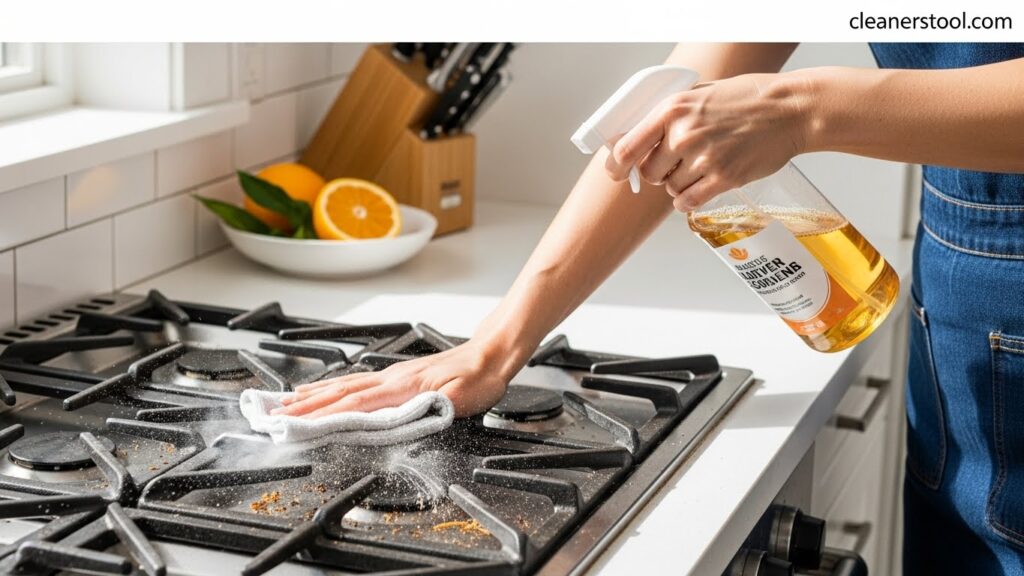
When shopping for the best orange cleaner, you should consider the specific task at hand. Not all “citrus” cleaners are created equal.
| Product Type | Best Use Case | Key Benefit |
| Orange Cleaner Spray | Daily kitchen & bathroom cleaning | Convenient, ready-to-use, fresh scent. |
| Orange Cleaner Concentrate | Large floors, decks, & bulk usage | Most economical; allows custom dilution. |
| Orange cleaner industrial | Mechanics, machine shops, & driveways | Maximum strength for oil and tire marks. |
| Fast Orange Cleaner | Skin and hand cleaning | Gentle on skin but tough on grease. |
5. Application Tips: Orange Cleaner Natural vs. Synthetic
- Avoid Stone: Whether you use a Best orange cleaner from the store or a homemade orange cleaner recipe, never use it on natural stone like marble or granite. The acidity can “etch” or dull the stone permanently.
- Test for Colorfastness: If using an Orange cleaner industrial on carpets or upholstery, always test a small, hidden spot first to ensure the oils don’t lift the fabric dye.
- Dwell Time: For heavy grease, spray your Orange Cleaner Degreaser and let it sit for 3–5 minutes. This gives the limonene time to liquefy the grease before you wipe.