Disclosure: As an Amazon Associate, we earn from qualifying purchases.
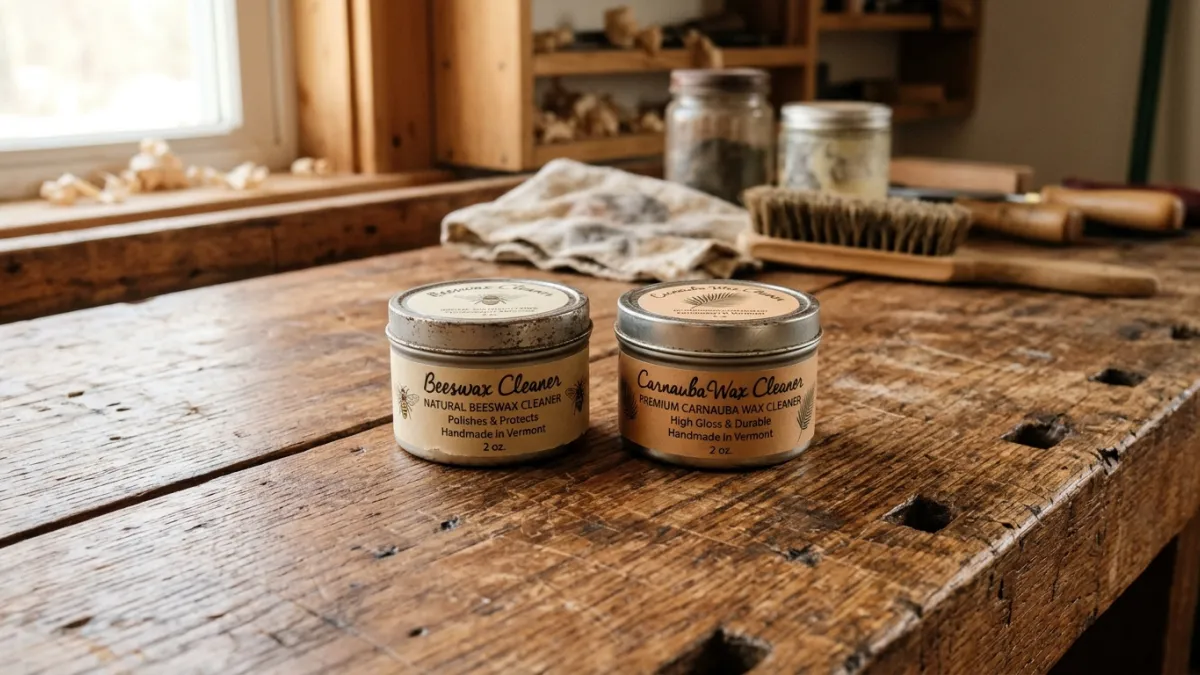
Protecting hardwood floors, dining tables, and antique cabinetry requires choosing the right protective wax polish. With dozens of natural wax cleaners lining store shelves, two organic ingredients dominate wood restoration: beeswax and carnauba wax. While both deliver a protective barrier against moisture, dust, and daily friction, their physical structures behave drastically differently once applied to grain surfaces.Quick answer: Carnauba wax cleaners last significantly longer on wood surfaces, offering 6 to 12 months of surface protection compared to 2 to 4 months for beeswax. Thanks to its Shore D hardness rating of approximately 78 and a high melting point between 180°F and 187°F (82°C–86°C), carnauba creates a rigid, heat-resistant shell that outperforms softer, honey-scented beeswax under heavy daily foot traffic and tabletop friction.
Understanding the Chemical and Physical Differences
Natural waxes are not created equal, and their underlying origin dictates how long they stay intact on timber. Beeswax is secreted by honeybees to construct honeycomb cells. Chemically composed of fatty acid esters and long-chain alcohols, raw beeswax melts at a modest 144°F to 149°F (62°C–65°C). Because of this lower melting threshold and soft molecular lattice, beeswax remains pliable at room temperature. When rubbed into raw or finished wood, it easily penetrates fine pores, nourishing dried fibers and building a warm, satin sheen that feels supple to the touch.
Carnauba wax comes from the leaves of the Copernicia prunifera palm tree native to northeastern Brazil. To retain moisture in arid tropical climates, the palm produces a dense layer of wax over its fronds. Extracted and refined into dry flakes, pure carnauba is often described as the "queen of waxes" due to its extreme density and high melting point of 180°F to 187°F (82°C–86°C). Solid carnauba registers a Shore D hardness of nearly 78—making it harder than concrete in pure form. This structural rigidity gives carnauba exceptional resilience against physical scuffs, water contact, and ambient warmth.
When formulated into commercial cleaners and cream polishes, these raw materials behave differently on finished oak, walnut, pine, and mahogany. Liquid beeswax polishes blend easily with citrus oils or mineral spirits to create soft pastes that spread seamlessly without intense manual buffing. Carnauba cleaners require specialized solvents, turpentine, or secondary plasticizing oils to soften the hard flakes so they can be buffed onto wood without leaving brittle, flaking residues behind.
Durability Showdown: Longevity Under Real-World Conditions
In high-traffic household areas, the primary job of a wood wax cleaner is to resist physical abrasion, prevent liquid penetration, and maintain aesthetic brilliance without requiring weekly touch-ups. Carnauba wax wins the sheer longevity test across nearly every metric. On dining tables, kitchen butcher blocks, and hardwood floor tracks, pure or carnauba-heavy paste waxes form a crystalline coat that resists scuffing from chair legs, sliding plates, and shoe soles. A properly applied carnauba film maintains a mirror-like gloss and bead-water protection for 6 to 12 months under standard indoor conditions.
Beeswax cleaners degrade faster under mechanical friction and heat exposure. Because beeswax remains soft at room temperature, it naturally attracts micro-dust over time and can transfer onto clothing or hot serving dishes. On a busy dining surface or coffee table, a pure beeswax coat typically begins to show wear, water spots, or dulled patches within 60 to 90 days. However, beeswax excels at deeply conditioning dry, unsealed wood. Where carnauba sits mostly on top of the finish as an armor-like shield, beeswax soaks deeper into unsealed wood grain, preventing dry rot and internal cracking over prolonged periods.
Cleaner's tip: Never apply pure carnauba wax or a high-concentration carnauba paste straight to cold furniture without warming the tin slightly or using a high-density 350 GSM microfiber cloth. If you skip buffing within 3 to 5 minutes of application, carnauba hardens into stubborn, white hazy ridges that require mineral spirits to dissolve. For fast buffing, apply in thin micro-layers and buff vigorously while the solvent carrier is slightly tacky.
Side-by-Side Comparison: Beeswax vs. Carnauba Wax Cleaners
Clear Briwax Original Formula by Briwax

Choosing between these two natural finishes comes down to balancing ease of application against the required level of protection. Below is a direct comparison of physical properties, longevity specs, and application traits for both wax types when used as wood cleaners and polishes:
| Feature / Specification | Beeswax Cleaner / Polish | Carnauba Wax Cleaner / Polish |
|---|---|---|
| Source Material | Honeybee comb secretion (Animal byproduct) | Brazilian Copernicia palm fronds (Plant-based) |
| Melting Point | 144°F – 149°F (62°C – 65°C) | 180°F – 187°F (82°C – 86°C) |
| Hardness (Shore D) | Soft / Pliable (~15–20) | Extremely Hard (~78) |
| Average Protection Longevity | 2 to 4 Months | 6 to 12 Months |
| Finish Type & Sheen | Warm, deep satin to low gloss | High-gloss glass reflection |
| Heat & Scuff Resistance | Moderate (Sensitive to warm plates) | High (Resists heat, scratches, friction) |
| Application Effort | Low (Spreads and buffs easily) | Moderate to High (Requires rapid, hard buffing) |
| Average 2026 Price Range | $12 – $22 per 16 oz tin/bottle | $18 – $35 per 16 oz tin/bottle |
How to Apply Wax Cleaners for Maximum Durability
Even the longest-lasting carnauba polish will wear away prematurely if applied over dirty, oily, or damp wood surfaces. To achieve maximum longevity out of your natural wax treatment, follow this professional step-by-step restoration routine:
Step 1: Deep Clean the Wood Substrate
Before applying any wax, remove old built-up grime, body oils, and silicones. Mix 1 teaspoon of a pH-neutral wood cleaner or liquid castile soap into 1 quart of warm water. Dampen a lint-free 300 GSM microfiber towel—wringing it out until it is barely damp—and wipe along the direction of the wood grain. For sticky residues or heavy build-up from spray furniture polishes, use a gentle mineral spirit wiped lightweight with the grain, then allow the timber to air dry completely for 30 minutes.
Step 2: Apply in Paper-Thin Layers
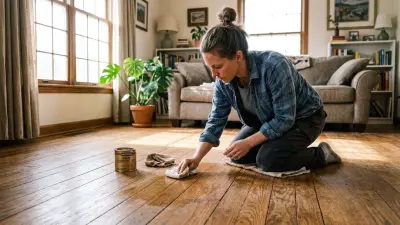
Take a soft applicator pad or clean microfiber cloth and scoop a nickel-sized amount of wax cleaner. Work in small 2-foot by 2-foot sections. Apply the wax using circular motions to press the compound into micro-scratches and wood pores. Then finish with light strokes along the wood grain. The biggest mistake homeowners make is applying wax too thick; thick layers trap unevaporated solvent beneath a hard crust, resulting in a gummy, hazy surface that wears off in weeks.
Step 3: Allow Proper Dwell Time
HOWARD Feed n Wax Wood & Conditioner Beeswax Polish, Orange, 16 Fl Oz, Pack of 2

Let the wax cleaner sit on the wood surface so the carrier solvents can evaporate. Beeswax polishes typically require 5 to 10 minutes of dwell time before buffing. Hard carnauba waxes dry much faster, often requiring buffing within 3 to 5 minutes. The wax is ready for buffing when it turns from a slick sheen into a light, uniform haze that does not smear under gentle fingertip touch.
Step 4: Buff to a High Shine
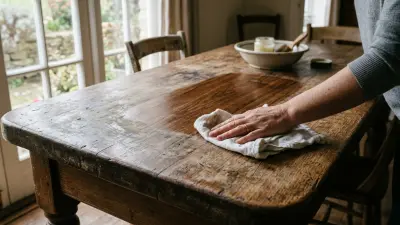
Using a dry, plush 350 to 400 GSM microfiber cloth, buff the surface briskly using firm, sweeping strokes. The friction heat generated by buffing melts the microscopic top ridge of the wax, flattening it into a hard, protective crystal layer. For high-use surfaces like dining tables or stair treads, apply a second paper-thin coat 2 hours after the first coat has fully cured.
Blended Wax Cleaners: The Best of Both Worlds
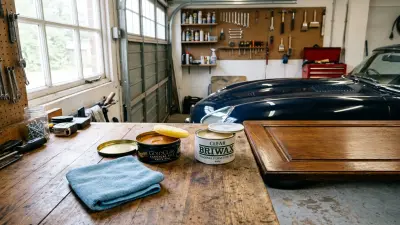
Because pure carnauba can be overly brittle on its own and pure beeswax can be soft and prone to smudging, professional wood restorers frequently rely on hybrid wax cleaners. Popular commercial products like Howard Feed-N-Wax, Briwax, and Liberon Carnauba Wax Polish combine both ingredients into a balanced solvent cream.
In a blended wax formula, beeswax acts as the penetrating plasticizer, softening the carnauba so it glides smoothly across intricate wood carvings, table bevels, and turned chair legs without pulling or flaking. Meanwhile, the carnauba component migrates toward the exterior surface as it dries, forming a tough, glass-like shield over the flexible beeswax layer. This combination delivers 4 to 8 months of durable water beading while keeping the application process simple enough for routine weekend maintenance.
Clear Recommendation for Your Wood Care Routine
For high-traffic wood flooring, stair treads, and dining table surfaces exposed to hot plates and heavy friction, select a carnauba-based wax cleaner to maximize long-term durability and scratch resistance. If you are restoring antique furniture, unsealed walnut, or decorative wall paneling where a warm satin feel and easy application are priority, a pure beeswax cleaner provides the deep hydration dry wood fibers require. For general household maintenance on kitchen cabinets and wood trim, an equal blend paste wax containing both carnauba and beeswax delivers the ideal balance of long-lasting defense and simple buffing.
Frequently Asked Questions
Can you mix beeswax and carnauba wax together for wood polishing?
Daddy Van's All Natural Unscented Beeswax Furniture Polish

Yes, mixing beeswax and carnauba wax creates an optimal wood finish. Beeswax provides elasticity and easy spreading, while carnauba adds surface hardness, water resistance, and a higher melting point to protect against scuffs.
Does carnauba wax build up on hardwood floors over time?
Carnauba wax can build up if applied too frequently or too thick. Because carnauba dries so hard, over-application leads to thick layers that can trap dirt. Reapply carnauba cleaner only once or twice a year, buffing thoroughly between coats.
Why is my waxed furniture cloudy or sticky?
Cloudy or sticky wood wax is almost always caused by applying too much product or buffing before the carrier solvent has properly flashed off. You can fix this haze by dampening a microfiber cloth with a small amount of mineral spirits, wiping away the excess softened wax, and re-buffing with a clean cloth.
Is carnauba wax safer than synthetic polyurethane finishes?
Natural carnauba wax contains no toxic volatile organic compounds (VOCs) when formulated in solvent-free or natural oil bases, making it non-toxic and food-safe once fully cured. Unlike permanent synthetic polyurethane polyurethane coatings, wax finishes allow timber to breathe naturally and can be easily spot-repaired without stripping the entire finish.
Sources
- Wikipedia: Carnauba Wax Overview and Physical Properties
- Wikipedia: Beeswax Chemical Composition and Uses
- U.S. Food and Drug Administration (FDA) - 21 CFR 175.300 Direct Food Contact Coatings
- ASTM International: ASTM D2240 Standard Test Method for Rubber Property — Durometer Hardness (Shore Hardness)
Looking for the Right Tools?
Check out our verified Top Cleaning Tools & Supplies on Amazon.
As an Amazon Associate, we earn from qualifying purchases.