Disclosure: As an Amazon Associate, we earn from qualifying purchases.
Managing pet hair in a multi-pet home is a constant battle against floating dander, shed undercoats, and stubborn fur embedded deep inside carpet fibers. Every dog and cat owner reaches a point where they ask whether switching to a lightweight cordless stick vacuum will actually keep up with daily shedding, or if dragging out a heavy corded upright remains an absolute necessity. Over two decades of testing cleaning equipment in residential homes and commercial spaces reveals that while cordless technology has made massive strides, the structural differences between battery-driven motors and continuous wall outlet power directly dictate long-term durability, suction performance, and maintenance effort.Quick answer: Corded vacuums deliver superior sustained suction power (often 250 to 400+ Air Watts) with unlimited runtime and larger dustbins, making them the best choice for heavy carpet pet hair and multi-pet households. Cordless models (ranging from 120 to 230 Air Watts) offer unmatched convenience for daily 10-minute quick sweeps on hard floors and stairs, but high-power boost modes drain batteries in under 12 minutes and require frequent dustbin dumping.
Raw Power vs. Freedom: How Suction and Runtime Impact Daily Pet Hair Cleanup
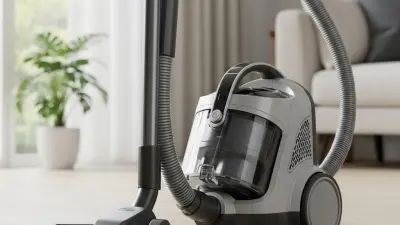
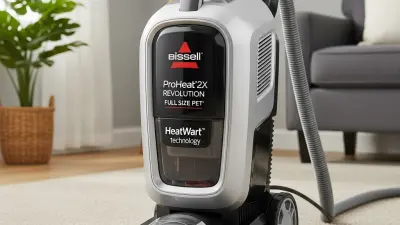
Suction performance is the single most critical factor when pulling fine cat undercoats or coarse dog hair out of upholstery and rug fibers. Corded vacuums connect directly to standard standard home electrical outlets (120V in North America delivering continuous 10 to 12 amp draws), allowing their motors to run at full output without throttling power to conserve energy. This continuous current enables corded uprights and canisters from brands like Bissell, Hoover, and Shark to generate consistent airflow between 250 and 400 Air Watts (AW) or up to 25,000 Pascals (Pa) of lift force indefinitely.
Cordless vacuums rely on lithium-ion battery packs that must balance voltage output, thermal management, and runtime. Modern high-end cordless stick vacuums, such as the Dyson V15 Detect or top-tier Shark stick units, can match high suction levels temporarily, achieving peak outputs between 150 AW and 230 AW in "Boost" or "Turbo" mode. However, operating a cordless vacuum at maximum suction generates substantial heat and rapidly drains the battery cell pack, reducing operational runtime from an advertised 60 minutes on eco mode down to just 8 to 12 minutes under full load.
For daily maintenance in a small home with hard floors, an 8-to-15 minute quick sweep with a cordless unit is usually enough to pick up loose tumbleweeds of pet hair before they settle. But when dealing with medium to high-pile carpets, pet fur forms static bonds with synthetic fibers that demand sustained, high-airflow suction alongside a rotating brush roll. If your daily routine requires more than 15 minutes of intensive carpet grooming, battery depletion becomes a major bottleneck unless you invest in spare swap-out batteries, which significantly increases total equipment costs.
Air Watts vs Continuous Current: Understanding Pet Fur Extraction
Air Watts measure both pressure differential (vacuum lift) and airflow speed (cubic feet per minute), reflecting the actual cleaning power available at the cleaner head. Corded vacuums maintain maximum Air Wattage continuously from the moment you flip the power switch until the job is finished. Because there is no software algorithm throttling the motor to preserve battery life, a corded machine consistently pulls stubborn hairs that are wedged under furniture edges and deep within heavy door mats.
In contrast, cordless vacuums feature microprocessors designed to optimize battery drain. Many modern cordless models utilize auto-sensing acoustic or optical sensors to boost power only when high particle concentrations are detected. While this intelligence extends runtime, it can occasionally lead to erratic suction surges on spotty pet hair patches. Furthermore, as lithium-ion batteries age over 300 to 500 charge cycles (typically 1.5 to 3 years of daily use), their internal resistance increases, resulting in shorter runtimes and slight drops in peak suction capacity.
Battery Degradation vs Unlimited Corded Operation
Daily pet hair pickup means your vacuum will likely run 1 to 2 charge-discharge cycles every day. Over a 24-month period, standard 21.6V to 25.2V lithium-ion battery packs naturally lose roughly 20% to 30% of their original milliamp-hour (mAh) capacity. Replacing a proprietary cordless vacuum battery pack typically costs between $75 and $150, adding to the total cost of ownership.
Corded vacuums eliminate battery failure points entirely. A well-maintained corded motor paired with a heavy-duty power cord can deliver identical suction performance in year five as it did on day one. The trade-off is maneuverability; plugging and unplugging a 25-to-30-foot cord, untangling it from furniture legs, and hauling a 14 to 18-pound machine up stairs creates friction that often deters homeowners from doing quick daily spot cleanups.
Shark Stratos Cordless Vacuum with DuoClean PowerFins (Renewed)

Floor Heads and Tangle Control: The Real Enemy of Dog and Cat Owners
Long pet hair wraps tightly around standard vacuum brush rolls, binding the bearings, slowing down rotation speed, and causing motor overheating. Floor head design and brush roll engineering are just as important as motor suction when selecting a machine for pet hair control.
Modern corded uprights and high-end cordless stick vacuums both feature specialized anti-tangle or self-cleaning brush roll technologies. Systems like Shark's Zero-M anti-hair-wrap technology or Dyson's hair removal vanes use internal comb teeth positioned along the roller housing to clear hair continuously into the airflow duct before it can wrap around the cylinder. However, the mechanical drive systems operating these brush rolls differ dramatically in terms of torque.
Corded vacuums utilize high-torque electric motors dedicated strictly to spinning the brush roll, allowing the stiff nylon bristles to agitate dense carpets without stalling under heavy hair build-up. Lightweight cordless brush heads use smaller low-voltage DC motors inside the roller bar. While adequate for hard surfaces and low-pile rugs, heavy fur build-up on thick carpeting can cause cordless brush rolls to slow down or trigger auto-shutoff safety breakers to protect the battery from overheating.
Dustbin Capacity and Dust Plumes During Disposal
Pet hair takes up an immense amount of physical volume compared to fine dust. Corded upright vacuums usually feature spacious dust cups ranging from 1.5 to 3.0 liters (or large multi-layer dust bags holding up to 4.0 liters). This large volume allows you to vacuum an entire multi-room home populated by shedding pets without stopping to empty the bin.
Cordless stick vacuums must remain lightweight and balanced for handheld use, limiting dustbin capacities to between 0.4 and 0.8 liters. When cleaning up daily shedding from large breeds like Golden Retrievers or German Shepherds, a small 0.5-liter bin fills up in under five minutes. Compressing pet fur into a tiny canister creates dense hair plugs that often require manual digging or pulling to empty, which can release dander and allergens back into the indoor air.
Cleaner's tip: Never let hair accumulate past the "MAX" fill line on a bagless dust cup—especially on cordless vacuums. When pet hair packs tightly above the intake cyclone, airflow drops by up to 40%, forcing the motor to draw extra battery current while severely reducing suction at the floor head. Empty the canister twice per room during heavy shedding seasons.
Comparative Analysis: Cordless vs Corded Specs for Pet Hair
To evaluate which system fits your daily routine, it helps to examine side-by-side technical performance metrics, weight, maintenance demands, and typical price points across standard 2026 industry options.
Bissell 2254 CleanView Swivel Rewind Pet Upright Bagless Vacuum, Automatic Cord Rewind, Swivel Steering, Powerful Pet Hair Pickup, Specialized Pet Tools, Large Capacity Dirt Tank, Teal

| Feature / Specification | Cordless Stick Vacuums | Corded Upright / Canister Vacuums |
|---|---|---|
| Average Suction Power | 100 - 230 Air Watts (Peak) | 250 - 450 Air Watts (Continuous) |
| Runtime per Charge / Power Source | 10 - 60 min (8-12 min on Boost) | Unlimited (Wall Outlet Powered) |
| Average Dustbin Capacity | 0.4 L - 0.9 L | 1.5 L - 4.0 L |
| Total System Weight | 5.5 lbs - 8.5 lbs | 13 lbs - 19 lbs |
| Filtration Standard | Sealed HEPA (99.97% @ 0.3 microns) | Sealed HEPA / Multi-Stage Synthetic Bag |
| Expected Lifespan (Core Unit) | 3 - 5 years (Battery swap at 2 yrs) | 7 - 12+ years |
| 2026 Typical Price Range | $200 - $750 | $120 - $450 |
When selecting a vacuum specifically targeting pet hair and dander, evaluate the primary surfaces and physical layout of your home before committing to a purchase. Key operational advantages for each design include:
- Cordless Vacuum Strengths: Fast grab-and-go accessibility for daily 5-minute cleanups; effortless handling on stairs, furniture upholstery, and car interiors; lightweight profile reduces arm and wrist fatigue.
- Corded Vacuum Strengths: Uncompromising deep-cleaning power for thick carpets; zero battery downtime; massive dust capacity requiring fewer trips to the trash can; significantly lower long-term cost per year of operation.
- Filtration Performance: Both formats offer high-end units with fully sealed HEPA filtration capable of trapping 99.97% of particles down to 0.3 microns, preventing microscopic pet dander from recirculating back into your room.
Real-World Testing & Practical Cleaning Protocols
In practice, reliance on a single vacuum type often forces compromises. Daily pet hair management requires a systematic approach that balances high-suction deep extraction with low-friction spot cleaning.
For homes with extensive carpet coverage and multiple high-shedding animals, relying exclusively on a cordless stick vacuum can lead to frustration due to short boost-mode runtimes and tiny dustbins. Conversely, keeping a heavy corded upright locked in a closet often leads to skipping quick daily cleanups altogether, allowing pet hair to get walked deep into rug backing where it damages carpet fibers.
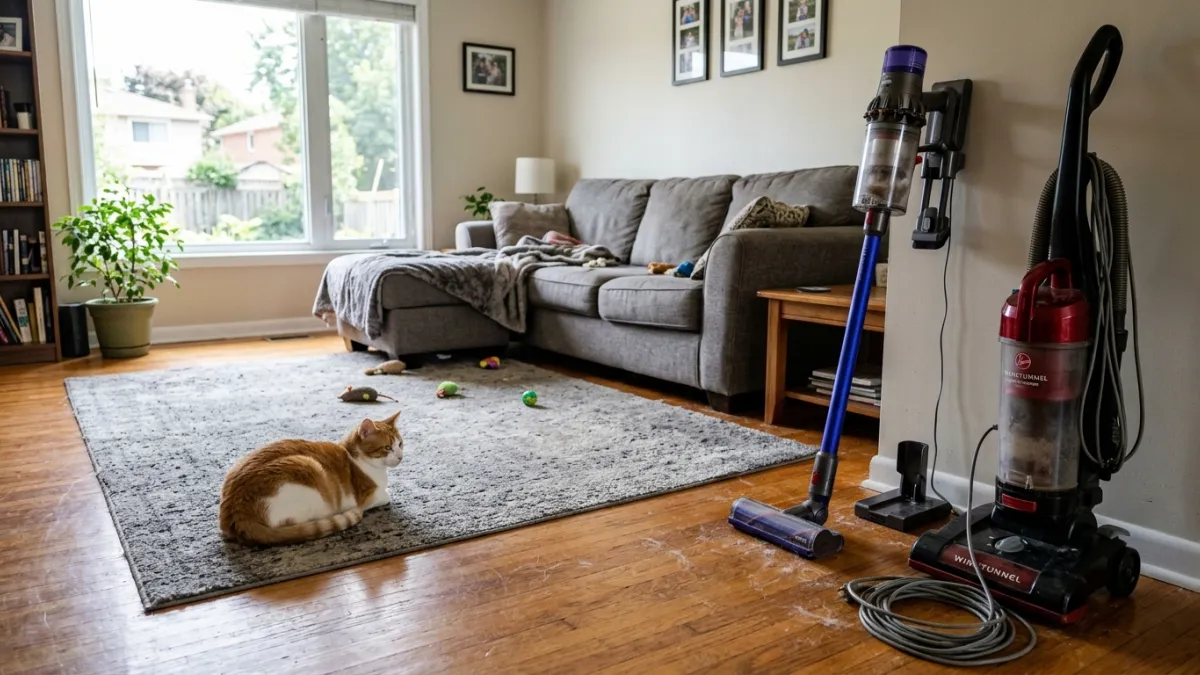
A proven strategy utilized by professional cleaners involves a hybrid maintenance routine. Use a lightweight cordless vacuum daily for high-traffic hard floor zones, kitchen tiles, carpeted stair treads, and sofa cushions. Then, bring out a high-performance corded upright or canister vacuum once or twice a week to perform a thorough, high-airflow pass across all wall-to-wall carpets and area rugs.
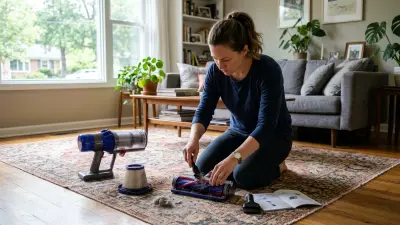
Proper maintenance of filters and roller bars is essential for keeping both types of equipment working effectively. Wash or replace pre-motor filters monthly to prevent fine dander dust from clogging internal motor housings. Check the brush roll end caps every two weeks to remove wrapped fur that can melt plastic belt drives or burn out head bearings.
Final Recommendation
If your home consists primarily of hard floors, low-pile area rugs, and a single low-shedding pet, a premium cordless stick vacuum with a sealed HEPA filter and anti-tangle brush roll provides all the cleaning power you need alongside unmatched daily convenience. However, if your household features wall-to-wall carpeting, multiple long-haired dogs or cats, and you want maximum long-term durability without worrying about battery degradation, a corded upright or canister vacuum remains the undisputed heavy-duty champion for daily pet hair extraction. For many busy pet owners, keeping an budget-friendly corded unit for deep weekend cleaning alongside an agile cordless stick for daily spot touch-ups delivers the ultimate balance of cleanliness and convenience.
Frequently Asked Questions
ChomChom Roller Pet Hair Remover – Original Size Reusable Lint Roller for Cat & Dog Hair on Furniture, Couch, Carpet, Car, Rugs & Bedding – Portable, Eco-Friendly (White)

Can a cordless vacuum replace a corded vacuum for pet hair on carpet?
High-end cordless vacuums with suction ratings above 200 Air Watts can effectively manage low to medium-pile carpets for light daily maintenance. However, for dense, high-pile carpets in multi-pet homes, cordless models struggle to match the continuous high airflow and deep agitating torque of a corded upright, often requiring running in boost mode which drains the battery in under 12 minutes.
How many Air Watts do I need to vacuum pet hair effectively?
For hard floors and bare surfaces, 100 to 120 Air Watts is sufficient to pick up loose fur. For embedded pet hair on area rugs, upholstery, and carpets, aim for a vacuum capable of delivering at least 150 to 200 Air Watts of suction power at the floor head.
Why does my vacuum brush roll stop spinning when picking up dog hair?
Brush rolls stall when long pet hair wraps tightly around the ends of the roller cylinder, binding the bearings, or when dense carpet creates excessive resistance against a low-voltage drive motor. Clearing hair tangles regularly and switching to an anti-tangle brush bar design prevents motor overload trip switches from shutting down the roller.
Do HEPA filters really help with pet hair allergies?
Yes. True HEPA filters trap 99.97% of airborne particles down to 0.3 microns, including microscopic pet dander, dried saliva particles, and pollen. Ensure the vacuum features a completely sealed system so unFiltered air cannot leak out through housing seams back into your room.
Sources
- US EPA: Indoor Air Quality & Biological Pollutants
- Wikipedia: Vacuum Cleaner Technology & HEPA Filtration Standards
- Manufacturer Service Manuals & Technical Specifications (Dyson, SharkNinja, Bissell, Hoover)
Looking for the Right Tools?
Check out our verified Top Cleaning Tools & Supplies on Amazon.
As an Amazon Associate, we earn from qualifying purchases.