Disclosure: As an Amazon Associate, we earn from qualifying purchases.
There is nothing more frustrating than pushing a vacuum cleaner across your carpet only to realize it is leaving dirt, hair, and debris behind. In my 20 years of working as a professional cleaner and maintaining commercial equipment, suction loss is easily the single most common complaint I hear from homeowners and staff alike. People often assume that their vacuum motor is dying and that it is time to throw the unit away, but in over 90% of cases, a drop in airflow is caused by basic maintenance oversights that take just a few minutes to fix.Quick answer: To stop a vacuum cleaner from losing suction over time, clear blockages from the hose and brush roll, regularly wash or replace the pre-motor and HEPA filters, ensure the dust bin or bag never exceeds two-thirds capacity, and inspect rubber gaskets for air leaks. Proper airflow management and routine maintenance will keep your machine operating at peak performance for years.
Understanding Airflow vs. Sealed Suction
To keep your vacuum performing like the day you unboxed it, you first need to understand how these machines actually pull dirt from your floor. Most people focus entirely on suction power, which manufacturers typically measure in Pascals (Pa) or Air Watts (AW). While raw suction pressure created by the motor is important, the real work is done by airflow, which is measured in Cubic Feet per Minute (CFM). Suction lifts the carpet fibers, but continuous airflow is what actually carries dirt up the wand and into the dust container.
When debris restricts the path between the intake nozzle and the exhaust exhaust port, airflow drops dramatically. Even if the motor is spinning at top speed, the lack of air movement prevents dirt from traveling into the bin. Premium uprights and cordless stick vacuums from brands like Dyson, Shark, and Bissell often pull anywhere from 100 AW to over 230 AW of suction force. However, a single clogged pre-motor filter can reduce effective airflow by more than 50%, making a $600 machine perform worse than an entry-level broom.
Furthermore, air leaks along the suction path destroy vacuum efficiency. If your vacuum has a cracked extension hose, a misaligned canister seal, or an unseated dust cup latch, the motor draws air from the room rather than pulling it through the floor head. Maintaining high performance requires keeping the internal air pathway completely sealed and entirely free of restrictions from the roller bar all the way to the exhaust filter.
The Essential Routine Maintenance Checklist
Preventing gradual suction loss requires following a strict, proactive maintenance routine rather than waiting for the machine to stop picking up dirt. Over two decades of commercial cleaning, I have developed a straightforward maintenance schedule that keeps vacuums running at 100% capacity regardless of brand or model.
Cleaner's tip: Never wash a vacuum filter with hot water or dish soap, and never put a wet filter back into your machine. Always rinse filters using lukewarm tap water only, press them gently with a towel, and let them air-dry completely for a full 24 to 48 hours. Installing a damp filter will draw fine dust directly into the wet fibers, instantly cement them shut, and potentially destroy your motor through moisture intake.
Replacement Parts for Tikom G8000 G8000 Pro HONITURE G20

To maintain peak suction power, pay close attention to these critical components of your vacuum cleaner:
- Dust Cup / Paper Bag Capacity: Never allow your dust container or paper filter bag to pass two-thirds full. As a bag fills up, pores in the fabric clog with fine dust, forcing the motor to pull against heavy resistance. Bagless vacuums rely on vortex airflow; overfilling the dust cup disrupts this cyclone action and forces dust directly into the filters.
- Filter Washing and Replacement: Most modern vacuums feature two filter stages: a washable foam or fabric pre-motor filter, and a high-efficiency HEPA post-motor filter. Wash pre-motor filters every 30 days under light use (or every 2 weeks if you have shedding pets). Replace HEPA filters once every 6 to 12 months, as micro-abrasions and trapped oils permanently reduce their breathing capability.
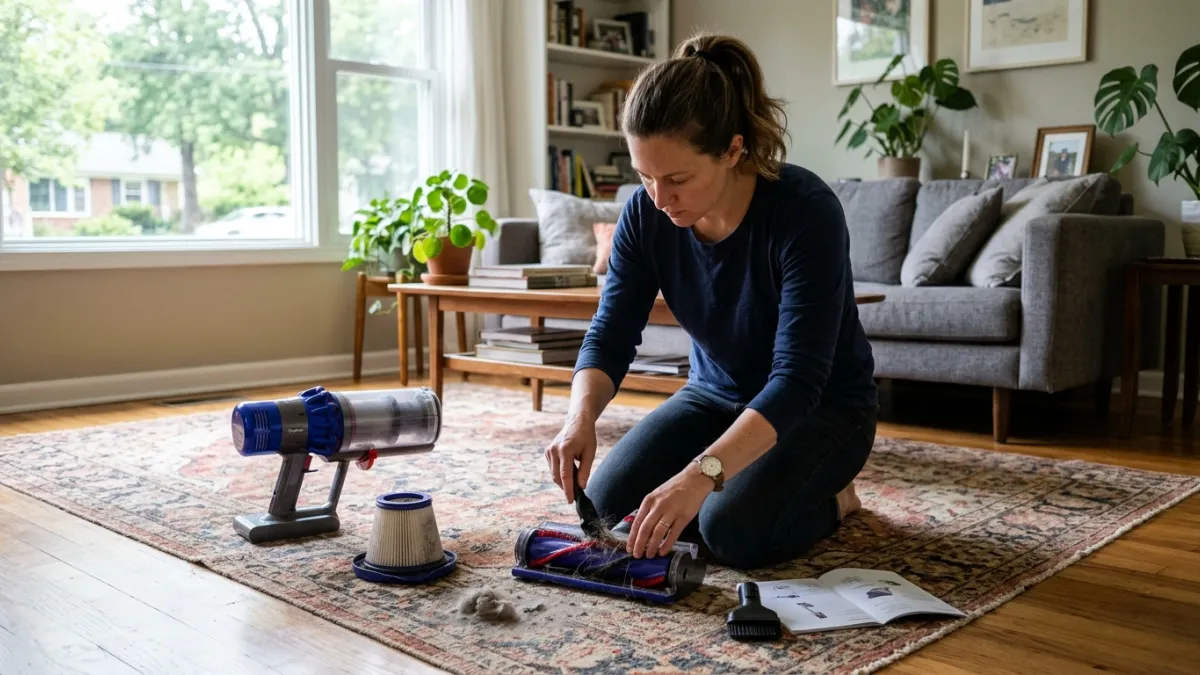
- Brush Roll and Bearings: Hair, threads, and carpet fibers wrap tightly around the brush bar over time. This extra drag slows down rotation speeds and traps large debris at the floor head opening. Unscrew the soleplate monthly, use a seam ripper or scissors to cut away wound hair, and clear any lint built up around the side bearings.
- Hose Blockage Inspection: Small toys, coins, or dense clumps of pet hair frequently lodge in the curved bends of the lower duct or handle wand. Disconnect the flexible hose fully once a month, stretch it out straight, and drop a marble or small coin through it. If the item does not fall straight through, you have a partial clog restricting your CFM.
Troubleshooting Suction Loss by Vacuum Component
When your machine suddenly loses suction power despite emptying the dust bin, you need to systematically isolate where the airflow restriction is occurring. Different vacuum designs—whether bagless stick vacuums, heavy-duty uprights, or bagged canisters—have specific failure points that degrade performance over time.
| Vacuum Component | Common Cause of Suction Loss | Corrective Action | Maintenance Frequency |
|---|---|---|---|
| Pre-Motor Filter | Fine dust buildup blocking air intake | Rinse with cold water; dry 24 hours | Every 2-4 weeks |
| Post-Motor HEPA Filter | Micro-pore clogging and carbon dust buildup | Replace filter entirely (do not wash unless specified) | Every 6-12 months |
| Flexible Hose & Wand | Stuck objects, pet hair mats, internal tears | Dislodge with broom handle; check for air leaks | Monthly inspection |
| Brush Roll & Duct | Wrapped hair, jammed bearings, blocked elbow duct | Cut wrapped hair; clean intake neck completely | Bi-weekly to monthly |
| Dust Bin / Cyclonic Mesh | Clogged shroud holes, compromised rubber gaskets | Wipe metal shroud with microfiber; check rubber seals | After every 3-5 uses |
For cordless stick vacuums like the Dyson V11/V15 or Shark Stratos series, fine dust frequently collects on the metal mesh shroud inside the cyclonic assembly. When this mesh gets covered in a layer of fine lint, the centrifugal cyclones cannot separate dirt efficiently. Wipe this shroud clean with a dry microfiber cloth every time you empty the canister to keep air moving smoothly through the upper chamber.
On traditional bagged models from Hoover or Sebo, ensure the bag dock and rubber inlet gasket are aligned correctly. A misaligned bag allows dust to bypass the collection container entirely, coating the internal motor compartment and instantly clogging the secondary safety filter. If your vacuum motor sounds higher-pitched than normal, it is screaming for air because an intake line or filter is completely sealed shut.
Long-Term Care to Extend Vacuum Motor Life
Shop-Vac Long Reach Flexible Micro Hose Set, with Universal Fit Adapter

A vacuum cleaner motor is a high-speed turbine that relies on incoming airflow for both suction and cooling. When you operate a vacuum with blocked filters or clogged hoses, the motor spins faster due to decreased air resistance, but its operating temperature skyrockets. Thermal stress is the primary reason vacuum motors burn out prematurely.
To protect your motor and maintain maximum vacuum efficiency over five to ten years of operation, practice proper storage and thermal management. Avoid vacuuming liquid, damp soil, or carpet powder formulas unless your machine is specifically engineered for wet pick-up. Baking soda and commercial carpet freshening powders are micro-fine particulates that pass right through standard filters, binding with moisture inside the motor casing and causing permanent bearing damage.
Additionally, check drive belts on upright models every six months. Standard stretch belts lose tension over time, causing the brush roll to slip under load. When the brush roll fails to agitate carpet fibers properly, dirt stays embedded in the carpet base, leading you to believe the vacuum has lost suction when the real issue is mechanical agitation failure. Replacing a loose $5 drive belt can instantly restore deep-cleaning effectiveness.
Recommended Maintenance Protocol
If your vacuum cleaner currently suffers from weak suction, start by turning off the unit, unplugging it, and doing a full system reset. Empty the dust bin completely, pull out all removable foam and felt filters, wash them under cool running water, and let them air-dry for two full days. While the filters are drying, detach the main hose and flush it out or gently clear it using the soft blunt end of a broom handle. Clear all hair wrapped around the roller bar, inspect the bottom intake neck for trapped debris, and wipe down all rubber seals with a clean, slightly damp microfiber cloth. Reassemble everything once dry, and you will find your vacuum pulling with the exact same power it had on day one.
Frequently Asked Questions
Why does my vacuum cleaner lose suction after just a few minutes of use?
This issue is almost always caused by a dirty pre-motor filter or an overheating motor safety shut-off. As the motor runs, thermal expansion combined with restricted airflow causes the machine's thermal cut-out switch to trigger, or fine dust quickly settles over already-clogged filter pores, cutting off airflow shortly after startup.
Vacuum & Hair Brush Cleaner Tool for Tangled Hair & Fibers

Can I wash a HEPA filter with water?
You should only wash a HEPA filter if it is explicitly labeled as "washable" by the manufacturer. Standard non-washable HEPA filters are made of tightly woven microscopic synthetic or glass fibers; exposing them to water breaks down these delicate structures, destroying their filtration efficiency and permanently blocking air passage.
How do I know if my vacuum hose has a hidden crack or air leak?
Turn on your vacuum, stretch out the hose fully, and run your hand along its length while listening for a high-pitched whistling sound. Alternatively, hold a lightweight tissue near the flex points of the hose; if the tissue is pulled toward the hose wall, air is leaking through a tear, which drastically reduces suction at the floor nozzle.
Why is my vacuum still lacking suction after cleaning all the filters?
If your filters are clean but suction is still weak, check the lower duct hose located right above the brush roll head. This short rubber elbow bend is the most common place for heavy items like small rocks, coins, or dense pet hair wads to become wedged out of sight.