Disclosure: As an Amazon Associate, we earn from qualifying purchases.
Maintaining commercial and residential floors at a high standard requires much more than a standard string mop and a bucket of warm soapy water. Heavy foot traffic, grit, grease, and atmospheric oils quickly embed into surface micro-abrasions, dulling original finishes and shortening the lifespan of expensive flooring substrates. To restore and maintain these surfaces effectively, professional janitorial technicians rely on a precise balance of chemistry, dwell time, and mechanical agitation. Understanding how these elements interact is the key to preventing permanent damage, cutting labor costs, and achieving pristine, slip-resistant floors.Quick answer: Professional floor care pairs task-specific pH chemistry (neutral pH 6–8 for daily care, alkaline pH 9–12 for degreasing, acidic pH 1–4 for mineral removal) with modern mechanical equipment like walk-behind or ride-on auto scrubbers. Matching pad color abrasiveness and following a structured dry-sweep, dwell, scrub, and vacuum extraction protocol ensures high-speed soil removal without dulling floor sealants.
Mastering Floor Care Chemistry: Understanding pH and Dilution
Chemical selection forms the backbone of any professional floor care routine. Using the wrong solution can cause catastrophic damage, such as permanently etching natural marble, stripping acrylic floor finish from vinyl composition tile (VCT), or leaving sticky chemical residues that attract airborne dust twice as fast. Every cleaning liquid sits on the logarithmic pH scale from 0 to 14, where every full unit change represents a tenfold increase in acidity or alkalinity. Understanding this scale allows cleaning technicians to target specific soil types without attacking the underlying flooring material.
Daily maintenance on finished hard surfaces relies heavily on neutral floor cleaners, which operate in the pH range of 6.0 to 8.0. These formulations utilize gentle surfactants to suspend light surface dirt, oils, and dust without degrading protective waxes or polyurethane coats. High-grade neutral concentrates are typically diluted at 1 to 2 ounces per gallon of water (1:128 to 1:64 ratio), making them exceptionally cost-effective for high-square-footage facilities. They are safe for sealed hardwood, polished concrete, terrazzo, and luxury vinyl tile (LVT).
When dealing with heavy grease, fats, and industrial oils, alkaline detergents in the pH 9.0 to 12.0 range become necessary. Common in commercial kitchens, auto repair bays, and manufacturing plants, alkaline formulas saponify fats and break down tough organic soils. On the opposite side of the spectrum, acidic cleaners (pH 1.0 to 4.0) dissolve inorganic mineral scale, hard water deposits, rust stains, and post-construction grout haze. However, acidic products must be used with extreme caution; they can destroy lime-based stones like marble and limestone in seconds and must always be followed by a thorough clean-water neutralize rinse.
Selecting Professional Equipment: Machines and Scrubbing Pads
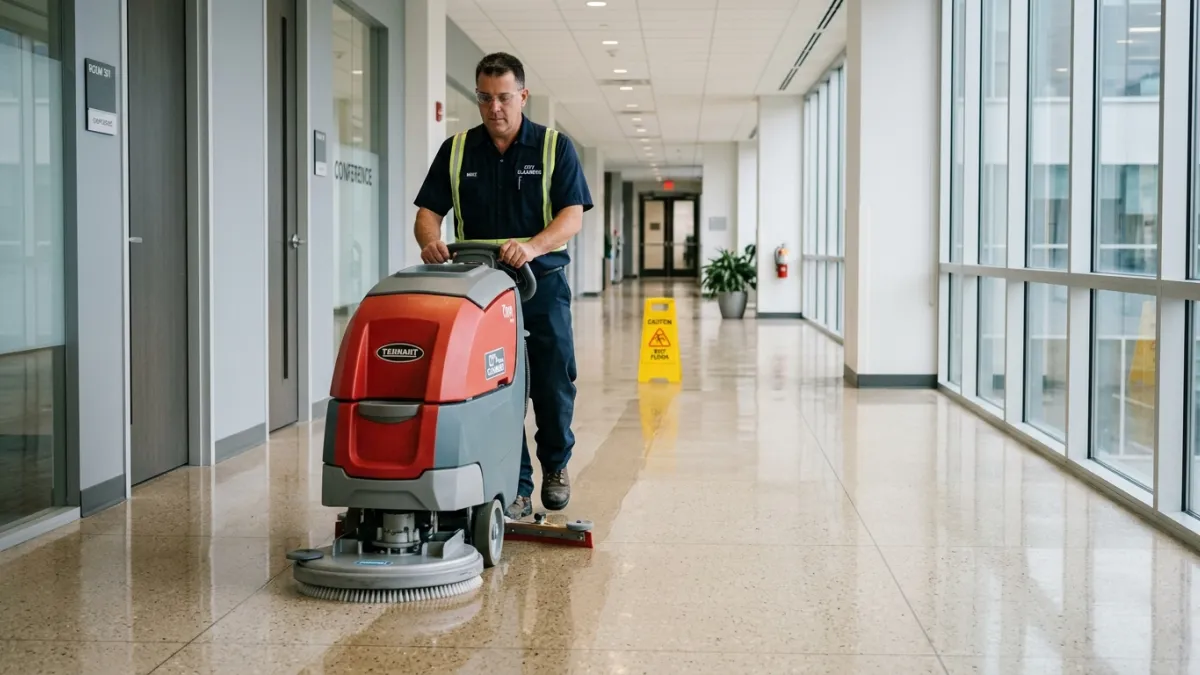
While chemical solutions break down surface bonds, mechanical force is what actually removes deeply trapped contaminants from floor pores. Professional cleaning setups range from low-speed single-disc rotary swing machines to advanced battery-powered automatic scrubbers. Selecting the right machine size depends directly on facility layout, doorway clearance, total square footage, and available labor hours.
Equally critical to machine choice is pad selection. Rotary floor pads are color-coded based on synthetic fiber density and abrasive grain content. Using a pad that is too aggressive can gouge soft vinyl or strip wax, while a pad that is too soft will fail to break up stubborn scuff marks. Low-speed floor buffers (typically operating at 175 to 300 RPM) use distinct pad colors for specific floor maintenance stages:
- White Pads (Polishing): Non-abrasive soft synthetic pads designed for high-gloss dry burnishing or applying soft paste wax on clean hardwood and marble floors.
- Red Pads (Daily Cleaning/Buffing): Mildly abrasive pads ideal for daily wet scrubbing on delicate surfaces, removing light dirt and scuffs without breaking down base sealants.
- Blue/Green Pads (Heavy Scrubbing): Moderately aggressive pads designed to strip off heavy grime, soil layers, and top layers of damaged finish prior to recoating.
- Black Pads (Stripping): Highly abrasive coarse pads loaded with silicon carbide or aluminum oxide grains, used exclusively with chemical stripping agents to remove all old wax down to the bare subfloor.
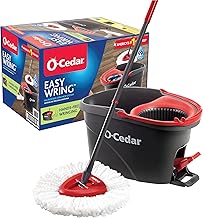
Dirty Water Separation & Cross-Contamination Control: Commercial Dual-Bucket System
Cleaner's tip: Never run a floor machine dry when using blue, green, or black scrubbing pads. Without a continuous layer of water or cleaning solution to lubricate the pad, the abrasive fibers will friction-burn the floor coat, leaving permanent circular swirl marks that can only be fixed by fully stripping and refinishing the room.
| Equipment Type | Average Coverage Rate | Solution Tank Capacity | Estimated Price Range (2026) | Best Facility Applications |
|---|---|---|---|---|
| Single-Disc Floor Buffer (17"-20") | 2,500 – 4,000 sq ft/hr | External spray tank (2-4 gal) | $1,200 – $2,500 | Small offices, spot stripping, spray buffing tight corners |
| Compact Walk-Behind Scrubber | 10,000 – 15,000 sq ft/hr | 4 – 10 Gallons | $2,800 – $5,500 | Retail aisles, school hallways, healthcare clinics |
| Standard Walk-Behind Scrubber | 15,000 – 28,000 sq ft/hr | 12 – 20 Gallons | $5,500 – $9,500 | Grocery stores, large cafeterias, gymnasiums |
| Ride-On Industrial Auto Scrubber | 35,000 – 64,500 sq ft/hr | 30 – 50+ Gallons | $12,000 – $25,000+ | Distribution centers, airports, convention halls, factory plants |
Step-by-Step Professional Floor Cleaning Protocol
Executing a flawless commercial floor clean requires a disciplined, multi-stage protocol. Jumping straight to wet scrubbing without removing dry debris is one of the most common mistakes inexperienced cleaners make. Follow this four-stage professional process to maintain optimal traction and appearance on hard surfaces.
Stage 1: Dry Soil Removal
Dry soil consists of quartz dust, sand, and atmospheric grit that acts like microscopic sandpaper under the pressure of heavy auto scrubber pads. Before applying any water or chemistry, thoroughly sweep or vacuum the entire floor area. Use a high-efficiency commercial dry vacuum or a treated continuous microfiber dust mop. Pay special attention to corners, door mats, and baseboard edges where abrasive sand collects.
Stage 2: Chemical Dilution and Application
Fill your machine’s solution tank with clean, room-temperature water before adding chemical concentrates to minimize foam creation. Measure the cleaner precisely according to the chemical manufacturer’s Safety Data Sheet (SDS); for example, 1 oz of neutral concentrate per gallon of water for light maintenance, or up to 4 oz per gallon for heavy soil loads. For heavily soiled commercial kitchen tile or greasy shop floors, pre-apply the solution using a low-pressure pump sprayer and grant a 5- to 10-minute chemical dwell time before starting the mechanical scrub.
Stage 3: Mechanical Scrubbing
Engage your auto scrubber or single-disc buffer fitted with the correct pad or cylindrical brush. Work in systematic, overlapping passes (overlapping each pass by approximately 2 to 4 inches) to ensure no missed spots. Set machine brush head pressure based on surface hardness: low pressure for high-gloss vinyl or linoleum, and maximum head pressure for porous unsealed concrete or heavy ceramic tile grout lines.
High-Dilution Maintenance: Zep Industrial Neutral Floor Cleaner

Stage 4: Extraction, Edge Detailing, and Drying
Ensure the rear squeegee assembly on your automatic scrubber forms an airtight seal against the floor surface, allowing the vacuum motor (typically rated at 60 to 100 CFM water lift) to recover dirty water completely in a single pass. For corners, door frames, and edges reached outside the squeegee path, carry a high-density flat microfiber mop (350 to 400 GSM) to catch excess liquid. Leave air movers running across high-traffic corridors to speed up dry times and prevent slip injuries.
Essential Safety Protocols and Equipment Care
Safety must always take priority during commercial floor care operations. Slip-and-fall incidents account for a large percentage of commercial liability claims. Always place highly visible yellow caution signs at all entry points and high-visibility perimeter tape around active wet zones before applying any liquid solutions. Ensure technicians wear slip-resistant footwear with oil-resistant rubber outsoles during scrub and strip operations.
Handling floor cleaning chemicals demands appropriate Personal Protective Equipment (PPE), including nitrile gloves, eye protection splash goggles, and proper ventilation when working in enclosed spaces with high-pH degreasers or low-pH acid strippers. Never mix chemical compounds—combining chlorine bleach with acid-based cleaners produces deadly chlorine gas, while mixing bleach with ammonia releases toxic chloramine vapors.
To keep equipment operating reliably and prevent costly motor burnouts, maintenance after every shift is mandatory. Always drain and flush both the clean solution tank and the dirty recovery tank with fresh water to prevent sludge accumulation and chemical corrosion. Rinse squeegee blades thoroughly, check for edge wear, flip or replace worn floor pads, and store auto scrubber batteries on charge according to manufacturer instructions.
For small to medium facilities seeking an ideal balance of performance, versatility, and equipment lifespan, an automatic 20-inch walk-behind battery scrubber paired with a quality pH-neutral cleaner concentrate (diluted at 1:128) and a stock of red scrubbing pads offers the best start. This setup handles routine maintenance safely across 90% of commercial floor types while saving hundreds of labor hours annually over traditional manual mopping.
Frequently Asked Questions
What is the safe pH range for daily mopping on sensitive stone floors?
High-RPM Mechanical Extraction: Electric Cordless Power Floor Scrubber

Sensitive stone floors like marble, limestone, and travertine require a neutral pH floor cleaner strictly between 6.5 and 7.5. Acidic formulas (pH below 6) etch stone surfaces instantly, while high alkaline cleaners (pH above 9) cause dulling and sealant degradation over time.
How often should commercial auto scrubber squeegee blades be replaced?
Squeegee blades should be inspected daily and flipped or replaced every 30 to 60 operating hours, or whenever you notice liquid streaks and water trails left behind on the floor during extraction.
Is a pad or a brush better for auto scrubber floor cleaning?
Floor pads work best on smooth, flat surfaces like vinyl composition tile (VCT) and polished concrete. Cylindrical or disc brushes are far better for textured floors, epoxy flooring with non-slip grit, and ceramic tile with depressed grout lines, as bristles penetrate down into floor crevices where flat pads cannot reach.
Why is my floor left sticky or hazy after using a commercial floor cleaner?
A sticky or hazy residue is almost always caused by using too much chemical concentrate in your dilution water. Over-concentrated solutions leave excess soap residue on the surface that fails to dry properly and rapidly attracts fresh dirt.