
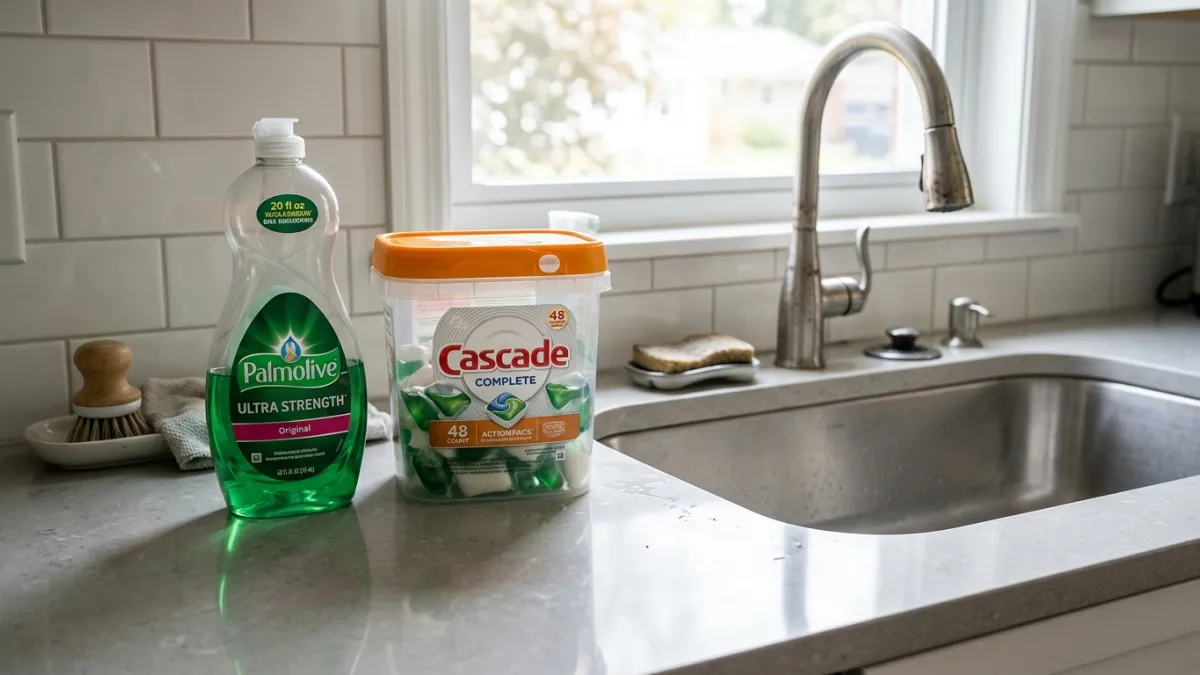
Quick answer: Liquid dish soap uses mild, neutral-pH (7–8) surfactants designed to create dense foam for hand scrubbing, whereas dishwasher detergent uses high-pH (10–11.5) alkaline builders, enzymes, and low-foaming agents tailored for high-pressure hot water sprayers. Swapping liquid dish soap into a dishwasher causes massive foam overflows and potential pump damage, while using dishwasher detergent by hand can irritate skin and damage sensitive dishware.
Chemical Formulation: Foaming Surfactants vs. Alkaline Enzymes
The primary distinction between manual liquid dish soap and automatic dishwasher detergent lies in their chemical makeup and how they handle surface tension. Hand dish soaps, like Dawn Ultra or Palmolive Original, are formulated with high-foaming anionic surfactants such as sodium lauryl sulfate (SLS) or sodium laureth sulfate (SLES). These compounds work by capturing hydrophobic oils and greases inside microscopic structures called micelles, keeping the grime suspended in water so it easily rinses off your sponge or dishcloth. Because hand washing occurs at comfortable tap temperatures—typically between 90°F and 110°F—these surfactants are balanced to remain gentle on human skin with a skin-safe, neutral pH ranging from 7.0 to 8.0.
Automatic dishwasher detergents, whether sold as powders, gels, or multi-chamber pods like Cascade Platinum or Finish Quantum, work on an entirely different chemistry. Machine cleaning lacks the friction of a manual sponge, so the detergent must do the heavy lifting through chemical breakdown rather than physical scrubbing. To achieve this, automatic formulas contain strong alkaline builders like sodium carbonate and sodium silicate, pushing the pH level up to an aggressive 10.0 or 11.5. This high alkalinity saponifies fats—turning stubborn greases into water-soluble soaps right inside the machine. Additionally, modern pods incorporate specialized enzymes: proteases to break down protein stains like egg and cheese, and amylases to digest complex starches like pasta and potato residue.
Crucially, automatic detergents contain anti-foaming agents or non-ionic low-foaming surfactants. In an enclosed machine cycle, high volume suds interfere with the mechanical rotation of the spray arms and block water pressure. Without these defoamers, air pockets created by foam cushion the impact of the jet spray, leaving dishes dirty. The lack of excessive foam in dishwasher detergent is not a flaw; it is a calculated engineering design that allows water jets to strip grime efficiently.
Mechanical Action: Friction vs. Water Jet Pressure
To understand why these products are not interchangeable, you must look at the mechanical environment in which they operate. Manual dishwashing relies heavily on physical friction provided by a scrub pad, microfiber cloth, or nylon brush. The liquid dish soap acts as a lubricant and emulsifier, reducing the physical effort needed to strip dried sauce or baked cheese off ceramic plates. Because human hands guide the sponge into every corner, the chemical solution does not need to dissolve solid food debris instantly; it only needs to keep suspended oils from redepositing onto clean surfaces while you scrub.
In contrast, an automatic dishwasher relies purely on thermal energy and high-velocity hydraulic pressure. Dishwashers heat water to internal temperatures between 120°F and 150°F (49°C to 65°C), which melts animal fats and accelerates chemical reaction rates. Rotating spray arms pump water at high velocity across the racks, blasting loosened debris off surfaces. The high pH of dishwasher detergent weakens organic bonds, while the hot water jets wash the particles down the drain filter. If you introduce a high-foaming liquid dish soap into this high-pressure environment, the rapidly whipping spray arms churn the soap into billions of tiny air bubbles within minutes.
| Property / Feature | Liquid Dish Soap (Manual) | Dishwasher Detergent (Automatic) |
|---|---|---|
| Primary Form | Concentrated Liquid | Pods, Powders, Gels |
| pH Range | Neutral (7.0 – 8.0) | Highly Alkaline (10.0 – 11.5) |
| Foaming Behavior | High-foaming (Anionic surfactants) | Low-foaming / Anti-foaming agents |
| Active Cleaning Ingredients | SLS/SLES surfactants, emollients | Alkaline builders, enzymes, bleaches |
| Ideal Water Temperature | Warm (90°F – 110°F) | Very Hot (120°F – 150°F) |
| Skin Contact Safety | Safe for direct hand contact | Corrosive; can cause skin irritation |
What Happens When You Swap Them?
Putting liquid dish soap into an automatic dishwasher is one of the most common—and messy—household mistakes. Just a single teaspoon of liquid dish soap placed in the detergent dispenser will produce enough foam to fill the entire tub, force open the door seals, and spill onto your kitchen floor. The foam traps air inside the circulation pump, causing the motor to cavitate, lose pressure, and potentially overheat. If this happens to you, cancel the cycle immediately, drain the tub, and add a quarter cup of vegetable oil or a cup of cooking salt directly into the bottom of the machine; both act as natural defoamers to break down the suds before running a rinse cycle.
Cleaner's tip: Over my 20 years in professional house cleaning, I've had to clean up dozens of dishwasher foam floods caused by clients using regular liquid soap. If foam leaks onto your hard floor, do not use a standard vacuum or steam mop right away. Mop up the suds with dry towels first, then sprinkle cheap table salt over the remaining slick residue to collapse the bubbles instantly before wiping clean with warm water.
On the flip side, using dishwasher detergent or pods to hand-wash dishes in the sink carries serious risks for your hands and your cookware. Because automatic detergents are formulated with an elevated pH level and concentrated bleach or oxygen active agents, direct contact with wet hands can strip skin oils, cause chemical irritation, or leave painful red rashes. Furthermore, without the massive dilution and continuous high-temperature rinsing of a machine cycle, dishwasher detergent can leave a chalky alkaline residue on your glasses, silverware, and non-stick pans that is difficult to wash off manually.
Material Compatibility and Cookware Protection
Knowing which cleaner to pick extends beyond machine safety; it also dictates how long your expensive kitchen tools will last. Liquid dish soaps are mild enough to clean almost any kitchen item, including delicate crystal, hand-painted porcelain, seasoned cast iron, anodized aluminum, and high-carbon steel chef's knives. Because hand soap maintains a neutral pH and contains no abrasive salts or bleaching compounds, it cleans grease without stripping protective seasoning layers from cast iron pans or dulling the fine edges of professional cutlery.
Dishwasher detergents, however, are far more aggressive and can permanently ruin specific materials. The combination of high alkalinity, chlorine bleach or percarbonate, and high heat causes severe oxidation on aluminum cookware, turning bright metal dark grey and leaving a powdery residue. Cast iron skillets washed with machine detergent lose their non-stick polymerized oil coating, leading to rust. Wood cutting boards and wood-handled knives warp, crack, and dry out under machine detergent exposure. Reserve your dishwasher pods strictly for dishwasher-safe materials like stainless steel, tempered glass, high-fired ceramics, and heat-resistant BPA-free plastics.
Choosing the Best Product for Every Cleaning Task
To maximize efficiency and save money in the kitchen, keep both cleaning products stocked and use them according to their strengths. For daily washing of delicate glassware, non-stick frying pans, sharp kitchen knives, and wooden utensils, rely on a high-quality liquid dish soap paired with a non-scratch microfiber pad. Dilute a few drops of soap in warm sink water to create a stable foam bath that breaks down grease without harsh chemical action.
For full loads of standard everyday dinnerware, stainless steel pots, and heat-resistant glass storage containers, use premium multi-chamber dishwasher pods or concentrated powders. Ensure your dishwasher inlet water reaches at least 120°F (49°C) for maximum enzyme activation. If you run out of dishwasher detergent, never substitute liquid dish soap; instead, hand-wash your pressing items or run a machine cycle using two tablespoons of baking soda in the main cup as an emergency, non-foaming stopgap until you can restock.
Frequently Asked Questions
Can I use liquid dish soap in the dishwasher if I only use a drop or two?
No, even a couple of drops of concentrated liquid dish soap can create excessive foam when agitated by high-pressure spray arms. The foam can bypass door gaskets, flood your floor, and cause the wash pump to run dry, potentially damaging the machine's motor.
Is dish soap or dishwasher detergent better at killing germs and bacteria?
Dishwasher detergent combined with a hot dishwasher cycle is vastly superior at sanitizing dishes. The combination of water temperatures exceeding 140°F (60°C) and highly alkaline detergent breaks down bacterial cell walls much more effectively than hand-washing with warm water and neutral dish soap.
Why does my dishwasher leave a white cloudy film on glasses after washing?
Cloudy film is usually caused by hard water minerals (calcium and magnesium) binding with alkaline dishwasher detergent, or by using too much powder detergent in soft water. Using a rinse aid fluid or adding a dishwasher salt system neutralizes this film during the final rinse cycle.
Can I wash my hands with liquid dish soap if regular hand soap runs out?
Yes, standard liquid dish soap is non-toxic and safe for skin contact during hand washing. However, because dish soap is optimized to strip heavy oils from pots and pans, using it frequently on your hands can dry out your skin faster than moisturizing liquid hand soap.
For everyday dishcare, use liquid dish soap in the sink for hand-scrubbing cast iron, aluminum, chef knives, and delicate crystal, while reserving high-pH dishwasher detergent pods strictly for your automatic machine to protect both your kitchen appliances and your cookware.