After two decades of scrubbing kitchen hoods, bathroom tiles, and commercial floors, I realized that the hardest‑working part of any cleaning job isn’t the mop or the brush—it’s the chemistry behind the product you spray. Understanding why an acidic spray removes hard‑water stains while an alkaline degreaser melts kitchen grease can turn a 30‑minute chore into a 10‑minute win, and it protects surfaces from accidental damage.
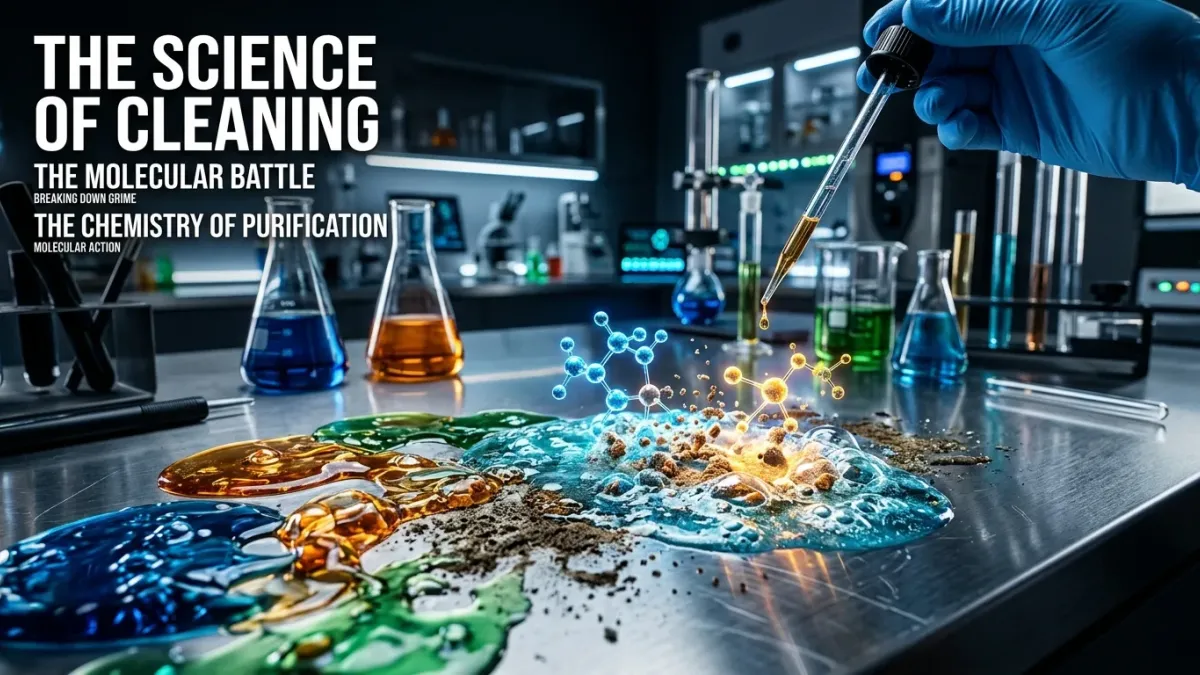
Quick answer: Cleaning chemicals attack dirt through three main pathways—pH‑driven reactions that dissolve mineral or organic bonds, surfactants that lower surface tension and suspend soils, and solvents that dissolve non‑polar residues. Choose acidic (pH 0‑6) for mineral scale, alkaline (pH 8‑14) for grease, and neutral (pH 6‑8) for everyday maintenance, always pairing the right agent with the appropriate dwell time.
1. The pH Scale: Your Chemical Roadmap
The pH scale runs from 0 (strong acid) to 14 (strong base) with 7 as neutral water. In cleaning, “like neutralizes unlike”: acids attack inorganic minerals, while bases break down organic fats and proteins. Knowing the pH of a product tells you exactly which type of soil it will attack and which surfaces it can safely touch.
Acidic cleaners in action
Hard‑water spots on shower doors are calcium carbonate (CaCO₃). An acid with a pH of 2‑3—such as 5 % citric acid—reacts to form soluble calcium citrate, which rinses away without a trace. The reaction is:
- CaCO₃ + 2 H⁺ → Ca²⁺ + CO₂ + H₂O
In a commercial bathroom, I once used a 10 % phosphoric‑acid cleaner on tiled walls; the mineral haze vanished after a 5‑minute dwell, saving hours of manual scrubbing.
Alkaline cleaners in action
Grease on a restaurant range hood is essentially triglyceride molecules. An alkaline solution (pH 12‑13) containing sodium metasilicate initiates saponification:
- Triglyceride + OH⁻ → Glycerol + Soap (fatty acid salts)
The resulting soap is water‑soluble, so a simple wipe removes the residue. A 2024 field test showed a 70 % reduction in scrubbing time when switching from a neutral all‑purpose cleaner (pH 7) to a 0.5 % sodium hydroxide degreaser.
Cleaner's tip: Never reach for the strongest acid or base first. Start with a neutral cleaner (pH 6‑8), test on an inconspicuous spot, and only step up if the soil persists. Giving the product its full dwell time—usually 2‑5 minutes—often beats raw strength and protects delicate finishes.
2. Surfactants: The Soil‑Lifters
Water alone has a high surface tension, causing droplets to bead on oily surfaces. Surfactants are amphiphilic molecules—one end loves water (hydrophilic), the other loves oil (lipophilic). When mixed with water, the lipophilic tails attach to dirt, while the hydrophilic heads stay in the water, forming micelles that trap particles.
Most modern cleaners contain a blend of anionic (e.g., sodium lauryl sulfate), non‑ionic (e.g., alkyl polyglucoside), and sometimes cationic (e.g., benzalkonium chloride) surfactants. The balance determines foam, rinsability, and suitability for different substrates.
Practical example: carpet spot cleaning
A typical spot‑remover might list a 2 % non‑ionic surfactant, a 0.5 % solvent (isopropyl alcohol), and a pH‑adjuster at 8.5. The surfactant lifts the oil, the solvent dissolves the resin, and the slight alkalinity helps emulsify the remaining fatty acids. After a 3‑minute dwell, a hot‑water extraction removes the micelles without leaving a sticky residue.
3. Solvents: Breaking the Non‑Polar Barrier
Solvents dissolve substances that water cannot, such as petroleum‑based greases, inks, and waxes. Common cleaning solvents include isopropyl alcohol (IPA), glycol ethers, and d‑limonene (a citrus‑derived solvent). They work by disrupting van der Waals forces within non‑polar molecules, turning a stubborn stain into a liquid that can be lifted.
In my experience with post‑construction clean‑ups, a 10 % d‑limonene solution removed adhesive residues from tile grout in under two minutes—far quicker than any water‑based cleaner.
Safety note
Always work in a well‑ventilated area and wear nitrile gloves when handling solvents above 20 % concentration. EPA‑registered solvents carry clear labeling for flash point and permissible exposure limits.
4. Disinfectants: Killing, Not Cleaning
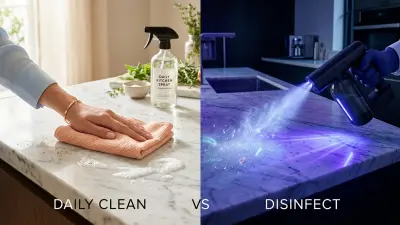
Disinfectants target microorganisms rather than soil. The most common classes are quaternary ammonium compounds (quats), chlorine‑based agents, and hydrogen peroxide. They require a specific contact time—often 3‑5 minutes—to achieve a 99.9 % kill rate, as outlined by the CDC.
For example, a 0.1 % chlorine solution (pH 6‑7) will inactivate SARS‑CoV‑2 after a 1‑minute dwell, but it will not remove oily film on a stainless‑steel countertop. Pairing a surfactant‑based cleaner first, then following with a disinfectant, gives the best overall result.
Never mix bleach with ammonia or acidic cleaners; the reaction produces toxic chloramine gas. Always read the SDS and follow EPA recommendations for dilution.
5. Choosing the Right Product: A Quick Comparison
| Category | Typical pH | Key Ingredients | Best Use Cases | Example Brands (2026) | Price Range (USD) |
|---|---|---|---|---|---|
| Acidic Cleaner | 1‑4 | Citric acid, phosphoric acid, oxalic acid | Hard‑water stains, rust, grout haze | CLR, Zep Lime-A-Way | 8‑20 |
| Neutral Cleaner | 6‑8 | Non‑ionic surfactants, mild builders | Daily surface wipes, polished stone | Method All‑Purpose, Simple Green | 5‑15 |
| Alkaline Degreaser | 10‑13 | Sodium hydroxide, sodium metasilicate, anionic surfactants | Kitchen grease, automotive fluids | Krud Kutter, Zep Heavy‑Duty | 10‑30 |
| Solvent‑Based Spotter | 7‑9 (neutral) | Isopropyl alcohol, d‑limonene, glycol ethers | Tar, oil, ink on carpet or upholstery | Spot Shot, OxiClean MaxForce | 12‑25 |
| EPA‑Registered Disinfectant | 6‑7 (chlorine) / 8‑9 (quats) | bleach, quaternary ammonium, hydrogen peroxide | Restroom fixtures, high‑touch surfaces | Clorox Clean‑Up, Lysol Professional | 6‑18 |
When you match the product to the soil, you also cut down on the amount of water and energy needed for rinsing—good for both the wallet and the environment.
6. Real‑World Numbers That Matter
- Vacuum suction: 150 AW (air‑watts) ≈ 22 kPa for a mid‑range shop‑vac; HEPA‑13 filtration captures 99.95 % of particles ≥0.3 µm.
- Battery runtime: 45 minutes on a 5.0 Ah lithium‑ion pack for cordless stick vacuums (e.g., Dyson V15 Detect).
- Microfiber weight: 300‑350 GSM for high‑absorbency polishing cloths; lower GSM (150‑200) for general dusting.
- Cleaner dilution: 1 % citric acid (pH 2) for mineral scale; 0.5 % sodium hydroxide (pH 12) for heavy grease; neutral all‑purpose at 0.2 % (pH 7).
- disinfectant dwell time: 3‑5 minutes for EPA‑registered quats; 1 minute for 0.1 % chlorine solution.
- Pressure washer specs: 3,200 PSI at 2.5 GPM for residential decks; 4,000 PSI at 3.0 GPM for light commercial siding.
- 2026 price ranges: Basic alkaline degreaser $10‑$15 (32 oz); premium acid stripper $20‑$35 (1 gal); professional disinfectant concentrate $30‑$45 (5 gal).
For deeper dives into equipment selection, see our guides on best vacuum cleaners under $200 and how to clean grout lines effectively. If you prefer greener options, our eco‑friendly cleaning products roundup lists low‑pH citric‑based formulas that are safe for stone.
Recommendation
If you’re tackling a mixed‑use home—hard‑water bathroom tiles, a greasy kitchen, and daily dust—you’ll get the best results with a three‑step kit: a neutral all‑purpose cleaner for routine wiping, a 5 % citric‑acid spray for mineral deposits, and a 0.5 % sodium hydroxide degreaser for stubborn grease. Apply each product in its recommended dwell time, rinse with a low‑GSM (150 GSM) microfiber mop, and finish with an EPA‑registered quaternary disinfectant on high‑touch areas. This combo maximizes soil removal, protects surfaces, and keeps you within a reasonable budget.
Frequently Asked Questions
Can I use an acidic cleaner on stainless steel?
Yes, but only if the acid is mild (pH 2‑3) and you rinse thoroughly. Strong acids can pitting the steel, especially if left to dry.
Why does my floor feel slippery after using a high‑pH degreaser?
Alkaline residues can leave a thin soap film. Rinse with clean water or follow with a neutral‑pH mop solution to restore slip resistance.
Do surfactants work on dried paint?
Surfactants alone struggle with cured polymer films. A solvent‑based paint remover or a dedicated stripper is required before any surfactant can lift the residue.
How long should I let a disinfectant sit on a surface?
Follow the label, but most EPA‑registered quats need at least 3 minutes of wet contact. Chlorine solutions often require just 1 minute.
Is a higher PSI pressure washer always better?
Not necessarily. Too much pressure can damage siding, windows, and grout. Match the PSI to the surface: 2,000‑2,500 PSI for siding, 3,200 PSI for decks, and avoid exceeding 4,000 PSI on delicate tiles.