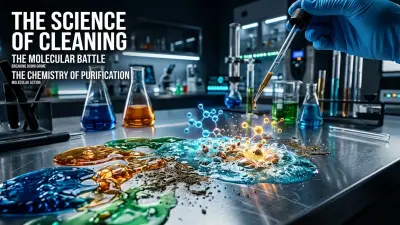
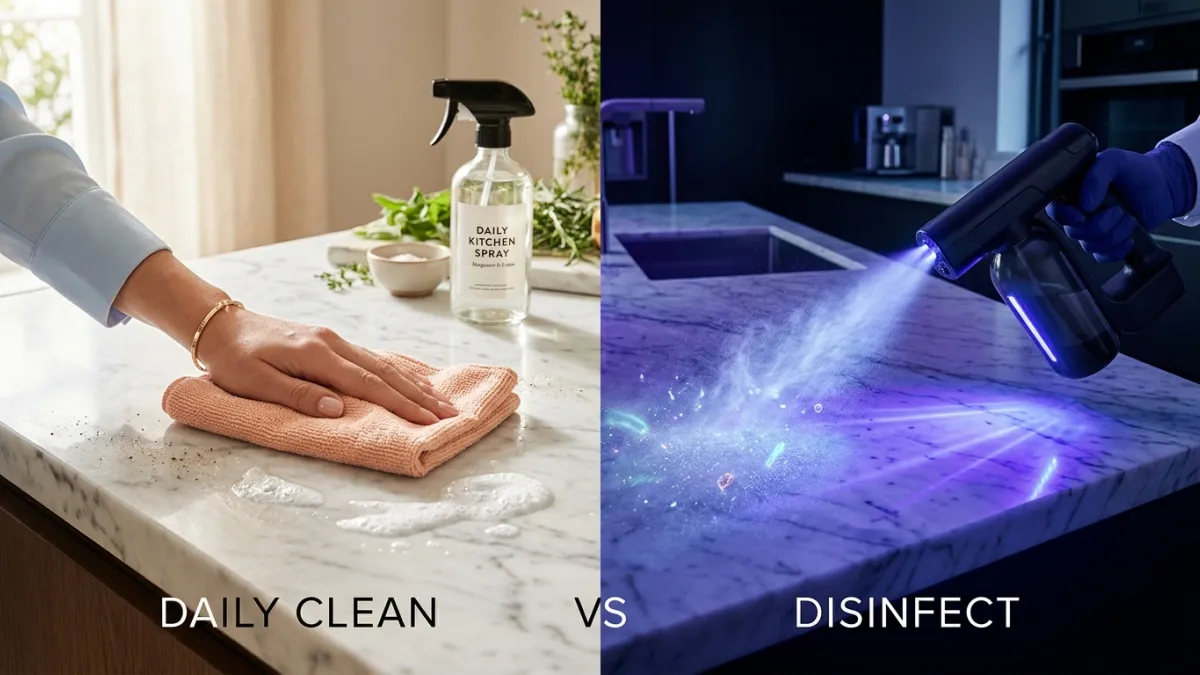
Daily cleaning physically removes dirt, dust, and organic matter from surfaces using water and soap, whereas daily disinfecting uses chemicals to kill 99.999% of remaining germs, viruses, and bacteria. You cannot properly disinfect a surface without cleaning it first, because organic debris prevents disinfectants from contacting and destroying pathogens. For daily home or commercial maintenance, cleaning is sufficient for low-risk areas, while high-touch surfaces like door handles, faucets, and light switches benefit from targeted daily disinfection.
Understanding when to clean and when to disinfect saves time, reduces chemical exposure, and preserves surface finishes. Combining both methods correctly forms the foundation of modern hygiene protocols.
Cleaning vs. Disinfecting: Side-by-Side Comparison
To choose the right approach for each area in your home or facility, review the fundamental differences below:
| Feature | Daily Cleaning | Daily Disinfecting |
|---|---|---|
| Primary Goal | Remove visible soil, dust, grease, and reduce germ count | Kill remaining pathogens on clean hard surfaces |
| Primary Action | Physical lifting and rinsing via surfactants & friction | Chemical inactivation (destroying cell walls/proteins) |
| Key Tools/Products | All-purpose cleaners, dish soap, microfiber cloths | EPA-registered disinfectants, bleach, alcohol (70%) |
| Dwell Time Required | None (wipe immediately) | Mandatory 30 seconds to 10 minutes wet contact time |
| Surface Safety | High (safe for almost all water-tolerant materials) | Moderate-Low (can degrade sealants, plastics, metals) |
The Daily Cleaning Method (Step-by-Step)
Daily cleaning relies on mechanical friction paired with a surfactant (like dish soap or neutral multi-surface spray). Surfactants break the surface tension of water, allowing dirt, oils, and microbes to be encapsulated and wiped away.
Step 1: Clear and Dust the Area
Remove loose items, clutter, and surface debris using a dry duster or vacuum attachment before applying liquid solutions.
Step 2: Apply a Surfactant Solution
Spray a neutral multi-surface cleaner or a mix of 1 teaspoon of liquid dish soap per 16 ounces of warm water onto the surface or directly onto your cloth.
Step 3: Wipe with Microfiber Cloths
Fold a split-microfiber towel into quarters to create eight fresh cleaning faces. Wipe in an "S" pattern from top to bottom, applying even pressure to lift dirt without spreading contamination.
After wiping dirty surfaces throughout the day, knowing how to clean microfiber cloth inventory properly is critical. Wash used microfiber towels separately from cotton or bath linens in warm water using a free-and-clear detergent. Avoid fabric softeners and bleach, as softeners coat the microscopic split fibers and eliminate their electrostatic charge. Tumble dry on low heat or line dry.
The Daily Disinfecting Method (Step-by-Step)
Disinfection requires a chemically clean surface to work efficiently. Dirt, grease, and bio-burden act as physical shields for pathogens against disinfectant agents.
Step 1: Clean First
Perform the standard daily cleaning process outlined above to clear off all dust, grease, and sticky residues.
Step 2: Apply EPA-Registered Disinfectant
Spray the target high-touch surface (doorknobs, toilet handles, phone screens, light switches) until thoroughly wet. Ensure the active ingredient aligns with your pathogen control needs (e.g., quaternary ammonium, hydrogen peroxide, or sodium hypochlorite).
Step 3: Respect Mandatory Dwell Time (Contact Time)
Leave the surface visibly wet for the full duration specified on the product label. Typical dwell times are:
- Accelerated Hydrogen Peroxide (AHP): 1 to 5 minutes
- Quaternary Ammonium Compounds ("Quats"): 3 to 10 minutes
- Diluted Household Bleach (1:50 dilution): 5 to 10 minutes
- 70% Isopropyl Alcohol: 30 seconds to 1 minute
Step 4: Wipe or Air Dry
If required by product directions (especially on food-contact surfaces like cutting boards or dining tables), wipe down with a damp cloth or rinse with potable water after the full contact time has elapsed.
Pros and Cons of Daily Disinfecting
Pros
- Directly inactivates flu, viruses, and foodborne bacteria like E. coli or Salmonella.
- Protects vulnerable household members or commercial environments during illness outbreaks.
- Reduces cross-contamination on non-porous high-touch items.
Cons
- Overuse can contribute to chemical sensitivities and indoor air pollution (VOCs).
- Improper dwell times give a false sense of security without actually killing germs.
- Corrosive active ingredients can damage unsealed natural stone, fine wood, and electronic screens over time.
Frequently Asked Questions
Can I clean and disinfect in a single step?
Yes, if you use a true 2-in-1 cleaner-disinfectant spray. However, if the surface has heavy soil or grease, you must apply the product twice: once to clean and wipe away dirt, and a second time to spray and remain wet for the full contact time.
Why shouldn't I disinfect every surface in my home daily?
Routine cleaning removes over 90% of surface microbes mechanically. Disinfecting every non-touch surface (like walls, ceilings, or decorative furniture) daily wastes chemical products, causes material wear, and exposes occupants to unnecessary vapors without adding noticeable health benefits.
How often should I clean and sanitize kitchen counters?
Kitchen counters should be daily cleaned before and after meal prep. Sanitize or disinfect counters specifically after handling raw meat, poultry, or eggs to prevent cross-contamination.