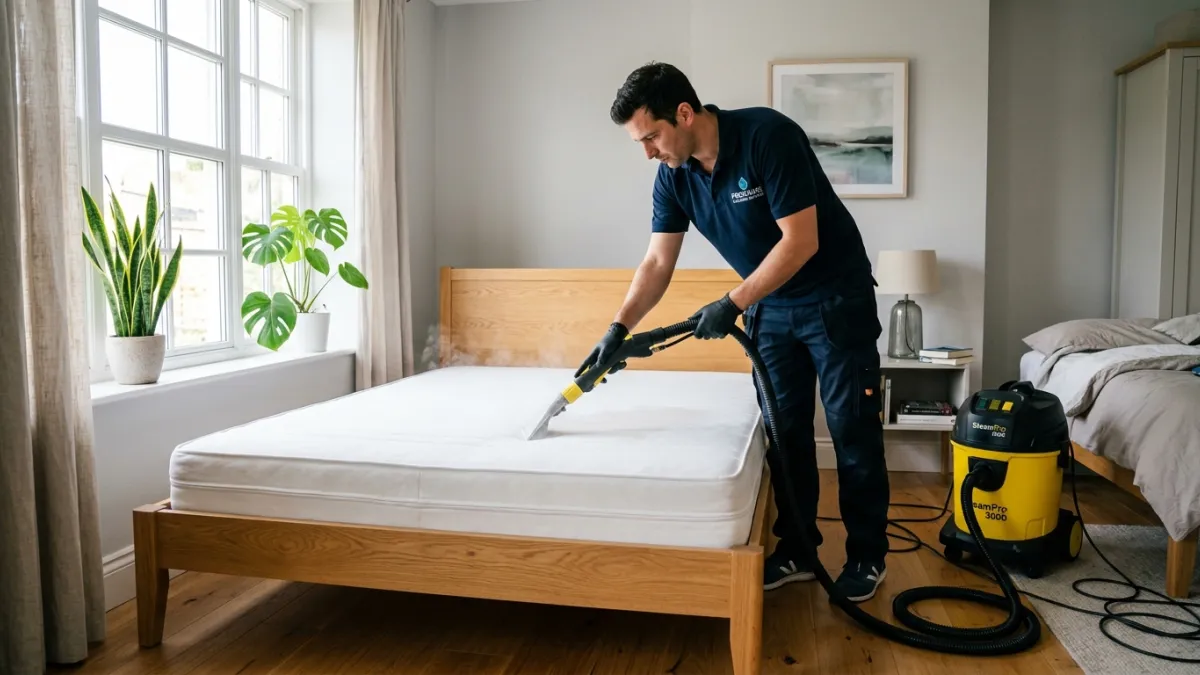
To clean a mattress effectively and remove tough body oils, urine, or sweat stains, the most reliable method is combining a specialized enzyme cleaner spray with a low-moisture upholstery extractor or high-filtration HEPA vacuum. Applying liquid minimally—allowing 10 to 15 minutes of dwell time for enzyme breakdown—and extracting moisture thoroughly prevents internal mold growth while removing up to 99% of surface dust mites, dead skin cells, and trapped odors.
Why Regular Mattress Cleaning is Essential
The average adult sheds approximately 1.5 grams of dead skin cells each day and loses up to 500 milliliters of sweat per night. Over time, these organic materials sink deep into mattress quilting, creating an ideal breeding ground for dust mites, bacteria, and fungal spores. Unlike surface glass maintenance using a window cleaner or hard surface degreasing with a multi-surface spray like fantastik cleaner, mattress care requires low-moisture techniques specifically formulated for deep fibrous layers.
Types of Mattress Cleaners Compared
Selecting the right product depends heavily on the type of stain, mattress material (such as memory foam versus hybrid or innerspring), and available drying time. Below is a breakdown of the primary cleaning solutions used by professional cleaners.
| Cleaner Type | Best For | Drying Time | Stain Removal Power |
|---|---|---|---|
| Enzyme Sprays | Urine, blood, sweat, organic odors | 2–4 hours | High (Organic stains) |
| Dry Baking Soda Mix | Light moisture, routine deodorizing | 1–2 hours | Moderate (Odors only) |
| Portable Spot Extractors | Deep liquid spills, set-in stains | 4–8 hours | Very High |
| Foam Upholstery Cleaners | Surface grime, delicate memory foam | 1–3 hours | Moderate |
1. Enzyme-Based Cleaners
Enzymatic formulas contain active biological proteins that break down complex organic compounds like uric acid, proteins, and lipids. They are essential for biological accidents, completely neutralizing odor molecules rather than masking them.
2. Low-Moisture Upholstery Extracts
Using a portable extractor—similar in function to an advance carpet cleaner—allows you to inject diluted upholstery shampoo and immediately pull dirty water back out. Key to this process is using specialized stair or upholstery hand tools to limit fluid delivery, preserving the inner core of the mattress.
3. Baking Soda & Essential Oils (Dry Method)
For standard monthly maintenance, dry absorption is the safest method, especially for moisture-sensitive memory foam. Baking soda neutralizes acidic odors while absorbing excess surface humidity.
Step-by-Step Guide: How to Deep Clean a Mattress
- Strip and Wash All Bedding: Remove sheets, mattress protectors, and duvet covers. Wash them in hot water (at least 130°F / 54°C) to kill dust mites and dissolve body fats.
- Vacuum Thoroughly with HEPA Filtration: Use an upholstery brush attachment to vacuum the top, sides, and seams. Press down firmly to lift trapped dander and dust mites out of tight tufts.
- Spot Treat Stains: Lightly mist an enzyme cleaner directly onto an microfiber cloth, then blot (do not rub) the stained area. Rubbing forces liquids deeper into the core padding.
- Deodorize with Baking Soda: Sift an even layer of pure baking soda over the entire surface. For extra freshness, mix in 5 to 10 drops of lavender or eucalyptus essential oil per cup of baking soda. Let it sit for a minimum of 4 to 8 hours.
- Vacuum a Second Time: Slowly pass the vacuum over the mattress to remove all saturated baking soda particles.
- Air Dry Completely: Ensure the room is well-ventilated with open windows or running fans before putting sheets back on.
How to Handle Specific Mattress Stains
Urine and Pet Accidents
Blot fresh liquid immediately with clean paper towels. Apply a high-grade enzyme spray generously to reach the depth of the spill. Allow 15 minutes of dwell time, blot excess moisture with dry towels, and cover with a thick layer of salt or baking soda to pull remaining moisture up as it dries.
Blood Stains
Never use hot water on blood, as heat permanently binds hemoglobin proteins to fabric fibers. Apply 3% hydrogen peroxide mixed with a drop of clear dish soap, or dilute a small amount of cold water enzyme detergent. Blot gently from the outside edge of the stain inward to avoid spreading.
Sweat and Yellow Discoloration
Mix 1 cup of hydrogen peroxide, 3 tablespoons of baking soda, and 2 drops of liquid dish soap in a spray bottle. Lightly mist yellowed areas, wait 15 minutes, and blot clean with a damp microfiber cloth.
Pros & Cons of Professional Extraction vs. DIY Dry Cleaning
Portable Extractor Cleaning
- Pros: Extracts deeply embedded dirt, dead skin, and old spills; high suction removes most liquid.
- Cons: Risk of over-wetting inner foam layers; requires longer drying periods (up to 8 hours).
DIY Baking Soda Dry Cleaning
- Pros: Zero risk of mold or mildew growth; extremely affordable; completely non-toxic.
- Cons: Cannot remove set-in liquid discoloration or deep internal spills.
Preventive Care and Maintenance Tips
Just as proper equipment maintenance keeps specialized automotive systems clear (much like using a cataclean fuel cleaner or standard cataclean cleaner to keep fuel lines free of deposits), preventive habits extend your mattress life significantly:
- Invest in a Waterproof Encasement: A breathable, zipped, waterproof protector blocks liquid spills, sweat, skin flakes, and dust mites entirely.
- Rotate Every 3 to 6 Months: Rotating the mattress 180 degrees distributes wear evenly, preventing deep body impressions that trap oils.
- Sunlight and Fresh Air: Whenever possible, unmake the bed and open bedroom curtains. UV light naturally disinfects fabric surfaces and evaporates trapped humidity.
Frequently Asked Questions
How long does a mattress take to dry after spot cleaning?
Surface spot cleaning typically dries within 2 to 4 hours with good airflow. If a portable extractor was used, allow 6 to 8 hours. Running an oscillating fan or dehumidifier in the room speeds up drying time significantly.
Can I use a regular full-sized carpet cleaner on a mattress?
No. Full-sized upright carpet extractors dispense far too much water for a mattress, which can saturate deep foam core layers and trigger mold growth within 24 to 48 hours. Always use hand upholstery tools designed for low-moisture delivery.
Is hydrogen peroxide safe for all mattress fabrics?
Hydrogen peroxide is generally safe for white and light-colored cotton or polyester mattress covers, but it can mild bleach darker fabrics. Always test a small hidden spot on the lower edge before applying it to visible areas.