Disclosure: As an Amazon Associate, we earn from qualifying purchases.
Cleaning suede sneakers is one of the most stressful maintenance tasks any footwear enthusiast or professional cleaner faces. Unlike smooth leather or synthetic canvas, suede features a sensitive open-nap surface that instantly absorbs liquid, darkens under moisture, and permanently mats down when scrubbed with the wrong brushes. Over the past two decades of professional gear cleaning, I have seen hundreds of premium suede kicks ruined by well-meaning owners who grabbed the wrong household soap or soaked the delicate hide in water. Understanding the boundary between specialized footwear care tools and standard household alternatives is crucial to protecting your investment.Quick answer: Dedicated sneaker cleaning kits containing dry eraser blocks and firm crepe brushes consistently outperform homemade liquid solutions on suede because they clean via mechanical agitation rather than moisture saturation. While DIY solutions like diluted white vinegar (pH 2.4–3.0) or micellar water can lift isolated water-based spots in a pinch, commercial suede dry-cleaning kits eliminate the severe risks of liquid water staining, color bleeding, and nap matted fibers.
Understanding Suede and Why Water Is Its Biggest Enemy
To clean suede effectively, you first need to understand its physical structure. Suede is crafted from the underside of animal hide, which leaves a soft, fuzzy finish known as the "nap." Because the grain layer is removed, the exposed protein fibers act like millions of tiny sponges. When water touches untreated suede, it alters the natural oils, causing the fibers to stiffen as they dry and creating dark ring stains around the damp zone.
Liquid cleaning agents introduce a high risk of color bleeding, especially on dyed sneakers like vibrant red or blue colorways. Standard household dish soap often carries a neutral to slightly alkaline pH level (pH 7.0 to 9.0), which breaks down the natural tanning agents inside the hide. Once those tanning agents break down, the suede loses its supple texture, turning scratchy and prone to premature cracking.
Professional leather crafters and shoe restorers rely heavily on dry cleaning principles. By using specialized rubber erasers and brass or crepe bristles, you dislodge trapped dust and dry debris from deep within the fiber weave without ever introducing liquid stress. Moisture should only be used as an absolute last resort for stubborn, set-in oil stains.
Sneaker Cleaning Kits vs. Homemade DIY Methods
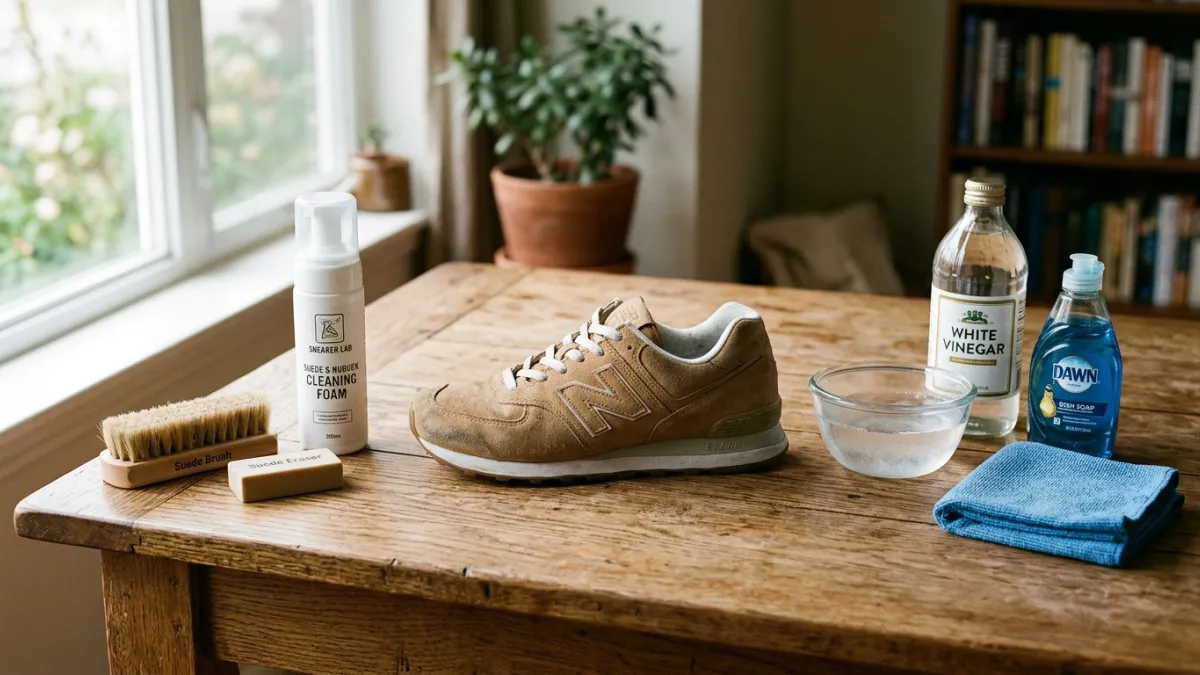
When selecting a method to restore dirty suede, cleaners generally choose between purpose-built commercial kits (such as Reshoevn8r, Jason Markk, or Angelus) and household remedies like white vinegar, rubbing alcohol, or cornstarch. Commercial suede kits are engineered specifically around dry and low-moisture cleaning technology, prioritizing mechanical friction over heavy chemical emulsification.
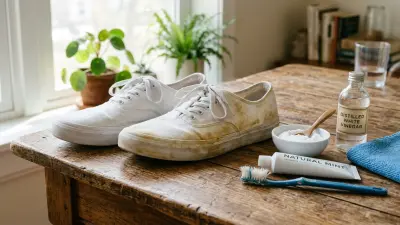
Homemade solutions rely on readily available items found around the kitchen or bathroom. Distilled white vinegar diluted 1:1 with distilled water acts as a mild acid that breaks down salt stains and water spots without harsh surfactants. Rubbing alcohol (70% isopropyl) evaporates rapidly, making it safer than tap water for oily residue, while cornstarch works through capillary absorption to draw fresh grease out of the nap before it sets.
Cleaner's tip: Never use a standard nylon shoe brush on delicate suede. Nylon bristles are far too coarse and will shred the delicate nap, leaving fuzzy patches that can never be smoothed out again. Always use a soft horsehair brush for dusting and a natural rubber crepe brush to restore nap movement, reserving stiff brass brushes strictly for rugged work-boot suede.
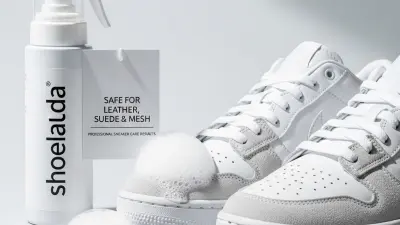
Jason Markk Suede Essentials Bundle, 4-Piece Shoe & Sneaker Care Set, 4oz Deep Cleaning Solution, Two Brushes, & Suede Stain Eraser, Safe for Leather, Nubuck, Cotton, Knits, and More

| Feature / Metric | Commercial Suede Cleaning Kit | DIY Homemade Solution |
|---|---|---|
| Primary Cleaning Mechanism | Dry friction (Eraser & Crepe Brush) + foam dry-cleaner | Liquid solvent (Vinegar/Alcohol) or dry absorbent (Cornstarch) |
| Average Price Range (2026) | $15 - $30 per kit | $2 - $5 (using house supplies) |
| Risk of Water Staining / Water Spots | Extremely Low (95% dry process) | Moderate to High (if over-saturated) |
| Nap Texture Preservation | Excellent (Restores original velvet nap) | Fair (Requires separate brushing to un-mat fibers) |
| Best Used For | Scuffs, dry dirt, daily maintenance, delicate dyes | Emergency spot treatment, oil spills, salt stain removal |
Step-by-Step Guide: How to Clean Suede Safely
Restoring suede demands patience and a structured workflow. Jumping straight into liquid spot treatment without proper surface prep will only push surface grime deeper into the hide matrix. Follow this field-tested procedure to maintain nap integrity and maximize soil removal.
- Dry Surface Dusting: Insert shoe trees or stuff the sneaker toe box with microfiber towels to maintain shape. Use a soft horsehair brush working in a single direction to remove loose surface dirt, dust, and dry mud.
- Gently Rub Out Scuffs: Take a dedicated suede eraser (or a clean vinyl pencil eraser) and apply medium pressure over scuffs, dark marks, and ground-in dirt. The eraser crumbles away, trapping contaminants within the rubber bits. Sweep away the residue with your horsehair brush.
- Target Stubborn Liquid Stains: If dark spots remain, lightly dampen the corner of a clean, high-GSM microfiber cloth (300 to 350 GSM) with a 50/50 mix of distilled white vinegar and distilled water. Dab—do not scrub—the stain gently to lift the mark without saturating the surrounding area.
- Treat Oil and Grease Spills: For fresh grease spots, sprinkle a generous layer of pure cornstarch onto the zone. Allow it to sit undisturbed for 6 to 8 hours to draw out the lipids, then brush it away completely using a dry brush.
- Dry and Revive the Nap: Allow the sneaker to air-dry naturally away from direct sunlight and heat sources for at least 4 hours. Once completely dry, use a natural rubber crepe brush in gentle circular motions to un-mat the crushed fibers and bring back the original velvet nap.
Safety Warnings and Preventative Care
Preventative protection is far more effective than heavy post-stain correction when dealing with fine suede hides. After cleaning, applying a high-grade fluoropolymer or silicone-free water and stain repellent spray creates an invisible hydrophobic barrier. This shield causes water droplets to bead up and roll off the surface rather than soaking into the delicate hide.
Avoid harsh chemical compounds at all costs. Never apply household chlorine bleach, hydrogen peroxide, heavy-duty degreasers, or standard multi-purpose cleaners to suede. These alkaline chemicals ruin leather tannins, induce severe discoloration, and rot synthetic stitching threads over time. Always test any liquid spray or vinegar mixture on an inconspicuous area, such as the inner side of the tongue, before treating the entire shoe upper.
Proper storage is equally critical for long-term suede health. Store suede sneakers in breathable cotton dust bags inside a climate-controlled room. Placing suede shoes inside plastic bins creates trapped humidity, which invites mildew growth and stiffens the leather nap.
Final Recommendation: Which Solution Should You Choose?
If you own premium suede sneakers, investing in a dedicated sneaker cleaning kit equipped with a suede eraser and a natural crepe brush is unequivocally the best choice. The dry mechanical cleaning approach eliminates moisture damage while perfectly preserving the velvet texture of fine hides. However, if you are caught dealing with an emergency liquid spill or salt ring stain on budget footwear, a minimal amount of diluted white vinegar or cornstarch used with a high-GSM microfiber cloth serves as a dependable, low-cost secondary option.
Crep Protect Suede Reviver & Ultimate Scuff Eraser - Sneaker Cleaner for Suede and Nubuck Shoes

Frequently Asked Questions
Can I use micellar water to clean suede sneakers?
Micellar water can be used sparingly for small emergency spot cleaning on light-colored suede, but it is not recommended for routine care. Because micellar water contains oil-attracting surfactants dissolved in water, over-saturating the shoe can leave water rings or cause darker dyes to bleed.
What is the difference between a crepe brush and a horsehair brush?
A horsehair brush features soft, fine animal bristles designed to sweep away loose surface dust without scratching delicate materials. A crepe brush uses folded, sticky rubber ribbons that grab and lift matted suede fibers while pulling out embedded dirt through mild surface friction.
How often should I apply protective spray to suede sneakers?
You should apply a breathable suede protector spray every 4 to 6 weeks for sneakers worn regularly in urban environments. If your sneakers are exposed to light rain or winter road salt, reapply the hydrophobic spray immediately after performing a routine dry cleaning.
Sources
- Wikipedia: Suede Leather Processing and Properties
- Leather Chemists and Technologists Association: Leather Maintenance Standards
Looking for the Right Tools?
Check out our verified Top Cleaning Tools & Supplies on Amazon.
As an Amazon Associate, we earn from qualifying purchases.