Disclosure: As an Amazon Associate, we earn from qualifying purchases.
In my twenty-plus years of testing and repairing vacuum cleaners for both commercial accounts and residential clients, I have noticed one issue coming up more than any other: standard suction complaints almost always trace back to clogged or improper filtration. People buy high-powered machines rating at 150 to 220 Air Watts (AW) or boasting 20,000 Pa of suction strength, only to suffer poor pickup within six months because they treat their filter system as an afterthought. Understanding the mechanics behind filter media—specifically HEPA, foam, and woven cloth—is the quickest way to protect your vacuum’s motor and maintain a dust-free home.
Quick answer: True HEPA filters capture 99.97% of particles down to 0.3 microns, making them essential for allergy sufferers, while washable foam filters excel as secondary motor protectors against coarse debris, and durable cloth filters serve high-capacity commercial bagless setups. For most households, a combination of a washable pre-motor foam pad and a post-motor HEPA filter delivers the perfect balance of airflow, motor defense, and microscopic air purification.
Understanding Vacuum Cleaner Filtration Systems
A vacuum cleaner is essentially an air pump that relies on continuous differential pressure. Dust-laden air rushes through the floor nozzle, travels up the wand, passes through one or more stages of filtration, and exits through the exhaust port. If the filtration barrier is too weak, microscopic dust blows right back into your room. Conversely, if a filter blocks airflow completely or becomes choked with fine dust, the motor overheats and suction drops to zero.
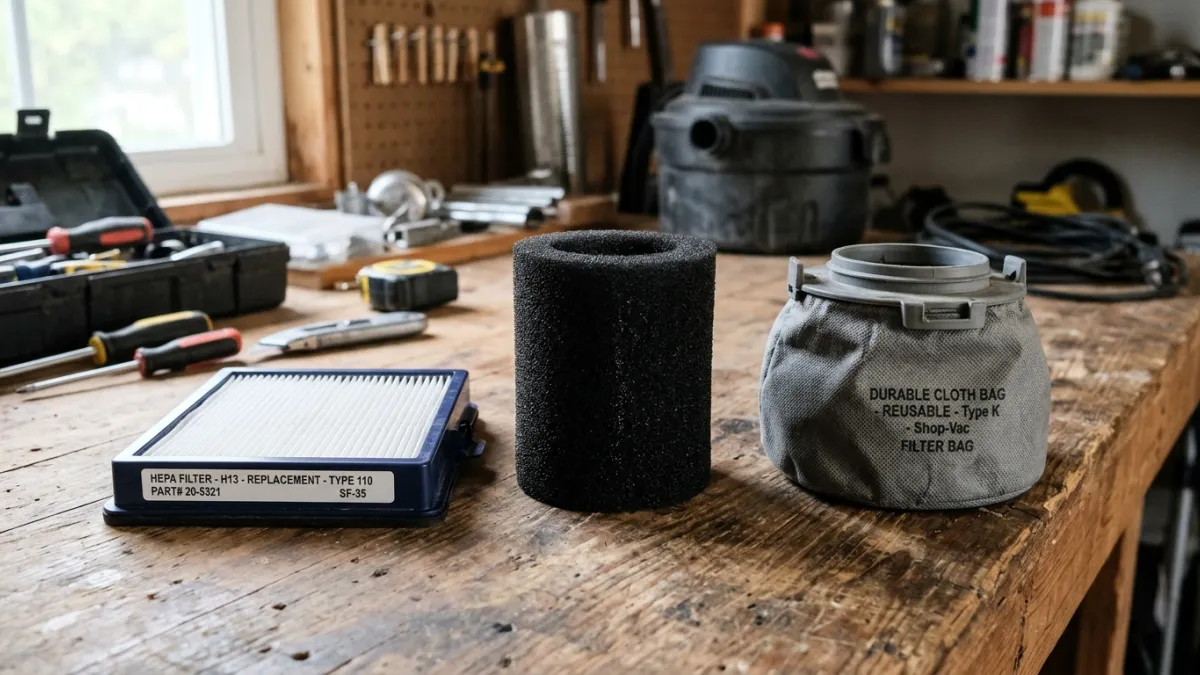
Modern vacuum architectures, including popular uprights and canisters from brands like Dyson, Shark, Bissell, and Hoover, rely on multi-stage filtration systems. Stage one typically separates heavy debris using cyclonic action or a primary cloth filter bag. Stage two uses a pre-motor filter—frequently made of dense foam—to trap hair, sand, and large lint before air enters the motor chamber. Stage three acts as the final exhaust barrier, utilizing high-density media such as HEPA to prevent sub-micron dust, pet dander, and pollen from circulating back into your indoor living spaces.
Choosing the correct combination of filter media directly impacts both short-term performance and the operational lifespan of your machine. A cheap machine with poor filtration will degrade quickly under heavy work, while a well-filtered unit running at moderate power can last a decade with simple, routine maintenance.
Cleaner's tip: Never put a washed foam or cloth filter back into your vacuum while it is even slightly damp. Residual moisture trapped inside a dense sponge will draw microscopic dust straight into the fibers, forming a cement-like crust within minutes of turning the motor back on. Worse, that damp air passes directly through the motor windings, causing metallic corrosion, premature bearing failure, and unpleasant sour odors. Always allow washed filters to air dry completely for at least 24 to 48 hours away from direct heat sources before reassembling your unit.
HEPA Filters: Maximum Air Purification
High-Efficiency Particulate Air (HEPA) filters represent the absolute standard in residential and industrial air cleaning. To qualify as a True HEPA filter under U.S. DOE and ASME standards, the media must capture at least 99.97% of airborne particles measuring 0.3 microns in diameter. This precise size parameter is known as the Most Penetrating Particle Size (MPPS); particles both larger and smaller than 0.3 microns are actually trapped with even higher efficiency due to impaction, interception, and Brownian motion.
Rainbow Genuine TRUE H13 Medical Grade HEPA Filter

The construction of a HEPA filter consists of dense, randomly arranged fiberglass or synthetic fiber mats folded into deep pleats. These pleats dramatically increase the total surface area of the filter media, allowing high volumes of air to pass through despite the tight weave. Sealed HEPA systems are widely used by allergic individuals and pet owners facing persistent dander, dust mites, mold spores, and fine soot residue.
However, HEPA filters do present operational tradeoffs. Because the dense pleats create higher initial airflow resistance (static pressure drop), your vacuum requires a powerful motor to pull air through efficiently. Additionally, while many synthetic HEPA-style filters are advertised as washable, genuine glass-fiber HEPA filters are usually strictly single-use and require replacement every 6 to 12 months, costing anywhere between $15 and $45 depending on the vacuum model.
Foam Filters: Washable and Durable Pre-Motor Protection
Foam filters are lightweight, low-cost porous sponges engineered primarily to serve as pre-motor barriers. Manufactured from open-cell polyurethane foam, these filters feature varied porosity ratings, typically measured in PPI (Pores Per Inch). Standard vacuum foam filters range between 30 PPI for open coarse protection and 60 PPI for finer particle trapping. Their primary job is to catch medium-to-large debris like pet hair, carpet fibers, and grit before it can strike the vacuum's high-speed fan blades.
The standout advantage of foam media is washability and endless reusability. A quality foam pad can withstand dozens of wash cycles under cool tap water without deteriorating or losing its structural elasticity. Many budget and mid-range bagless vacuums combine a foam disk with a thin felt backing layer to achieve balanced dual-stage filtration without restricting air volume.
Despite their physical durability, foam filters fall short when it comes to fine dust containment. Microscopic allergen particles, microscopic mold spores, and ultra-fine plaster dust pass straight through open-cell foam structures. If used as the sole filter in a vacuum, fine dust will be ejected through the exhaust port, settling across your furniture and settling in your lungs.
Cloth Filters: High Capacity and Commercial Durability
Cloth filters are the heavy-duty workhorses of commercial, shop, and traditional bagless vacuum designs. Constructed from woven cotton, heavy polyester blends, or non-woven synthetic fabrics, cloth filters form a physical barrier capable of holding large volumes of coarse grit, dry dirt, and construction debris. They are common in commercial backpack vacuums, garage shop vacuums, and vintage heavy-duty uprights.
Cloth media shines when dealing with high-volume, bulk vacuuming tasks. Unlike delicate pleated paper or fiberglass, a sturdy cloth filter bag or shroud can be vigorously shaken, beaten out over a trash bin, washed in warm soapy water, and reinstalled without ripping. Their high resistance to physical abrasion makes them cost-effective for janitorial crews and jobsite cleanup operations.
However, basic woven cloth filters lack microscopic trapping power. While high-grade non-woven synthetic cloth options exist, standard woven fabrics allow fine particles below 5 to 10 microns to escape through the weave gaps. In residential settings, relying solely on a cloth filter often leads to visible dust clouds during heavy vacuuming, requiring frequent secondary wiping of hard surfaces.
IZ862H UZ565H Replacement Filters for Shark Stratos Cordless Vacuum

Filter Performance and Specifications Comparison
To help you select the ideal configuration for your home or cleaning business, the following table compares key technical parameters across HEPA, foam, and cloth filter types based on standard industry metrics:
| Filter Type | Filtration Efficiency | Washable / Reusable | Average Lifespan | Airflow Resistance | Estimated Replacement Cost (USD) |
|---|---|---|---|---|---|
| True HEPA | 99.97% @ 0.3 microns | No (mostly single-use) | 6 - 12 Months | High | $15 - $45 |
| Polyurethane Foam | 70% - 85% @ 5+ microns | Yes (water washable) | 12 - 24 Months | Low to Moderate | $5 - $15 |
| Woven Cloth | 60% - 80% @ 10+ microns | Yes (shake out / hand wash) | 24 - 36+ Months | Low | $10 - $25 |
How to Maintain Vacuum Filters for Maximum Suction
Consistent maintenance is the single most effective action you can take to prolong motor life and preserve maximum suction power. A clogged filter increases motor load, raising internal operating temperatures by up to 30 degrees Fahrenheit and dramatically increasing electrical draw. Follow these practical steps to keep your machine operating at peak performance:
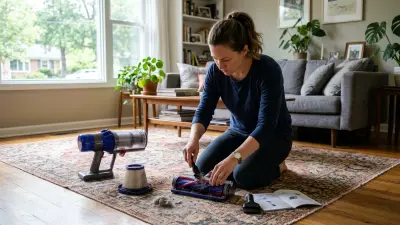
- Inspect Pre-Motor Filters Monthly: Check your foam or felt pre-motor pads every 30 days. Rinse them under tepid tap water without harsh chemicals until the runoff stays clear. Gently squeeze excess water out—do not wring or twist foam, as this tears open the cellular matrix.
- Tap Out Dry Debris: For pleated HEPA filters, gently tap the plastic outer casing against the inside of a trash container to dislodge caked dust layers. Never rub pleated filter paper with a stiff brush or wash non-washable HEPA elements, as water ruins the electrostatic charge and fibers.
- Deep Clean Cloth Filters: Shake out cloth filter bags outdoors to remove heavy dirt deposits. Hand wash thoroughly using warm water mixed with a mild pH-neutral detergent, rinse completely, and let air-dry flat for 24 hours.
- Check Seal Gaskets: Rubber or silicone seals surrounding HEPA frames must remain soft and intact. Cracked or missing gaskets create dirty air bypass, rendering your high-efficiency filter useless.
If you or your family members suffer from environmental allergies, asthma, or keep multiple pets indoors, invest in a completely sealed vacuum system featuring a post-motor True HEPA filter combined with a washable pre-motor foam disc. For workshop cleanups, garage maintenance, or heavy commercial janitorial jobs, prioritize high-capacity cloth pre-filters backed by durable foam protection to handle bulk dust without ballooning your maintenance costs.
Frequently Asked Questions
Can I wash a HEPA filter with water?
Reusable Washable Universal Vacuum Cleaner Cloth Dust Bag ,

Only wash a HEPA filter if it is explicitly labeled as "washable" by the manufacturer. Standard H13 or ASME True HEPA filters consist of delicate glass microfibers that degrade, swell, and lose their static charge when exposed to water, permanently reducing particle capture efficiency.
How often should I clean or replace my vacuum foam filter?
You should rinse your pre-motor foam filter once every 30 days under normal residential use. Replace the foam insert entirely every 12 to 18 months, or as soon as you notice physical degradation, crumbling edges, or permanent staining that restricts airflow.
Why does my vacuum smell bad even after I cleaned the filter?
Persistent odors typically stem from re-installing damp foam or cloth filters before they have thoroughly dried, causing mold growth inside the housing. Odors can also result from fine organic matter trapped deep within motor housings or non-washable HEPA pleats, requiring filter replacement.
Does a better vacuum filter reduce suction power?
Dense filters like HEPA create higher initial static resistance compared to loose foam or woven cloth. However, modern vacuum motors are designed to compensate for this pressure drop. Suction only degrades significantly when the filter pleats become saturated with uncleaned dust.
Sources
- U.S. Environmental Protection Agency (EPA) - Guide to HEPA Filters
- NIOSH / CDC - Air Filtration Engineering Guidelines
- Wikipedia - HEPA Filter Standards and Mechanics
Looking for the Right Tools?
Check out our verified Top Cleaning Tools & Supplies on Amazon.
As an Amazon Associate, we earn from qualifying purchases.