Disclosure: As an Amazon Associate, we earn from qualifying purchases.
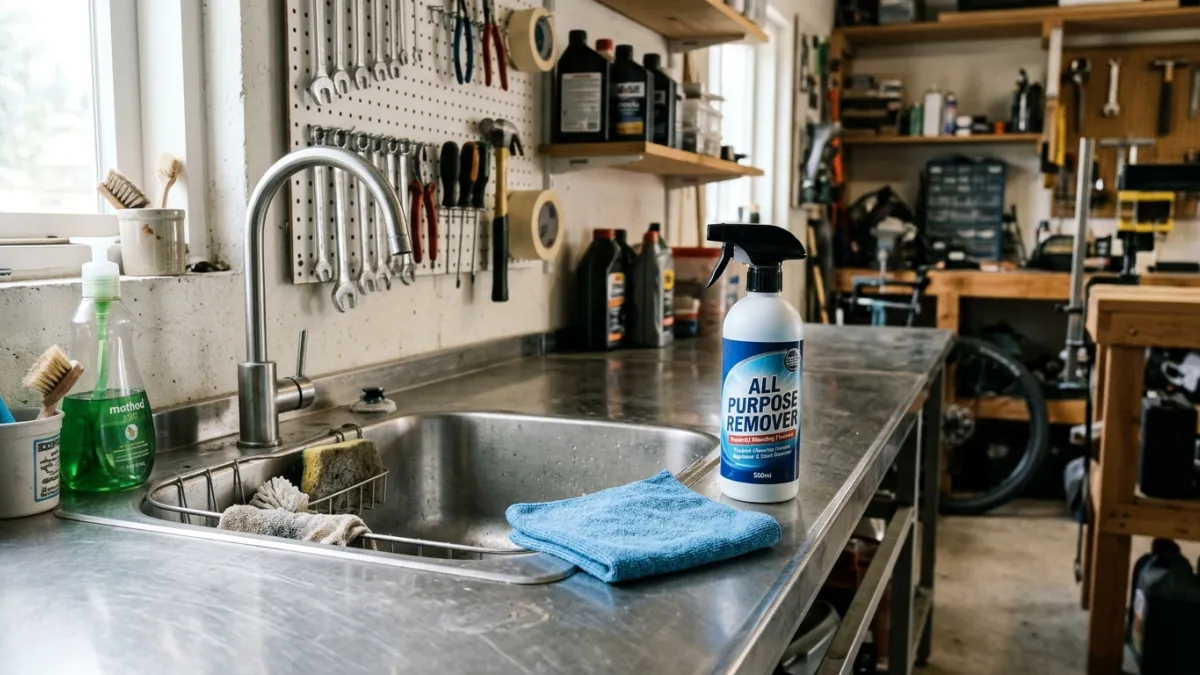
Oops! Multi-Purpose Remover is a heavy-duty solvent-based formula designed to dissolve tough, set-in residues such as dried latex paint, adhesive stickers, permanent marker, tree sap, asphalt tar, and heavy grease. Formulated with fast-acting solvent compounds including acetone and toluene in traditional formulations or citrus/alcohol bases in mild variants, it weakens the chemical bonds of stubborn residues within 1 to 5 minutes so they can be wiped away without damaging underlying hard surfaces like glass, sealed metal, and unpainted wood. However, because of its solvent power, proper surface testing and adequate ventilation are essential to prevent damage to soft plastics or delicate finishes.
What Makes Oops All Purpose Remover Effective?
Unlike water-based all-purpose cleaners or enzyme-based stain removers that rely on surfactant tension or biological breakdown, Oops! operates as a solvent-blend dissolver. When applied to latex paint splatter, sticky price-tag adhesive, or ground-in grease, the liquid penetrates the polymer matrix of the mess. Within seconds, the hardened film softens, liquefies, and releases its grip from the non-porous or semi-porous base material.
According to technical data sheets, the standard solvent blend targets sticky resins that water and detergent alone cannot dissolve. This makes it a go-to chemical tool for post-renovation cleanup, painter overspray correction, auto detailing prep, and thrifted item restoration.
Surfaces You Can Clean and Surfaces to Avoid
Because solvent cleaners react differently depending on the surface substrate, identifying where to safely apply Oops! prevents accidental discoloration or material melting.
Safe and Recommended Surfaces
- Glass and Windows: Ideal for removing window paint, leftover tint adhesive, and price tags.
- Unfinished or Cured Hardwood: Removes paint spills, tape residue, and scuffs on sealed wood floors or unfinished lumber.
- Metals: Safe on stainless steel, aluminum, brass, and copper for grease, tar, and glue removal.
- Ceramic & Porcelain Tile: Works quickly on tile surfaces to remove grout haze, adhesive, or paint drops.
- Colorfast Carpets & Rugs: Can be used sparingly to blot out paint or marker drips, provided colorfastness is tested first.
Max Strip All Purpose Paint Remover & Drip Cleaner, Multi-Surface, 22 oz

Surfaces Requiring Extreme Caution
- Freshly Painted Surfaces: The solvent will strip uncured or standard wall paint just as easily as the stain itself.
- Certain Plastics & Acrylics: Solvents like acetone can cloud, etch, or soften clear plastics, polycarbonate, and polystyrene.
- Fine Silk, Wool, or Rayon: High-solvent concentrations can weaken delicate fibers or cause bleeding on unsealed dyes.
Step-by-Step Guide to Removing Paint, Glue, and Ink
Following a precise, methodical cleaning protocol ensures maximum stain removal while protecting surrounding surface finishes.
- Perform a Spot Test: Apply a small drop of Oops! to an inconspicuous area (such as the backside of a chair leg or inside a carpet corner). Wait 2 minutes and wipe clean. If no color fading, melting, or surface dulness occurs, proceed with the full cleaning.
- Ventilate the Area: Open nearby windows or run an exhaust fan to maintain active airflow while handling solvent vapors.
- Apply Directly to the Residue: Pour or spray a small amount of Oops! onto a clean microfiber cloth or directly onto the target stain. Avoid oversaturating large areas unnecessarily.
- Allow Dwell Time: Let the solvent rest on the residue for 1 to 3 minutes. For thicker dried latex paint, allow up to 5 minutes so the solvent can fully break through the top coat.
- Agitate and Wipe: Using a soft microfiber towel or a non-scratch plastic scraper, gently work from the outer edges of the stain toward the center to prevent spreading the dissolved mess.
- Rinse and Neutralize: Once the stain is completely removed, clean the treated spot with warm water and a mild dish soap solution to remove any remaining chemical residue, then wipe completely dry.
Oops Multi-Purpose Remover Comparison Table
Understanding how Oops! compares to other commercial removers helps you pick the right tool for your specific cleaning challenge.
| Cleaner Type | Primary Active Base | Best Used For | Dwell Time | Surface Safety Level |
|---|---|---|---|---|
| Oops! Multi-Purpose Remover | Solvent Blend (Acetone / Toluene / Hydrocarbons) | Dried latex paint, permanent marker, tar, heavy adhesives | 1 – 5 Minutes | Moderate (Avoid delicate plastics & fresh paint) |
| Citrus-Based Adhesive Removers | d-Limonene (Citrus Oils) | Sticker residue, wax, crayon, light tape glue | 5 – 15 Minutes | High (Safe on most cured finishes & hard plastics) |
| Enzyme-Based Cleaners | Biological Enzymes & Surfactants | Organic stains, pet messes, wine, food spills | 10 – 30 Minutes | Very High (Safe on fabrics, upholstery & carpet) |
Pros and Cons of Using Oops Remover
FOSHIO Plastic Razor Blades 200PCS Double Edged 1.5 Inch Suit for Razor Blade Scraper, Plastic Scraper for Remove Decals Stickers Adhesive Label and Glass Clean, Orange

Pros
- Dissolves fully cured latex paint splatter that standard water-based cleaners cannot touch.
- Works rapidly within minutes, reducing mechanical scrubbing effort.
- Versatile performance across wood, metal, glass, tile, and stone.
- Cuts through tough industrial residues like tar, tree sap, and silicone film.
Cons
- Strong chemical odor requires adequate room ventilation during use.
- Can damage painted walls, clear plastic lenses, or varnish if left unmonitored.
- Requires a secondary rinse with soap and water to clear residual solvent film.
Safety and Storage Precautions
Because standard Oops! products contain volatile organic solvents, safety guidelines published by safety data sheets should always be followed:
- Wear nitrile or solvent-resistant gloves to protect skin from drying or chemical irritation.
- Keep away from open flames, pilot lights, or electrical sparks, as solvent vapors are flammable.
- Never mix solvent removers with bleach, ammonia, or other household chemicals.
- Store the bottle securely capped in a cool, dry area away from direct sunlight and out of reach of children and pets.
Frequently Asked Questions
200 PCS Professional Foam Cleaning Swab Sticks, Dust-Free Cleaning Sponge Tip Swabs Printer Heads, Scanners, Camera Lenses, Chip Hard Disk Industries, Optical Lenses and Optical Equipment

Can Oops All Purpose Remover take dried paint out of carpet?
Yes, Oops! can lift dried latex paint spills from colorfast synthetic carpets. Always perform a hidden spot test first. Apply a small amount to a clean white rag, gently dab the painted carpet fibers from the outside edge inward, and immediately rinse the area with warm soapy water to stop the solvent action once the paint lifts.
Will Oops! damage my car's exterior paint?
Caution is advised on automotive paint. While cured clear coats can tolerate brief spot applications for tar or tree sap removal, leaving solvents on vehicle paint for too long or rubbing aggressively can haze or strip the clear coat. Always test on an hidden spot, use minimal liquid, and rinse thoroughly immediately after use.
How does Oops! differ from standard Goo Gone?
Goo Gone relies primarily on citrus oils (d-limonene) and petroleum distillates, which excel at sticky adhesives and wax but act slowly on paint. Oops! utilizes stronger solvent compounds designed specifically to break down harder synthetic films like cured latex paint and permanent marker in addition to heavy glue.