Quick answer: Advance carpet cleaners are top-tier commercial extractors designed for high-productivity facility care. The compact ES300XP excels in tight office corridors, the ES400 XLP offers balanced self-propelled production for medium facilities, and the ES4000 ride-on delivers unmatched speed for expansive convention centers, restoring heavily soiled carpets with quick 1 to 4-hour dry times.
Operational Performance and Core Engineering Features
Commercial carpet extraction demands a precise balance of mechanical agitation, solution pressure, and high-volume moisture recovery. Advance engineers their equipment around heavy-duty 3-stage vacuum motors capable of delivering over 120 inches of waterlift suction. This intense negative pressure pulls deeply embedded grit, liquid spills, and greasy residues straight from the backing layer without delaminating the carpet. The high-impact rotomolded polyethylene housing dampens motor noise while protecting internal components from accidental impacts against door frames and concrete pillars.
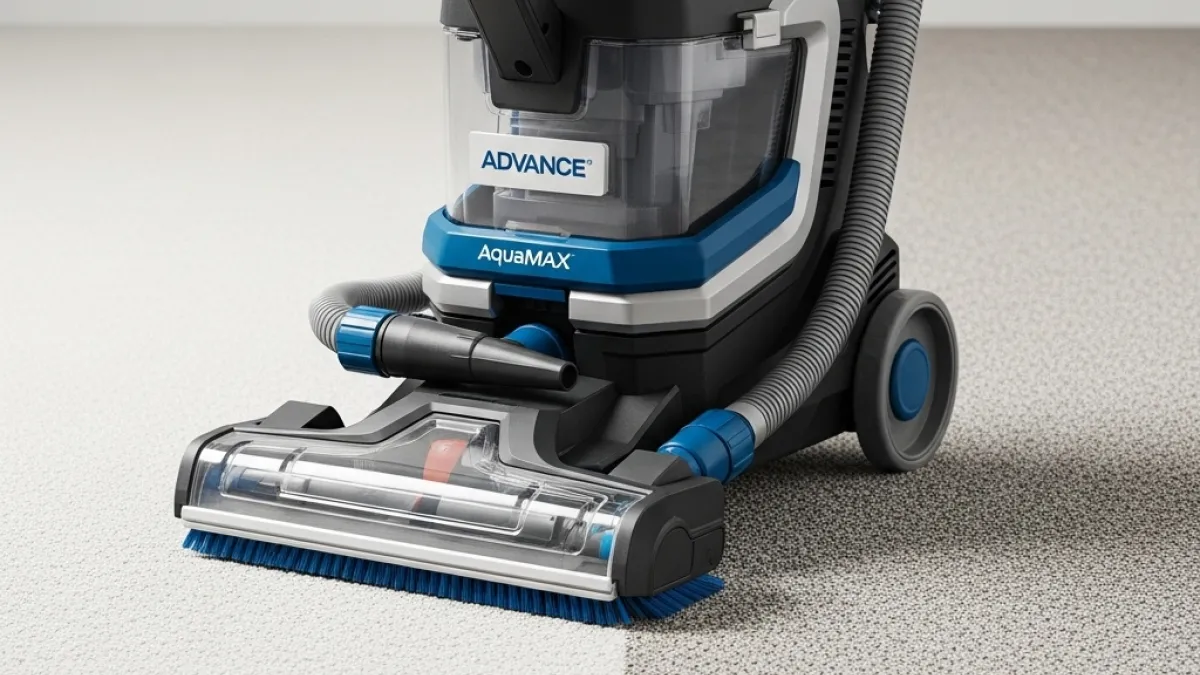
A standout innovation across the modern Advance extractor line is the dual-cleaning system, which seamlessly switches between low-moisture interim cleaning and deep restorative hot-water extraction. Operating in interim mode applies an EPA-recognized chemical encapsulation spray at low pressure (around 30 to 60 PSI) alongside active cylindrical brush scrubbing. This process uses minimal water, allowing high-traffic hallways and hotel lobbies to dry in under 60 minutes. When deep cleaning is required, switching to restorative mode engages higher pump pressures up to 100 PSI, flooding the fibers to suspend soil before pulling dirty recovery water into isolated tanks.
Cleaner's tip: Always add 2 to 3 ounces of a high-quality liquid defoamer directly into the recovery tank—never the solution tank—before starting a deep restoration job. Commercial carpets often retain dried shampoo residues from previous cleaning crews. If that old soap foam enters the 3-stage vacuum motor housing, it will quickly strip motor bearing lubrication and cause a $400 vacuum motor failure within months.
Chemical dosing accuracy also plays a major role in overall cleaning quality and surface protection. Integrated metering systems allow operators to precisely dilute specialized carpet cleaning chemicals, preventing sticky surfactant residues that cause rapid re-soiling. When tackling stubborn greasy spots, applying an alkaline pre-spray with a pH between 8.5 and 9.5 and allowing a full 10-minute dwell time dramatically improves soil recovery without damaging sensitive nylon or polypropylene synthetic fibers.
Model Breakdown: Advance ES300XP, ES400 XLP, and ES4000
Choosing the right commercial unit depends entirely on total square footage, doorway dimensions, and available storage space. Advance offers distinct chassis sizes to cover everything from narrow tenant suites to multi-acre airport terminals. Comparing their core technical specifications reveals how each unit targets specific labor and production goals.
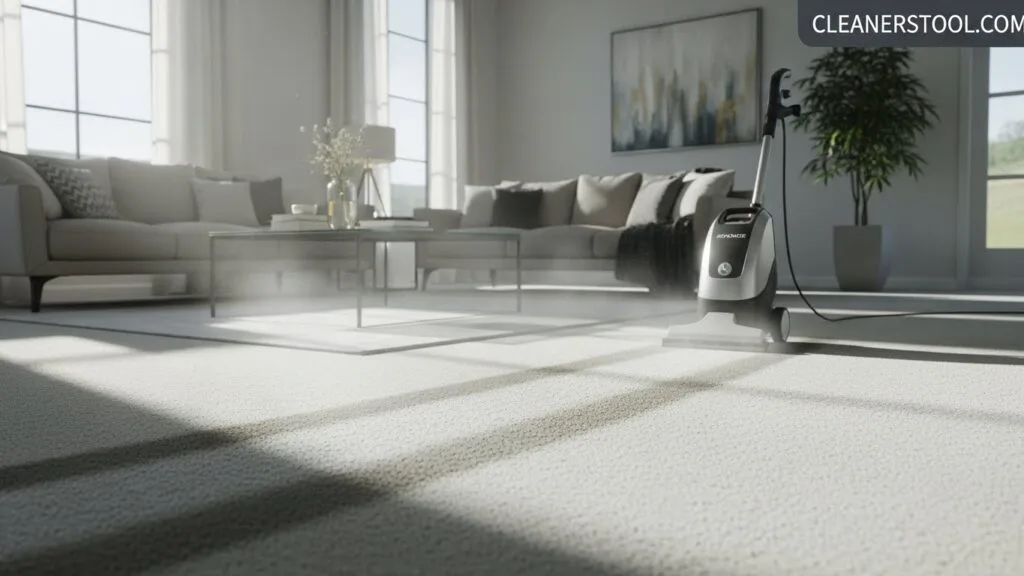
The Advance ES300XP serves as the nimble workhorse of the lineup. Featuring a 16-inch cleaning path and a 9-gallon solution tank, it fits easily inside standard commercial elevators and narrow office cubicle aisles. Its ergonomic push-forward design minimizes lower back fatigue, allowing a single operator to cover up to 2,000 square feet per hour during restorative extraction jobs without feeling physically drained at the end of a shift.
Stepping up to the Advance ES400 XLP carpet extractor introduces a wider 18-inch cleaning path and a larger 12-gallon capacity tank, paired with self-propelled drive controls. The ES400 XLP is engineered for medium-sized facilities like K-12 schools, medical clinics, and corporate headquarters. Its adjustable brush pressure setting enables aggressive pile lifting on plush commercial cut-pile carpeting while easily easing up when working on dense loop-pile carpet tiles.
For massive facilities, the Advance ES4000 ride-on extractor completely transforms labor dynamics. Boasting an expansive 28-inch dual-brush cleaning head and massive 28-gallon recovery tanks, this ride-on machine enables an operator to clean up to 30,000 square feet per hour in interim mode. By drastically reducing non-productive travel time to dump and refill solution tanks, large contract cleaning companies routinely see labor cost reductions exceeding 50% compared to traditional walk-behind commercial carpet extractors.
| Model | Cleaning Path | Tank Capacity | Pump Pressure (PSI) | Vacuum Suction | Coverage Rate (sq ft/hr) |
|---|---|---|---|---|---|
| Advance ES300XP | 16 inches | 9 Gal Solution / 7 Gal Recovery | 60 PSI | 120 in Waterlift | Up to 2,000 (Restorative) |
| Advance ES400 XLP | 18 inches | 12 Gal Solution / 10 Gal Recovery | 60–100 PSI | 120 in Waterlift | Up to 4,500 (Interim) |
| Advance ES4000 | 28 inches | 28 Gal Solution / 28 Gal Recovery | Up to 400 PSI (Pre-spray) | Dual 3-Stage Motors | Up to 30,000 (Interim) |
Essential Maintenance, Manuals, and Replacement Parts
Preventative maintenance determines whether a commercial extractor lasts 3 years or 15 years in active service. High-volume extraction places severe stress on diaphragm pumps, squeegee blades, and electrical connections. Referencing the official Advance ES300 XP parts manual provides detailed schematics for ordering original manufacturer components, preventing costly installation mismatches that occur with low-grade aftermarket copies.
Daily post-job maintenance routines are simple but essential for avoiding unexpected breakdowns on the job site. After completing a job, flush the solution lines with clean warm water (not exceeding 130°F / 54°C) to prevent mineral buildup and dried chemical crystal blockage inside spray tips. Clean the clear plastic recovery lid, spray nozzles, and stainless-steel intake mesh filters to maintain peak airflow and vacuum performance.
- Cylindrical Brushes: Inspect weekly for wrapped string or carpet fibers. Replace brush strips when bristle height drops below 0.5 inches to preserve carpet agitation.
- Vacuum Shoes and Seals: Inspect neoprene shoes for nicks or warp patterns that break suction against the carpet pile.
- Solution Filters: Clean inline brass or plastic strainers after every 20 hours of operation to maintain steady pump output pressure.
- Battery Maintenance (ES4000): Inspect AGM or wet-cell battery terminal connections for corrosion and follow correct charge cycles to prevent premature cell failure.
Keeping spare high-wear replacement parts on hand—such as quick-disconnect spray tips, vacuum shoe seals, and drive belts—ensures your crew never loses an entire workday over a minor $15 component failure. Proper routine storage in a climate-controlled room protects internal pump seals from freezing and cracking during cold winter months.
Hands-On Results: Cleaning Efficiency, Drying Times, and ROI
Real-world testing on high-traffic commercial carpets shows impressive performance across various soil types. In tests featuring heavy dark shoe-scuff trackage, dried beverage spills, and embedded particulate soil, Advance machines restored fiber appearance in a single forward-and-backward pass. The high-RPM cylindrical brush lifts flattened carpet pile while loosening deeply trapped abrasive sand that accelerates fiber wear.
Moisture extraction performance is exceptionally reliable. Cheap extractors leave carpets saturated, creating ideal breeding grounds for mold and mildew while damaging subfloors. Thanks to high-efficiency laminar flow vacuum shoes, Advance extractors recover up to 88% of applied liquid during restorative passes. In standard 70°F (21°C) indoor environments with normal humidity, carpets cleaned in restorative mode dry completely in 3 to 4 hours. In interim low-moisture mode, drying takes just 30 to 60 minutes, eliminating downtime for busy facility operators.
From an economic perspective, the higher initial purchase price of an Advance unit ($3,000 to over $20,000 depending on specification) delivers clear long-term returns. Reduced labor hours, lower chemical consumption via accurate dosing, and extended carpet lifespan offset the initial investment within 6 to 12 months for active commercial cleaning operations.
Recommendation
For small-to-medium janitorial operations and contract cleaners handling retail stores, corporate offices, and schools, the Advance ES400 XLP provides the ideal sweet spot of self-propelled ease, 18-inch cleaning width, and versatile dual-mode performance. If you manage massive convention venues, airport corridors, or multi-story healthcare facilities, investing in the ride-on Advance ES4000 will deliver massive labor savings and unmatched daily coverage speeds.
Frequently Asked Questions
Can I use hot water in my Advance carpet extractor?
Yes, you can fill the solution tank with warm or hot tap water up to 130°F (54°C). Avoid using boiling water, as extreme thermal expansion can damage internal pump seals, plastic fittings, and solution lines.
How often should I clean carpets with interim encapsulation versus restorative extraction?
For typical commercial office settings, perform interim low-moisture cleaning monthly or quarterly to maintain carpet appearance and control high-traffic soil. Reserve deep restorative hot-water extraction for semi-annual or annual deep-cleaning cycles to pull out deeply embedded soil from the carpet backing.
Why is my Advance carpet cleaner leaving excess water on the carpet?
Excess moisture usually points to a clogged vacuum intake screen, damaged or misaligned neoprene vacuum shoe seals, a full recovery tank triggering the automatic float shut-off, or worn vacuum motor carbon brushes that reduce suction performance.
Where can I download the Advance ES300 XP parts manual?
Official parts manuals, wiring diagrams, and technical service sheets can be downloaded directly from the official Nilfisk-Advance technical documentation portal or requested through authorized equipment service centers using your machine's exact serial number.