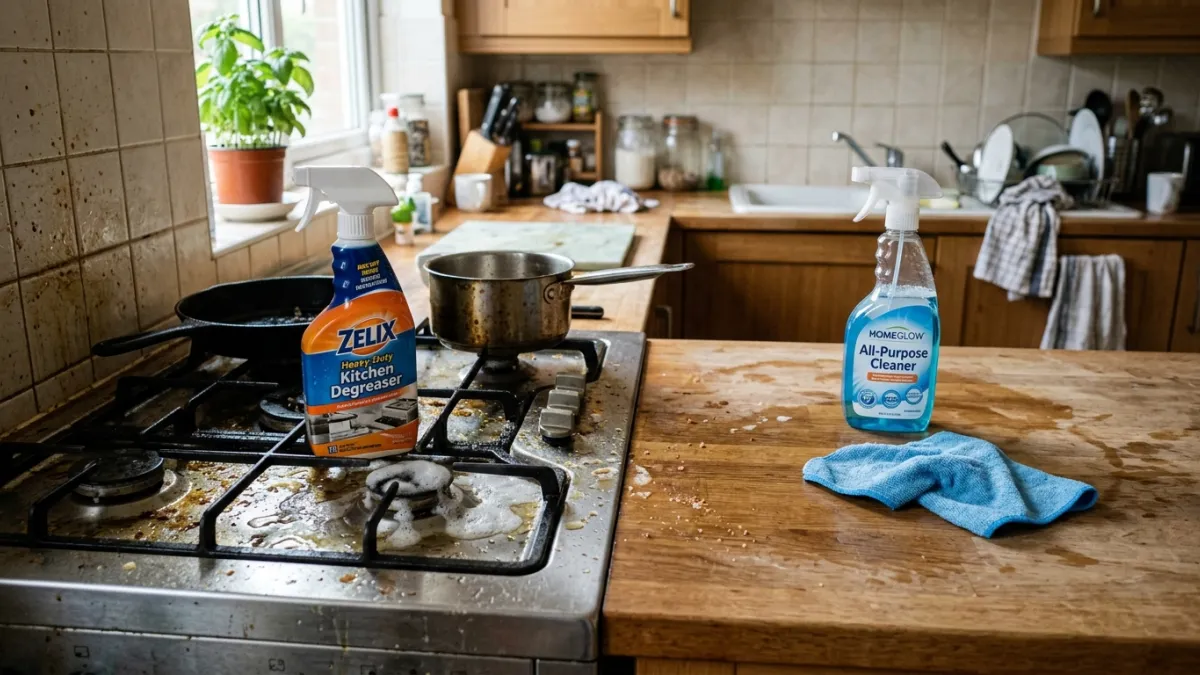
Quick answer: While standard neutral all-purpose cleaners (pH 6–8) excel at daily dust, food spills, and light water marks, only alkaline heavy-duty degreasers (pH 11–13) can chemically breakdown (saponify) thick, polymerized cooking oils. Use an all-purpose cleaner for daily wiping, but switch to a specialized solvent-based or alkaline degreaser when tackling sticky range hoods, oven interiors, and stovetops.
Understanding Chemical Formulations: pH Levels and Active Surfactants
To understand why these products perform so differently on grease, you have to look at chemical pH scales and active surfactants. Kitchen grease is largely non-polar lipid organic matter. When heated repeatedly during cooking, floating grease droplets undergo polymerization, transforming liquid oil into a hard, plastic-like varnish. Standard water-based cleaners simply bead up on top of this layer without penetrating the tough hydrophobic bond.
All-purpose cleaners (APCs) are manufactured primarily with neutral or mildly alkaline surfactants (generally ranging from pH 6 to 8.5). Popular brands like Lysol, Fabuloso, or Mrs. Meyer’s rely on non-ionic surfactants that lower the surface tension of water, allowing it to surround water-soluble soil particles and pull them off laminate counter tops or sealed tile. They are formulated to be safe on skin and gentle on sensitive home finishes, making them ideal for everyday maintenance.
Specialized kitchen degreasers sit much higher on the pH scale, usually operating between pH 11.0 and 13.5. Formulations like Zep Heavy-Duty Degreaser, Simple Green Pro HD, or Krud Kutter contain heavy alkaline saponifiers (such as sodium metasilicate or potassium hydroxide) alongside glycol ether solvents. These aggressive ingredients convert oily fats into soluble soaps through saponification, rapidly breaking down dense lipids so they rinse away cleanly with water.
Cleaner's tip: Never jump straight to a high-pH degreaser on painted wooden cabinets without testing first. Over my 20 years in professional house cleaning, I have seen dozens of DIYers strip the varnish straight off maple cabinets because they left an alkaline industrial degreaser on for a 10-minute dwell time. For fine woodwork, start with a warm 1:10 dilution of dish soap or a dedicated neutral cleaner, reserve pH 12 degreasers exclusively for metal vent hood filters, stainless backsplashes, and glass oven doors.
Head-to-Head Comparison: Performance, Dilution, and Safety
Selecting the correct chemical agent prevents unnecessary scrubbing labor while protecting costly kitchen materials. Using an APC on a polymerized range hood filter will leave you scrubbing for hours with steel wool, whereas a proper degreaser dissolves the accumulation in under five minutes. Conversely, using a heavy commercial degreaser on a daily basis drains your wallet unnecessarily and poses respiratory risks in poorly ventilated homes.
Dilution ratios and contact times (dwell time) also vary dramatically between these product categories. All-purpose cleaners are typically ready-to-use (RTU) out of the bottle or diluted at a mild 1:32 ratio for mopping floors. Concentrated commercial degreasers often require precise 1:4 to 1:10 dilutions with hot water for medium kitchen grease, requiring heavy rubber nitrile gloves and adequate ventilation during application.
| Feature / Metric | All-Purpose Cleaner (APC) | Heavy-Duty Kitchen Degreaser |
|---|---|---|
| Typical pH Level | pH 6.0 – 8.5 (Neutral / Mild Alkaline) | pH 11.0 – 13.5 (Highly Alkaline) |
| Primary Active Ingredients | Ethoxylated alcohols, citric acid, alkyl sulfates | Sodium metasilicate, glycol ethers, potassium hydroxide |
| Ideal Target Soils | Fresh food spills, dirt, dust, fresh liquid splatters | Baked-on grease, animal fats, polymerized yellow oil films |
| Surface Safety | Safe on granite, quartz, painted walls, laminate, tile | Requires caution: damages unsealed wood, aluminum, soft paint |
| Required Dwell Time | 30 to 60 seconds (Spray and immediate wipe) | 3 to 10 minutes (Chemical reaction time needed) |
| Average Cost (2026 Price) | $0.10 – $0.25 per ready-to-use fl oz ($4–$8/bottle) | $0.25 – $0.50 per ready-to-use fl oz ($8–$16/bottle) |
Step-by-Step Guide: How to Deep Clean Polymerized Kitchen Grease
When cooking grease has turned into that brownish, tacky slime, following a systematic removal process ensures quick results without harming surface materials or introducing toxic chemical fumes into your living area.
- Identify the Surface Material: Check whether you are working on bare stainless steel, powder-coated metal, painted wood, or natural stone. Never apply high-pH alkaline degreasers (pH 11+) to unsealed natural granite, marble, or raw aluminum, as severe etching will occur.
- Apply Hot Pre-Rinse: Wipe away surface dust and loose crumbs with a damp microfiber cloth soaked in warm water. Heat softens grease solids, allowing chemical solvents to penetrate faster.
- Apply Degreaser and Allow Dwell Time: Spray your chosen concentrated degreaser directly onto the sticky build-up. Allow the liquid to sit undisturbed for 3 to 5 minutes. Let the chemistry break down the lipid bonds; avoid scrubbing immediately while the product is dry.
- Agitate with Suitable Tools: For stainless steel and stove grates, scrub using a non-scratch nylon scrub pad or a medium-bristle brush. For wood cabinetry, use a 300 GSM plush microfiber towel folded into quarters to gently lift dissolved sludge.
- Neutralize and Rinse Thoroughly: Once grease is emulsified, wipe the entire surface clean with a damp microfiber towel soaked in clean warm water. Rinsing is critical because alkaline chemical residue attracts new airborne dust twice as fast if left behind.
Choosing the Right Cleaning Tool for Everyday Maintenance
Combining the correct chemical product with an appropriate micro-fiber cloth or scrubbing pad reduces cleaning time by up to 50 percent. For basic daily wipe-downs using an all-purpose cleaner, lightweight 200–250 GSM microfiber cloths work brilliantly to pick up simple spills without leaving lint on glass cooktops.
When attacking thick oil accumulation around exhaust fans or fryer areas, upgrade to a dense 350+ GSM split microfiber cloth or non-scratch scrubbing sponge. Split synthetic fibers (an 80/20 polyester/polyamide blend) act like millions of tiny hooks, mechanical locking onto softened oil molecules that standard cotton rags merely push around.
For removable metal mesh filter screens above the range, bypass manual scrubbing entirely: submerge the grates in a sink filled with boiling water, 1/2 cup of heavy-duty liquid degreaser, and 1/4 cup of washing soda. Allow them to soak for 15 minutes, then spray off with hot tap water for a completely restored mesh screen.
Frequently Asked Questions
Can I mix dish soap with an all-purpose cleaner to remove tough grease?
While liquid dish soaps (like Dawn) contain high concentrations of grease-cutting surfactants, combining different off-the-shelf cleaning products can neutralize active ingredients or create unnecessary chemical fumes. It is far safer and more effective to use dish soap diluted in hot water or switch directly to a dedicated kitchen degreaser rather than mixing store-bought formulas.
Is it safe to use a heavy-duty degreaser on granite or quartz countertops?
No, heavy-duty degreasers with a pH above 10 can strip protective sealers from natural granite and degrade resin binders in engineered quartz over time, causing dull spots. Use a pH-neutral cleaner (pH 7) specifically labeled for natural stone to handle daily kitchen counter maintenance safely.
Why does my stove still feel sticky after using an all-purpose cleaner?
All-purpose cleaners lack the heavy alkalis or solvent compounds necessary to break down polymerized oil. When cooking oils heat up and cool repeatedly, they transform into tough organic polymers that resist mild surfactants, leaving a sticky film until a high-pH degreaser breaks those cross-linked chemical bonds.
Does vinegar work as an effective kitchen degreaser?
No, white vinegar is acidic (around pH 2.5), making it excellent for dissolving mineral scale and hard water spots, but ineffective against thick grease. Lipids require basic alkaline substances (high pH) for emulsification; acids will not chemically saponify fats or oils effectively.
Final Cleaning Recommendation
Keep a quality neutral all-purpose cleaner on hand for 90% of your daily kitchen chores, including wiping down dining tables, clearing prep counter surfaces, and removing fresh water marks. However, when tackling seasonal deep cleaning, stove backsplashes, oven glass, or sticky range hood vents, invest in a dedicated alkaline kitchen degreaser. Having both products in your caddy ensures fast, safe, and professional-grade results every single time.