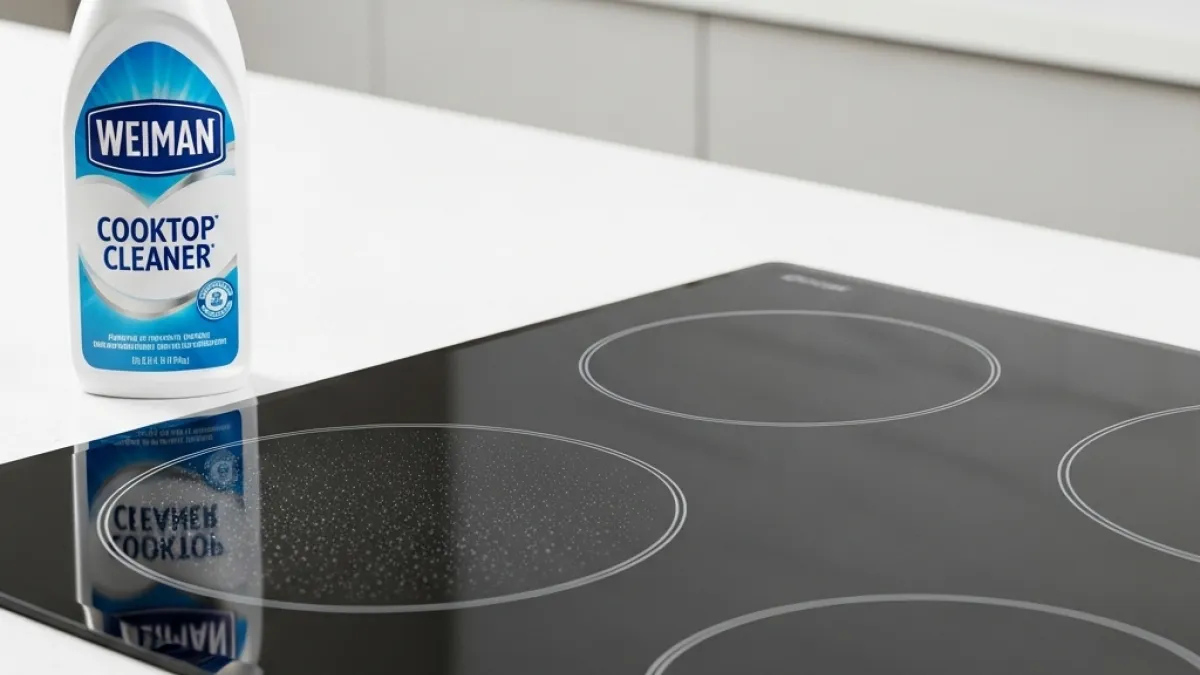
Quick answer: Weiman Cooktop Cleaner is the standard choice for glass and ceramic cooktops because its micro-abrasive cream formula (pH 7.5–8.5) breaks down hard, burnt-on carbonized food without scratching tempered glass. The line includes a daily trigger spray for light grease, a heavy-duty cream for restoration, and a complete kit with a non-scratch scrubbing pad and razor scraper for heavy buildup.
The Chemistry and Formula Options: How Weiman Protects Cooktops
To understand why specialized cleaners are necessary for glass and ceramic stovetops, you have to look at how carbonized residue binds to tempered glass. When oils, carbohydrates, and proteins spill onto a cooktop operating at temperatures upwards of 400°F to 700°F, they undergo thermal degradation. They transform into a hard, polymerized carbon coat that locks onto the non-porous glass surface. Standard all-purpose spray cleaners lack the physical density and chemical solvents required to soften this carbon shell, forcing homeowners to scrub harder, which risks scratching the glass.
Weiman solves this problem by combining mild, environmentally responsible surfactant blends with micro-fine mineral abrasives. These microscopic particles possess a lower hardness rating on the Mohs hardness scale than the tempered glass or ceramic substrate of your stove. As a result, the abrasive action breaks down the brittle carbonized crust without leaving micro-scratches on the smooth surface. Furthermore, the cream formulation leaves behind a microscopic silicon-based protective barrier that repels future spills and makes daily wipe-downs significantly easier.
The Weiman lineup comes in three main product configurations depending on the severity of the soil you are addressing in your daily kitchen routine:
- Weiman Heavy Duty Cooktop Cleaner & Polish (Cream): A dense paste-like liquid packed with micro-abrasives designed specifically for severe burnt-on stains, mineral rings, and yellowing heat tints.
- Weiman Cooktop Daily Cleaner (Trigger Spray): A light, streak-free liquid spray ideal for wiping away fresh grease, fingerprints, and light water spots immediately after cooking.
- Weiman Cooktop Max & Complete Kits: Bundled systems that include the heavy-duty formula alongside specialized cleaning accessories, such as surface-safe red scrub pads and specialized safety razor tools.
Comparing Weiman Formats and Cleaning Accessories
Selecting the correct formula and companion tool prevents unnecessary labor and keeps your kitchen tools working efficiently. Below is a breakdown comparing performance metrics, ideal applications, and typical 2026 market specifications across the primary Weiman cooktop options.
| Product Format | Primary Application | Key Active Ingredients / Mechanics | Recommended Dwell Time | Average Price Range (2026) |
|---|---|---|---|---|
| Heavy Duty Cream Polish | Deep cleaning burnt-on carbon & heat stains | Micro-fine feldspar/quartz abrasives, organic solvents (pH ~8.0) | 2–3 minutes | $8.00 – $12.00 (10 oz – 15 oz) |
| Daily Trigger Spray | Routine surface wipedowns & light grease | Biodegradable surfactants, water conditioners (pH ~7.5) | 30–60 seconds | $7.00 – $10.00 (22 oz) |
| 3-in-1 Cleaning Kit | Complete cooktop restoration & maintenance | Cream paste + non-scratch red pad + safety razor tool | 2–3 minutes (cream) |
When executing a deep restoration on an overlooked stove, pairing the heavy-duty cream with proper applicators is critical. Always select a high-density microfiber cloth featuring a minimum rating of 300 GSM (grams per square meter). Low-quality, thin cloths trap stray grit particles against the stove surface, which can cause swirling scratches during the buffing stage.
Step-by-Step Guide: How to Safely Clean Burnt-On Stains
Achieving a pristine, mirror-like reflection on your cooktop requires a methodical approach. Hurrying the cleaning process or applying cold liquid to a hot cooktop can cause thermal shock, which risks cracking glass panels. Follow these steps for best results when using Weiman products on ceramic or glass cooktops.
- Allow the Cooktop to Cool Fully: Never apply cleaner to a warm or hot cooktop. Ensure all burner indicators show that the surface is completely cool to the touch before starting.
- Perform Initial Surface Debris Removal: Wipe away loose crumbs, salt granules, or fresh surface debris with a dry microfiber towel. Removing loose grit prevents scratching during the scrubbing phase.
- Scrape Burnt Residue (For Heavy Buildup): If you have thick, raised carbon crusts, spray a light mist of water to lubricate the area. Hold a single-edge safety razor blade at a flat 45-degree angle against the glass. Carefully push forward to lift the crust. Never tilt the corner of the blade downward, as the sharp corner can gouge the surface.
- Apply Weiman Heavy Duty Cream: Shake the bottle thoroughly. Pour an upper-dollar-coin-sized drop directly onto the problem areas or burnt ring outlines.
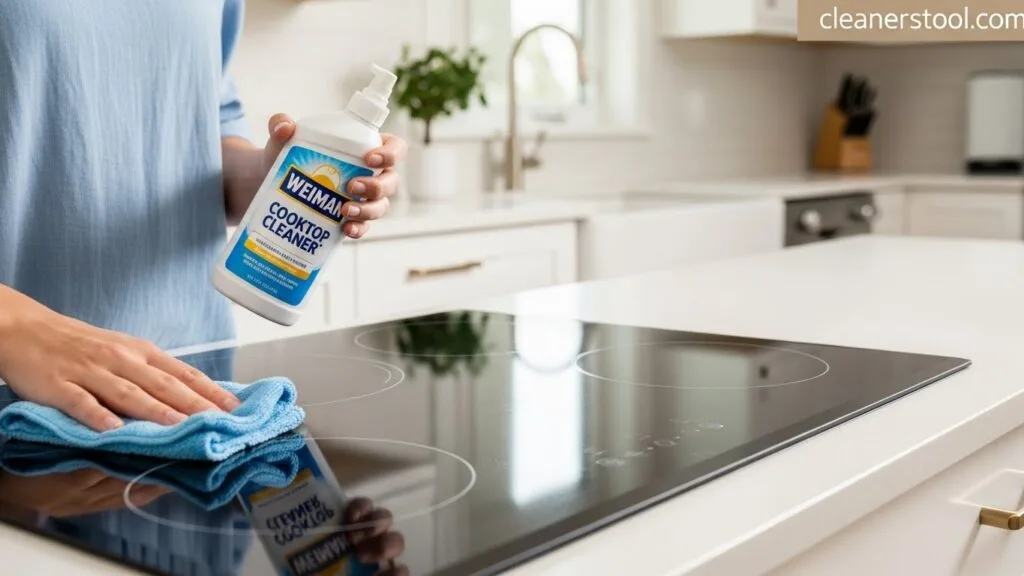
- Scrub in Circular Motions: Using a non-scratch red cooktop scrubbing pad, scrub the cream over the stains using firm, circular pressure. Allow the polish to sit for 2 to 3 minutes so the solvents can break down oil deposits.
- Buff to a High Polish: Take a clean, dry 300 GSM microfiber towel and buff away the dried white haze. Turn the cloth to a dry side and wipe until all streaks disappear and the surface shines.
Cleaner's tip: The biggest mistake I see beginners make when using cream glass cleaners is applying too much product and skipping the dwell time. If you leave a thick layer of paste on the stove and try to wipe it off immediately while wet, you end up smearing white haze back and forth. Apply a thin layer, give it 2 minutes to soften the bond, let it dry to a slight haze, and then buff it dry. The dried micro-abrasives polish out grease far better when dry than when oversaturated with moisture.
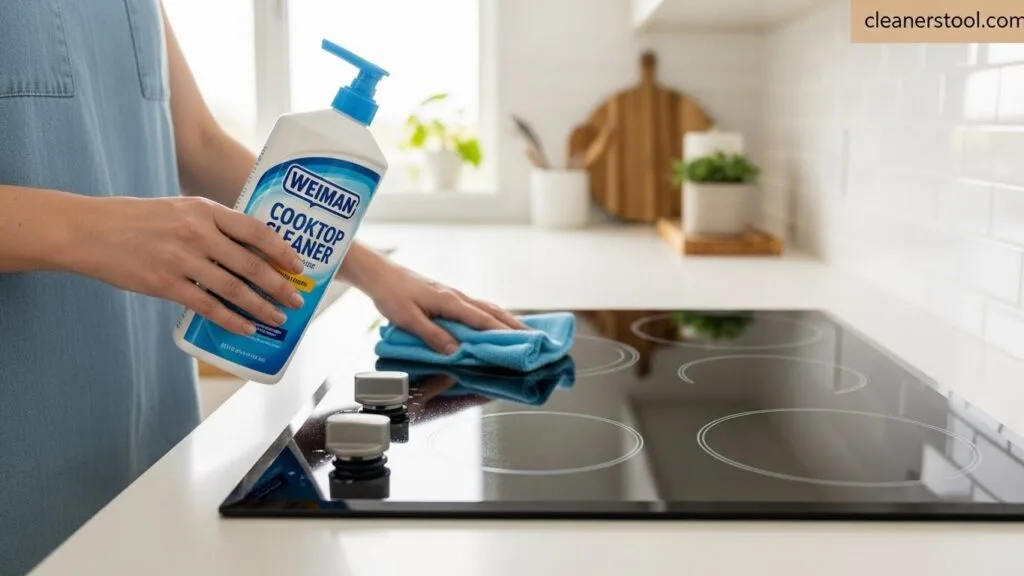
Avoiding Common Smooth-Top Cleaning Hazards
Glass and ceramic cooktops require specific precautions. Using incorrect chemicals or mechanical tools can dull the glass, strip protective coatings, or cause expensive damage. Knowing what not to do is just as important as choosing the right polish when you want to deep clean your kitchen.
First, never use traditional oven cleaners on smooth-top cooktops. Oven sprays contain high concentrations of sodium hydroxide (lye), an intensely alkaline chemical with a pH level often exceeding 13.0. While lye dissolves baked-on enamel grease inside traditional ovens, it permanently etches and pits smooth glass cooktop surfaces, leaving dull gray patches that cannot be polished out.
Second, avoid homemade acid solutions like high-concentration vinegar or citric acid on hot glass. While mild acids can help remove hard water scale, acidic liquids applied to hot glass cause microscopic pitting over time. Never mix cleaning agents under any circumstances. Combining bleach-based products with ammonia or acidic cleaners produces hazardous chlorine gas or chloramine fumes, posing severe respiratory risks.
Finally, avoid using green nylon scouring pads, steel wool, or abrasive pumice stones on glass tops. Green scouring pads often contain aluminum oxide crystals designed for heavy cast iron and stainless steel; on tempered cooktop glass, they leave permanent swirled scratches. Always verify that any pad used is specifically certified as non-scratch for smooth cooktops.
Final Recommendation for Homeowners and Pros
If you want to maintain a spotless cooktop with minimal hassle, keeping both the Weiman Cooktop Daily Trigger Spray and the Heavy Duty Cream Polish on hand is the best approach. Use the spray for quick, daily cleanups immediately after cooking to stop grease from baking on. For weekly deep cleans or stubborn burnt-on spills, use the cream polish alongside a red non-scratch pad and a 300 GSM microfiber towel to clear heavy buildup and restore the factory shine.
Frequently Asked Questions
Can I use Weiman Cooktop Cleaner on stainless steel surfaces?
No, you should not use the heavy-duty cooktop cream on brushed stainless steel. The micro-abrasives engineered for tempered glass can scratch the delicate brushed grain of stainless steel appliances. Instead, select a dedicated polish like Weiman Stainless Steel Cleaner & Polish, which utilizes tailored oils and solvent bases designed specifically for steel alloys.
Is Weiman Cooktop Cleaner safe for induction cooktops?
Yes, Weiman Cooktop Cleaner is completely safe for induction cooktops. Induction cooktops use smooth glass-ceramic surfaces identical to standard radiant glass electric stoves. Because induction cooktops operate cooler overall, burnt-on food is usually less severe, making the daily trigger spray highly effective for routine upkeep.
How do I remove burned sugar or melted plastic from my ceramic cooktop?
For melted plastic or sugary boil-overs, turn off the burner immediately and allow the surface to cool completely. Apply a small amount of Weiman Heavy Duty Cream to soften the residue, then hold a single-edge safety razor blade flat at a 45-degree angle to scrape away the hardened deposit. Finish by buffing the area clean with a dry microfiber cloth.
How often should I deep clean my glass stove with the cream formula?
Deep clean with the cream polish once a week if you cook daily, or immediately whenever heavy boil-overs and greasy splatters occur. Using the daily trigger spray after every meal prevents carbon buildup, reducing how often you need to perform intensive deep cleanings.