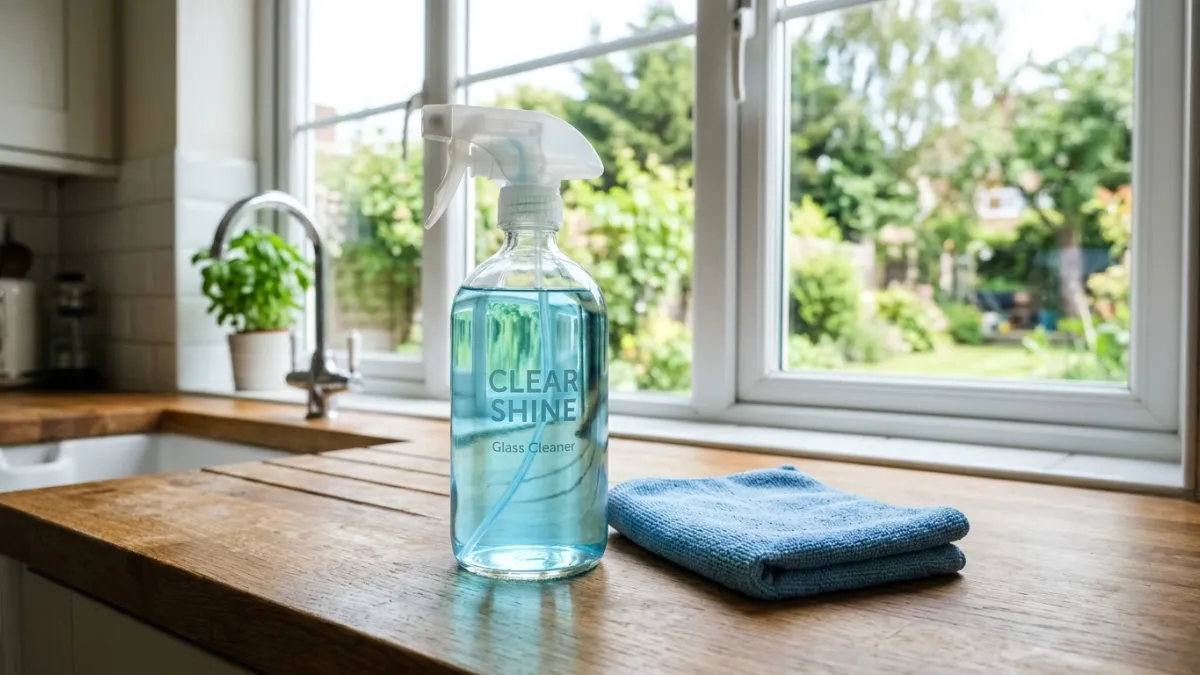
Achieving a truly streak-free shine on glass requires an fast-evaporating, residue-free formula paired with two dedicated microfiber towels—or a professional squeegee—applied out of direct sunlight. Commercial cleaners containing isopropyl alcohol or glycol ethers (such as Invisible Glass or Sprayway) evaporate before soap film can dry on the pane, while DIY mixtures of 2 cups distilled water, 2 tablespoons isopropyl alcohol, 2 tablespoons white vinegar, and 4 drops of liquid dish soap offer identical performance at a fraction of the cost. Most streaks are not caused by dirty glass, but by hard water minerals, detergent residue, or dirty cleaning cloths dragging loosened soil across the surface.
Why Most Glass Cleaners Leave Frustrating Streaks
Understanding why glass streaks helps eliminate the problem before you even pick up a spray bottle. Streaks usually stem from three distinct sources:
- Leftover Detergent Residue: Standard all-purpose cleaners and cheap glass formulas often contain heavy surfactants or artificial fragrances. When the liquid evaporates, these additives stay behind as a microscopic film that catches the light.
- Hard Water Minerals: Diluting cleaning concentrate with tap water introduces dissolved calcium and magnesium. As the water dries on the glass, these minerals crystalize into faint white lines.
- Incorrect Cloths and Fabrics: Wiping windows with cotton rags washed with fabric softener transfers wax directly onto the glass. Cotton towels also drop lint fibers that trap moisture, creating haze.
Commercial vs. Homemade Glass Cleaners
Both ready-to-use commercial sprays and quick homemade formulas can yield spotless results when formulated correctly. Here is how the most popular options compare in professional cleaning environments:
| Cleaner Type | Key Ingredients | Drying Speed | Best Suited For |
|---|---|---|---|
| Foaming Aerosol (e.g., Sprayway) | Denatured alcohol, surfactants | Fast (holds on vertical glass) | Mirrors, interior architectural glass, picture frames |
| Alcohol-Based Liquid (e.g., Invisible Glass) | Isopropanol, glycol ether (ammonia-free) | Very Fast | Automotive windshields, tinted glass, house windows |
| Pro DIY Alcohol-Vinegar Solution | Distilled water, white vinegar, isopropyl alcohol, mild dish soap | Fast | Everyday maintenance, eco-conscious cleaning |
| Traditional Blue Spray (Ammonia-based) | Ammonium hydroxide, blue dye | Moderate | Untinted exterior glass with heavy grease (avoid on car film) |
The Ultimate Pro DIY Glass Cleaner Recipe
If you prefer making your own non-toxic glass cleaner, avoid using pure tap water or plain vinegar, which can leave water spots or dry too slowly on warm glass. Instead, mix this proven, fast-evaporating solution in a clean 32-ounce spray bottle:
- 2 cups distilled water: Eliminates hard water mineral spots.
- 2 tablespoons isopropyl alcohol (70% or 91%): Accelerates evaporation to prevent drying lines.
- 2 tablespoons distilled white vinegar: Cuts through grease, fingerprints, and soap scum.
- 4 drops mild liquid dish soap (e.g., Dawn): Acts as a gentle surfactant to lift dirt off the glass surface.
Gently swirl the bottle before use. The alcohol ensures rapid drying, while the tiny amount of dish soap traps grease without leaving a heavy film behind.
Essential Tools for a Flawless Finish
Even the finest streak-free formula will fail if paired with paper towels or contaminated rags. Professional cleaners rely on a few specific tools:
1. Waffle-Weave Microfiber Cloths
Unlike plush microfiber towels that drag on dry glass, waffle-weave microfiber features pockets that trap dirt while gliding smoothly over the surface. Always keep two towels ready: one for wiping away the wet cleaner, and a second, bone-dry towel strictly for the final polish.
2. Professional Window Squeegee
For large patio doors and exterior windows, a high-quality squeegee with a fresh, crisp rubber blade pulls liquid completely off the glass, eliminating the need for extensive hand rubbing.
Step-by-Step Guide to Cleaning Glass Without Streaks
Follow this exact technique to clean windows, mirrors, and glass shower doors efficiently:
- Avoid Direct Sunlight: Solar heat causes liquid glass cleaner to flash-evaporate before you can wipe it off, trapping loosened dirt onto the pane. Clean glass when surfaces are cool to the touch.
- Dust the Frame First: Wipe down window frames, sills, and tracks with a damp rag. If spray hits a dusty frame, muddy drips will run onto your clean glass.
- Mist Lightly: Over-saturating glass creates excess liquid that pools in corners and leaves wipe marks. Lightly spray the cleaner across the pane.
- Wipe in an 'S' Pattern: Using your damp microfiber towel, wipe from the top left corner horizontally across to the right, sweeping down in an 'S' shape. This prevents redistributing soil over clean areas.
- Perform the Dry Polish: Immediately grab your second dry, clean microfiber cloth and buff the surface using firm, circular motions. This step removes any remaining microscopic moisture droplets before they evaporate into streaks.
Safety & Surface Warnings
Before spraying any cleaner, keep these precautions in mind:
- Tinted & Automotive Glass: Never use cleaners containing ammonia on aftermarket window tint or car windshields, as ammonia damages tint film and adhesive layers. Stick to ammonia-free aerosol or alcohol-based formulas.
- Natural Stone Surroundings: If your mirror is mounted on marble or granite countertops, cover the stone. Acidic vinegar or ammonia overspray can etch delicate natural stone surfaces over time.
- Laundering Microfiber: Wash glass-cleaning microfiber towels separately from cotton laundry, and never use fabric softeners or dryer sheets. Softeners coat microfibers in silicone oil, guaranteeing streaks on your next job.
Frequently Asked Questions
Why does my glass look streaky even after using a microfiber cloth?
Streaks often occur if your microfiber cloth was washed with fabric softener or dried with dryer sheets. Fabric softeners leave oily residue on microfibers that transfers onto glass. Additionally, if you use only one towel for both wiping and drying, it quickly saturates with dissolved dirt and liquid, smearing soil back onto the pane.
Can I use newspaper to wipe windows streak-free?
While newspaper was historically popular because it lacked lint, modern newspapers use soy-based or water-soluble inks that can smudge onto window frames and hands. Specialized waffle-weave microfiber cloths offer far superior absorption and leave no ink residue behind.
Is vinegar or alcohol better for cleaning glass?
Both serve different purposes. Vinegar breaks down mineral deposits and oily grime due to its acidity, while isopropyl alcohol speeds up evaporation so water doesn't dry into spots. Combining both in distilled water gives you the ultimate streak-free performance.
Sources
- U.S. Environmental Protection Agency (EPA) - Safer Choice Standard
- Wikipedia - Glass Cleaner Ingredients and Chemistry
- Consumer Reports - Window and Glass Cleaner Evaluation Standards
Looking for the Right Tools?
Check out our verified Top Cleaning Tools & Supplies on Amazon.
As an Amazon Associate, we earn from qualifying purchases.