Disclosure: As an Amazon Associate, we earn from qualifying purchases.
Standing water in a commercial sink or home shower stall brings work to a screeching halt. Over two decades of clearing stubborn blockages in residential homes and rental units have taught me that standard liquid drain gels from retail stores often fall short on severe, organic clogs. Thrift Drain Cleaner has built a massive reputation among plumbers, property managers, and professional maintenance crews as a fast-acting solution for grease, hair, and soap scum buildup.Quick answer: Thrift Drain Cleaner is extremely effective for clearing organic blockages like hair, congealed grease, and soap scum within 60 seconds. Its concentrated sodium hydroxide dry-granule formula generates intense heat when activated with hot water, liquefying tough obstructions far faster than standard liquid gels. However, it will not clear mechanical blockages like tree roots or plastic toys and requires strict safety precautions.
Understanding the Chemical Power Behind Thrift
Unlike standard supermarket liquid openers that rely heavily on diluted sodium hypochlorite (bleach) formulas, Thrift consists of dry, highly concentrated sodium hydroxide (caustic soda) granules. This anhydrous compound carries an alkaline pH of roughly 13 to 14. When exposed to hot water, the dry crystals trigger an immediate, powerful exothermic reaction that drives temperatures inside the trap up rapidly. This extreme heat combines with the heavy alkaline saponification process to break down animal fats, vegetable oils, solidified hair strands, and viscous soap binders in seconds.
Because the product is sold as a solid, dry granulate, it boasts an indefinitely long shelf life when stored in a cool, dry location with the lid tightly sealed. Liquid alternatives lose chemical potency over time as chlorine or liquid lye degrades inside the plastic jug. Thrift stays fully active until the moment you pour it down the drain pipe. Plumbers keep it on their trucks because a single 2 lb container delivers dozens of treatments without taking up valuable space or leaking fluid across service vans.
Another distinct advantage is the complete absence of acidic sulfur odors. Many commercial-grade acid openers emit harsh, suffocating fumes that linger in bathrooms and commercial kitchens for hours. Thrift releases heat and steam during its chemical activation, but it generates zero pungent chemical gas. This makes it an ideal choice for high-traffic environments, restaurants, and occupied apartment complexes where strong chemical smells trigger safety complaints from residents.
Performance Comparison: Thrift vs. Standard Drain Cleaners
To understand why professional contractors prefer Thrift over retail brands like Drano, Liquid-Plumr, or heavy-duty sulfuric acid formulations, we can compare their fundamental chemical profiles, reaction times, and best-use scenarios.
| Drain Cleaner Type | Primary Active Chemical | Average Dwell Time | Best Used For | Pipe Safety Profile |
|---|---|---|---|---|
The table clearly illustrates why dry sodium hydroxide remains a dominant force in professional maintenance. It delivers the speed of acid-based solutions while maintaining the pipe safety profile of mild alkaline gels, provided hot water application guidelines are strictly followed.
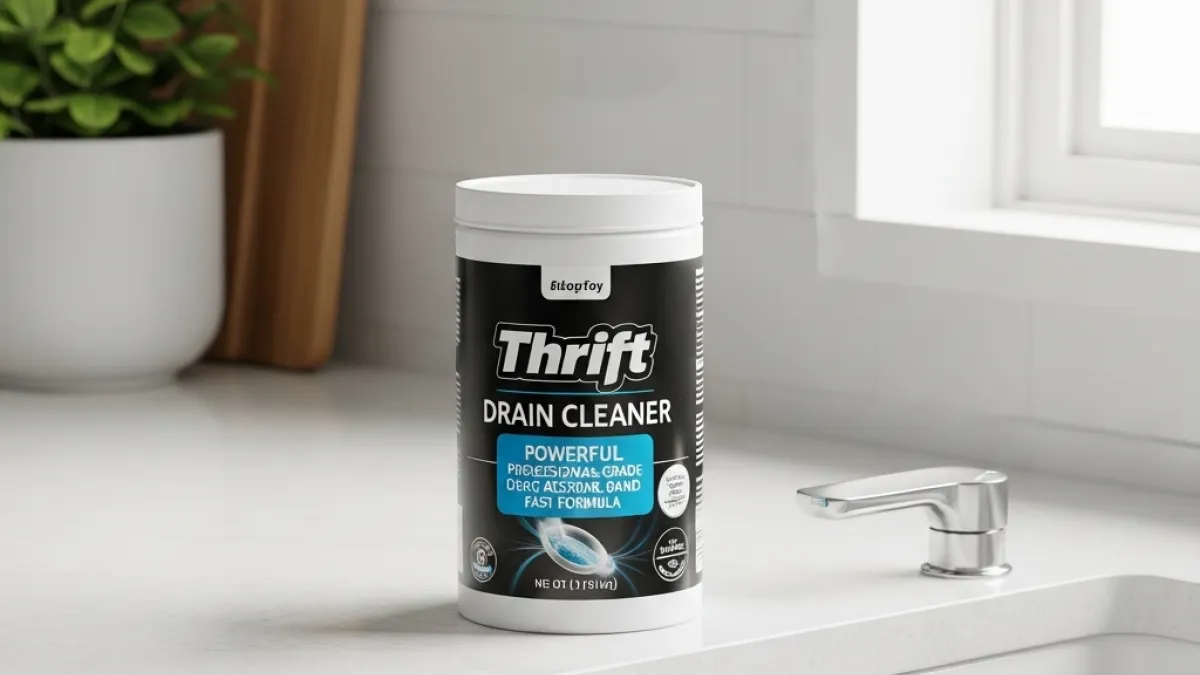
60-Second Thermal Reaction: Thrift Odorless Granular Drain Cleaner

How to Safely Use Thrift Drain Cleaner: Step-by-Step Instructions
Because Thrift reacts violently with water to create high temperatures, using proper technique is critical for your safety and the longevity of your plumbing network. Misusing dry lye can cause chemical splash-back or harden the product into an impenetrable crust inside the trap.
Cleaner's tip: The single biggest mistake people make with Thrift is pouring crystals into cool water or pouring them into a sink full of standing water. If the water isn't boiling hot, or if the drain is completely blocked with zero flow, the crystals will settle in the trap, cool down, and solidify into a rock-hard cement plug. Always scoop or bail out standing water completely before applying Thrift, and verify your water heater delivers hot water to the fixture before pouring.
- Prep the Fixture: Bail or sponge out all standing water from the sink basin, tub floor, or floor drain. The dry crystals must reach the drain orifice and P-trap directly without being diluted by standing, ambient water.
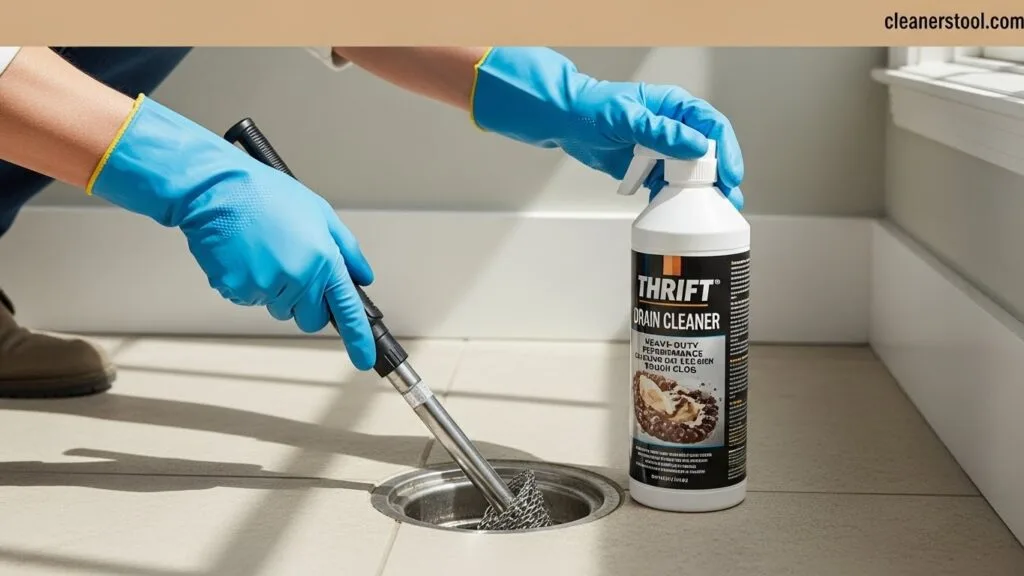
- Protect Yourself: Put on heavy nitrile or rubber gloves and chemical safety goggles. Ensure the room has reasonable air circulation. Keep children and pets out of the room.
- Pre-Heat the Line: Run the tap water on maximum heat for 1 to 2 minutes until it comes out steaming hot. Turn off the faucet.
- Pour the Crystals: Measure approximately 1 cup of dry Thrift granules (for standard 1.5-inch to 2-inch residential drains) and carefully pour them straight into the drain opening. Avoid getting dry crystals on chrome, brass, or satin nickel drain rims, as raw sodium hydroxide can discolor fine metal finishes if left dry.
- Activate with Hot Water: Immediately pour 1 to 2 cups of steaming hot water directly over the crystals. Step back immediately. You will hear a sharp sizzling or bubbling sound as the chemical reaction ignites.
- Wait 60 Seconds: Allow the heat and alkaline reaction to break down the hair and liquefy the grease buildup in the trap. Do not leave the product in the drain for extended periods (such as overnight), as the liquified waste will cool down and settle further down the line.
- Flush Thoroughly: Flush the drain with continuous hot tap water for 3 to 5 minutes to sweep all dissolved debris, emulsified fats, and chemical residue completely past the main sewer stack.
Pipe Compatibility, Septic Safety, and Limitations
When used strictly according to manufacturer instructions, Thrift is completely safe for standard metal pipes (cast iron, copper, steel) and modern plastic pipes (Schedule 40 PVC, ABS). Because the high thermal reaction lasts for a brief window before being thoroughly flushed away with hot tap water, it does not melt plastic piping or soften glue joints. Furthermore, once flushed into municipal sewer lines or private septic tanks, the highly alkaline solution neutralizes as it mixes with large volumes of wastewater, making it septic-safe in standard residential doses.
However, Thrift is not a universal solution for every drainage failure. It cannot dissolve non-organic obstructions. If a child drops a plastic toy down the toilet, or if tree roots have penetrated an underground sewer line outside the home, chemical drain openers will yield zero results. Pouring chemical cleaners onto non-dissolvable objects wastes money and creates a hazardous, highly caustic fluid reservoir that a plumber will have to contend with when snaking or disassembling the line manually.
Pre-Treatment Hair Extraction: FlexiSnake Drain Weasel Hair Snake

Additionally, exercise extreme caution in very old homes featuring thin-walled, heavily corroded lead or thin copper piping. While sodium hydroxide itself does not eat through metal, the thermal energy generated during a concentrated reaction can stress already failing, paper-thin wall joints. If you suspect your plumbing line is structural unsound or compromised by rust holes, mechanical snaking or hydro-jetting remains the safest alternative.
Where to Buy and Final Sourcing Guidance
Because Thrift is a professional-grade plumbing chemical rather than a mainstream household detergent, you will rarely find it on the shelves of local grocery stores or big-box retail supercenters in the cleaning aisle. The most consistent sources for immediate pickup are local plumbing supply houses, commercial cleaning supply distributors, and independent hardware outlets like Ace Hardware or True Value.
If you prefer online purchasing, it is widely available through online suppliers and Amazon in single 1 lb jugs, 2 lb containers, or cost-effective multi-packs. Property management teams and maintenance heads often purchase 2 lb jugs in six-pack cases to ensure every service truck remains fully stocked for emergency call-outs.
Clear Recommendation
If you are dealing with persistent bathroom hair clogs, sluggish kitchen sinks clogged with cooking fats, or slow-draining floor traps in commercial kitchens, Thrift Drain Cleaner is the absolute best fast-acting chemical option available today. It outperforms standard liquid gels by a wide margin while offering an odorless application. Pick up a 2 lb jug from a local plumbing supplier or online, ensure you clear out standing water first, and always pair it with steaming hot water for a clean, free-flowing drain line in under two minutes.
Frequently Asked Questions
Can I use Thrift Drain Cleaner in a completely blocked toilet?
No, you should never use Thrift Drain Cleaner in a toilet bowl. Toilets contain standing trap water that cannot easily be removed, which will dilute the crystals or cause them to clump and harden at the bottom of the porcelain bowl. Furthermore, the heat generated by the exothermic reaction can crack the porcelain toilet bowl structure. Use a heavy-duty toilet plunger or a toilet auger instead.
Targeted Hydraulic Pressure: Commercial Rubber Sink Plunger

What happens if I use cold water instead of hot water with Thrift?
Using cold water prevents the sodium hydroxide granules from fully activating and dissolving quickly. Instead of creating an intense heat reaction to melt organic grease and hair, cold water causes the granules to form a hard, solid mass inside the drain line. This creates an even worse mechanical obstruction that usually requires disassembling the P-trap to clear manually.
Is Thrift Drain Cleaner safe for garbage disposals?
It is generally not recommended to pour dry caustic chemicals directly into a garbage disposal unit. The crystals can get trapped beneath the internal rubber splash guards and behind the stainless steel impellers, potentially damaging rubber seals, corroding delicate metal parts, or splashing chemical residue back into the sink during operation. Stick to manual mechanical cleaning or specialized disposal cleaner tablets for sink disposals.
How often can I use Thrift to maintain my kitchen drain pipes?
For preventative maintenance in commercial kitchens or heavy-use residential sinks, applying a half-cup treatment of Thrift once every 30 to 60 days is safe and effective. Regular maintenance prevents animal fats, soap curds, and food particles from coating the pipe walls and forming dense blockages over time.