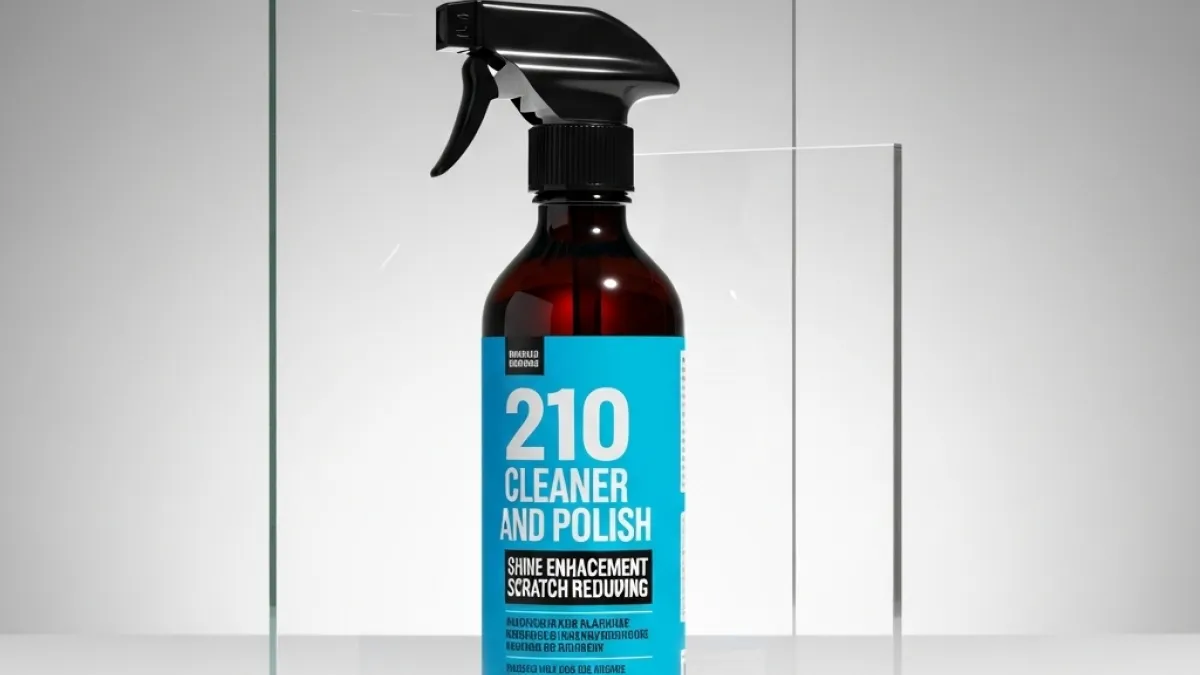
Quick answer: Sumner Laboratories 210 Plastic Cleaner and Polish is an industry-standard aerosol spray designed to clean, seal, and polish clear plastics in a single step. Its anti-static, anti-fog formula fills micro-scratches, repels salt spray and dust, and restores clarity to clear vinyl, polycarbonate, acrylic, and helmet visors without abrasive rubbing.
Understanding Clear Plastic Vulnerabilities & Why Special Care Matters
Clear plastics might look as solid as glass, but chemically they behave quite differently. Standard glass features a hard, non-porous structure rated around 5.5 to 7 on the Mohs hardness scale. In contrast, acrylic (PMMA) and polycarbonate (Lexan) sit significantly lower, often between 2 and 3. This soft matrix means microscopic airborne grit—like road dust, dry salt crystals, or sand—acts like sandpaper when dragged across the surface during standard wiping.
Furthermore, common household glass cleaners contain harsh chemicals such as ammonia, isopropyl alcohol, or strong solvents. When applied to stretched polycarbonate or clear vinyl windows on boats, these chemicals strip essential plasticizers. Over time, this exposure triggers chemical hazing, micro-crazing (a spiderweb pattern of fine internal cracks), and premature yellowing. Incorporating specialized care into your routine maintenance prevents these costly structural failures before they begin.
To preserve optical clarity and extend the working lifespan of your plastic equipment, you need a formula specifically balanced to nourish synthetic polymers while providing a slick, static-free finish that rejects fresh contaminants.
The Chemistry Behind Sumner Laboratories 210
Originally formulated for aerospace maintenance—where cloudless visibility through flight deck canopies is a critical safety requirement—Sumner 210 has earned a permanent spot in marine detailing shops, motorcycle garages, and commercial facilities. Distributed widely across the RV and boating sectors (frequently co-branded with marine distributors like Camco), the chemical mixture remains identical across labels.
The product functions as a dual-action aerosol emulsion containing lightweight aliphatic hydrocarbon solvents combined with micro-polymers and silicone fluids. When sprayed onto an acrylic surface, the mild hydrocarbon fraction acts as a gentle solvent that breaks down road film, grease, insect residues, and dried salt spray. Crucially, it neutralizes these soils without attacking the underlying polymer matrix or stripping UV coatings.
Cleaner's tip: Always wipe off loose dust with a dry, high-pile 350+ GSM microfiber cloth using light air pressure before applying any aerosol cleaner. Spraying 210 directly onto a dusty shield without a preliminary dry blow-off forces sand particles into the plastic pores under your rag, creating the exact swirl marks you are trying to prevent.
Safety Data & Chemical Profile (SDS Overview)
A review of the official 210 Plastic Cleaner and Polish Safety Data Sheet (SDS) highlights several key physical properties and handling guidelines necessary for safe shop application:
- Propellant System: Pressurized with an isobaric hydrocarbon aerosol blend (butane/propane). Store cans strictly in ambient environments below 120°F (49°C) to prevent thermal expansion and container failure.
- Chemical pH Balance: Formulated within a near-neutral range (pH 6.5 to 7.5), rendering it safe for sensitive coatings, tint films, and anti-glare layers.
- Toxicity & Handling: Non-corrosive to skin, but the vapor can cause mild respiratory irritation in closed areas. Always operate in ventilated shop spaces or outdoors.
- Flash Point & Storage: Aerosol contents are flammable. Avoid spraying near open flames, pilot lights, or running engine manifolds.
Sumner 210 vs. Competitor Plastic Cleaners
Choosing the right maintenance product often comes down to balancing performance, drying speed, anti-static properties, and overall cost per fluid ounce. Below is a detailed comparison of Sumner 210 alongside other popular market solutions like Plexus and Novus.
| Product | Form Factor | Anti-Static Rating | Scratch Filling Ability | 2026 Price Range (Approx.) | Best Suited For |
|---|---|---|---|---|---|
| Sumner 210 Polish | Aerosol Fine Mist | Exceptional | Light micro-scratches & swirls | $15 - $20 / 14 oz | Clear vinyl, Isinglass, helmet visors, everyday maintenance |
| Plexus Plastic Cleaner | Aerosol Thick Foam | Good | Light micro-scratches | $28 - $36 / 13 oz | Aircraft windshields, extreme high-end marine enclosures |
| Novus No. 1 | Liquid Spray Bottle | Moderate | Surface sheen only (no fill) | $12 - $16 / 8 oz | Indoor acrylic displays, light dust removal |
| Meguiar's PlastX | Abrasive Cream Rub | None | Heavy haze removal (polishes out) | $10 - $14 / 10 oz | Severely oxidized rigid headlight lenses |
While Plexus delivers outstanding performance, its price point per ounce has driven many commercial detailing teams and boat owners toward Sumner 210. In contrast to creamy abrasive polishes like Meguiar's PlastX, 210 leaves zero chalky white residue inside seams, zipper tracks, or rubber gaskets, making routine cleanup significantly faster.
Step-by-Step Guide: Cleaning Clear Plastics for Maximum Clarity
Achieving optical clarity on sensitive clear plastic requires proper technique just as much as quality chemistry. Follow this refined 4-step process to get professional results every time without scratching.
Step 1: Cool and Shade Prep
Never clean hot plastic in direct sunlight. High surface temperatures cause the aerosol solvents to evaporate instantly, leaving behind dry, concentrated polymer spots that require extra buffing to flatten. Move the vehicle or marine enclosure into the shade and ensure the surface feels cool to the touch.
Step 2: Loose Debris Removal
Rinse the surface with low-pressure fresh water if you are working on salt-sprayed boat vinyl or bug-splattered motorcycle fairings. If a water hose isn't accessible, lightly blow away dust using compressed air or flick the surface using a plush microfiber towel without applying downward pressure.
Step 3: Target Spray and Dwell Time
Shake the 210 aerosol can vigorously for 10 seconds to fully emulsify the silicone polymers with the hydrocarbon carrier. Hold the can approximately 8 to 10 inches from the plastic and spray a light, uniform mist. Allow a dwell time of 30 to 40 seconds. This allows the solvents to break down environmental oils and float dirt away from the pores.
Step 4: Wipe and High-Shine Buff
Fold a clean 300+ GSM microfiber towel into quarters. Gently wipe the surface in straight, overlapping horizontal lines—avoid tight circular scrubbing, which can trap hard particles and grind them into the surface. Turn the microfiber towel to a completely dry side and gently buff the sealed coating until a slick, reflection-clear gloss appears.
Where 210 Plastic Cleaner Excels: Practical Applications
The versatility of Sumner 210 spans multiple demanding environments where vision and surface protection cannot be compromised:
- Marine Clear Vinyl (Isinglass & Strataglass): Prevents flexible vinyl enclosures from drying out, cracking, and turning milky from constant UV exposure and marine salt deposits.
- Motorcycle Helmets & Windshields: Seals polycarbonate helmet shields so road grime, night flies, and water droplets slide off effort-free during high-speed rides.
- Powersports & Golf Carts: Restores vibrant clarity to curved plastic wind deflectors, side doors, and instrument clusters exposed to mud and dust.
- Residential & Commercial Fixtures: Safely cleans acrylic skylights, transparent patio screens, greenhouse panels, and clear display cabinets without streaking.
For extensive cleaning jobs involving tough mold, bird droppings, or thick mud on marine framework, combine your plastic care with our comprehensive deep cleaning techniques before applying your final protective coat of 210.
Clear Recommendation
If you need a reliable, cost-effective, daily-use maintenance product to protect clear vinyl, acrylic, or polycarbonate equipment, Sumner 210 Plastic Cleaner and Polish is your best choice. It provides 95% of the optical finishing performance of ultra-premium aviation sprays like Plexus at roughly half the cost, without leaving messy white residue along edges. For severely yellowed, heavily gouged, or sun-baked rigid plastics, start first with a dedicated multi-step abrasive wet-sanding kit before applying 210 as your permanent maintenance sealer.
Frequently Asked Questions
Can 210 Plastic Cleaner fix deeply scratched headlights or cloudy yellow acrylic?
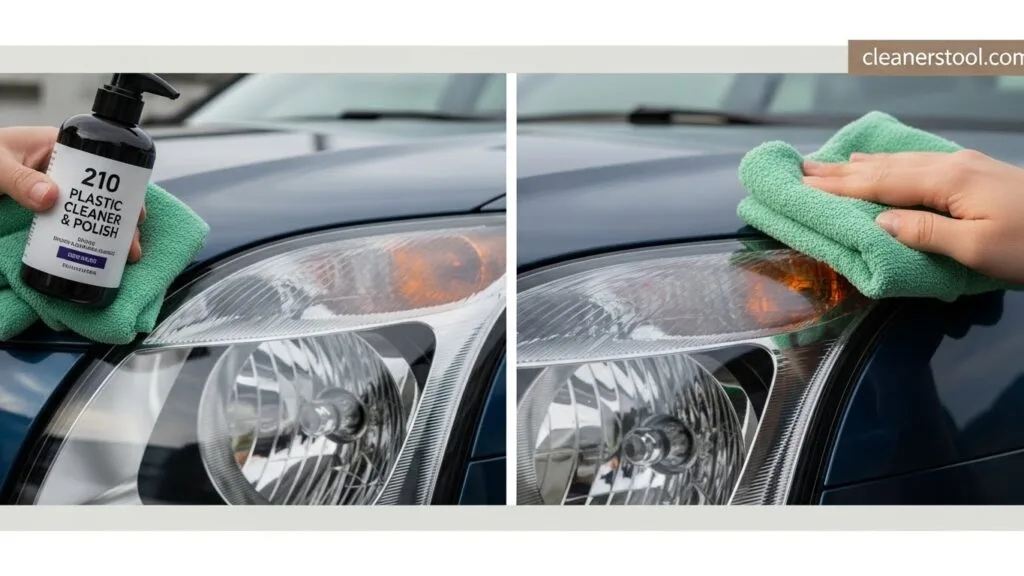
No. Sumner 210 is a non-abrasive cleaner and protective sealer designed to fill microscopic swirl marks and light haze. Deep physical scratches or heavy yellow UV oxidation require mechanical wet-sanding and compound polishing to restore the surface before 210 can be applied as a daily maintainer.
Is 210 Plastic Cleaner safe for tinted window films or touchscreen displays?
Yes, on factory tinted polycarbonates and aftermarket non-ammonia safe window films, 210 is safe because it contains no harsh ammonia or strong alcohol solvents. However, for interior anti-glare navigation screens, always check manufacturer guidelines before applying silicone-based polishes.
Where is the best place to buy 210 Plastic Cleaner and Polish?
Because of its specialized formulation, you will rarely find 210 in regular grocery aisles. The most reliable suppliers are marine supply outlets (such as West Marine), motorcycle dealerships, RV parts centers, or online detailing suppliers. It is frequently sold under both the Sumner Laboratories and Camco product labels.
Sources
- Wikipedia: Poly(methyl methacrylate) / Acrylic Plastic Properties
- Wikipedia: Polycarbonate Engineering Standards & Reactivity
- Sumner Laboratories Product Data & SDS Technical Sheets