Quick answer: Armstrong Floor Cleaner—most famous under the "Once 'n Done" name—is a specialized, neutral-to-slightly-alkaline formula (pH 7.0 to 8.5) engineered specifically for resilient flooring like vinyl, LVP, sheet vinyl, tile, and sealed hard surfaces. It effectively breaks down grime without needing to be rinsed, preserving the factory polyurethane finish for years. Today, it is widely available under both professional commercial labels and consumer household brands like Pledge.
Understanding the Armstrong Formula: Ingredients, pH Balance, and Chemistry
To understand why professional cleaners swear by the traditional Armstrong chemistry, you have to look at what goes into the bottle. Unlike generic, high-alkaline degreasers that bite into floor coatings, or harsh acidic household remedies like vinegar (pH 2.0 to 3.0) that can etch soft surfaces, Armstrong "Once 'n Done" (S-330 formula) balances active cleaning power with material safety. It relies on a blend of non-ionic surfactants, light water-miscible solvents like 2-butoxyethanol, and minor buffering agents like ammonium hydroxide to stabilize the pH around 7.5 to 8.5.
The non-ionic surfactants lower the surface tension of water, allowing the solution to spread evenly and slide beneath oil drops and fine soil particles. Meanwhile, solvent molecules target lipid-based spills, shoe scuffs, and sticky residues. Because the product contains zero heavy soaps, animal fats, or wax additives, it dries purely by evaporation without requiring a fresh-water rinse pass. This saves professional crews significant labor time on large-scale jobs.
For deep restoration tasks, Armstrong developed "New Beginning" (S-390), a heavier alkaline stripper with a higher pH range (10.0 to 11.5). While standard "Once 'n Done" is designed for daily or weekly maintenance, "New Beginning" breaks down heavy soil accumulations, ground-in dirt, and old acrylic wax layers. Understanding the distinct difference between routine neutral maintenance and chemical stripping prevents accidental floor damage during standard cleaning rounds.
Which Floor Types Can You Safely Clean with Armstrong?
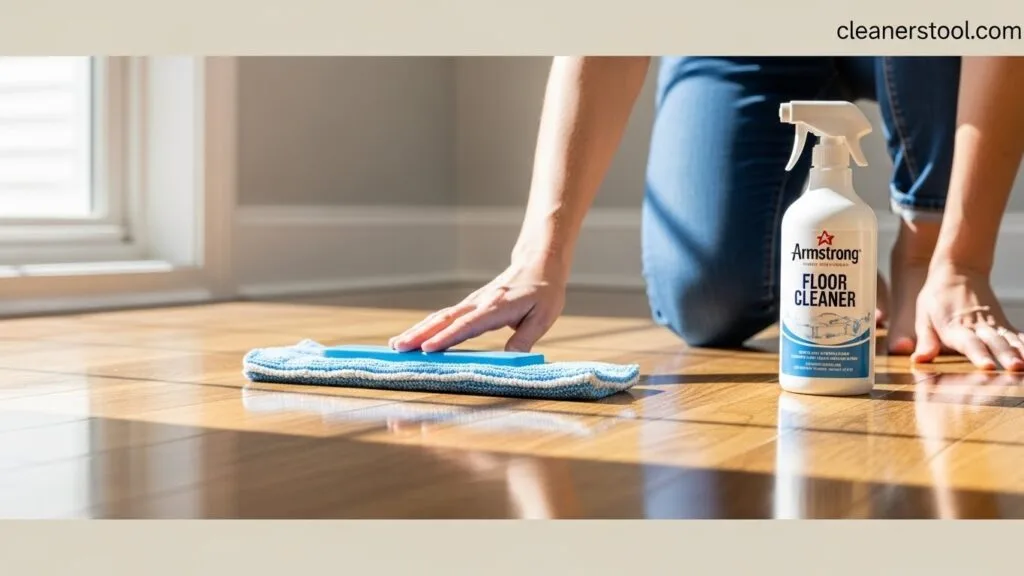
While originally formulated to protect Armstrong’s proprietary resilient sheet vinyl and vinyl composition tile (VCT), this cleaner works across a surprisingly wide spectrum of modern flooring materials. Luxury Vinyl Plank (LVP) and Luxury Vinyl Tile (LVT) are prime candidates. Modern LVP features a factory-applied urethane or ceramic-bead wear layer that ranges from 6 mil to 28 mil in thickness. Standard acidic or abrasive cleaners degrade this clear protective barrier over time, causing micro-scratches that harbor dirt. Armstrong’s balanced formula protects this wear layer while removing surface grease.
Ceramic, porcelain, and quarry tiles also benefit from this formula. Acidic cleaners can degrade unsealed grout lines over prolonged exposure, while soap-based oil soap cleaners leave an invisible layer of film over glazed porcelain tiles, making them dangerously slippery when wet. Because Armstrong evaporates cleanly, tiles retain their natural slip resistance without requiring a secondary damp-mop pass. Sealed hardwood and engineered wood floors can also be cleaned using a tightly wrung-out microfiber pad, provided water pooling is strictly prevented.
However, raw, unsealed wood, unsealed porous natural stone (such as traverstine or marble), and heavily waxed antique floors require caution. High-solvent formulas or improper dilution ratios can penetrate porous natural stone and cause discoloration or clouding under the seal. For sealed surfaces, following precise manufacturer dilution ratios ensures pristine visual results without surface clouding.
Cleaner's tip: A common mistake I see on job sites is using hot water when mixing "Once 'n Done" concentrate. Hot water causes the active solvents to flash off (evaporate) too quickly in the bucket, reducing the working solution's ability to dissolve grease. Always mix your dilution with cool to lukewarm water (around 65°F to 75°F). Additionally, if your microfiber pad becomes saturated and turns dark grey, stop and swap it out—reusing a filthy mop head simply redistributes micro-dirt particles across the floor's clear coat, leaving faint streaking when dry.
Step-by-Step Instructions: Routine Cleaning and Deep Wax Stripping
Achieving a streak-free, mirror-clean finish depends heavily on proper execution. Throwing a wet mop onto a dusty floor only creates a abrasive slurry that dulls your floor's finish. Follow these detailed steps for best results:
Routine Maintenance Cleaning Method
- Dry Soil Removal: Vacuum the entire floor using a hard-floor setting (beater bar turned off) or sweep thoroughly with a synthetic dry dust mop. Removing grit prevents fine surface scratching during the wet moping stage.
- Mix the Dilution: Pour exactly 1/4 cup (2 fluid ounces) of Armstrong "Once 'n Done" concentrate into 1 gallon of cool or lukewarm tap water. For spray-mop bottles, mix 1 teaspoon of concentrate per 16 ounces of water.
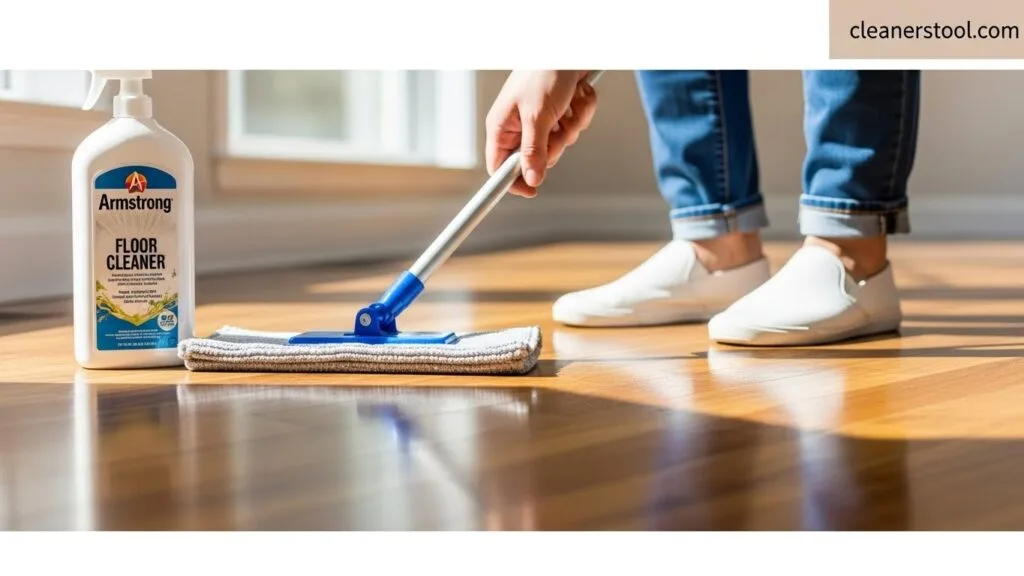
- Mop Application: Dip a high-density flat microfiber mop (recommended 300 to 400 GSM weight) into the solution and wring it out completely. The mop pad should be damp, not dripping wet.
- Systematic Passes: Mop in a figure-8 pattern, overlapping each pass by 50%. This motion lifts soil and pulls it into the microfiber loops rather than pushing it sideways.
- Air Drying: Allow the surface to air-dry naturally for 15 to 20 minutes. No fresh-water rinsing is necessary.
Deep Cleaning and Wax Stripping Method
- Prep the Area: Clear all furniture and dry-sweep the surface to remove loose debris. Mask off adjacent carpet or raw wood trim.
- Apply Stripping Solution: Mix 1 part "New Beginning" (S-390) or heavy-duty stripper with 4 parts warm water. Spread generously over the floor using a string mop.
- Dwell Time: Let the liquid sit for 8 to 10 minutes. Do not allow the chemical to dry out on the floor; re-wet dry patches as needed.
- Agitation: Agitate the surface using a stiff nylon deck brush or a floor buffer equipped with a blue/green scrubbing pad.
- Rinse and Neutralize: Mop up the slurry using a wet/dry shop vacuum or heavy cotton mop. Rinse the entire floor thoroughly with clean, cold water at least twice to fully neutralize the pH before applying any new polish or sealant.
Technical Specifications and Alternative Comparisons
When selecting floor care chemicals, comparing technical specifications helps you make an informed decision based on cost-per-gallon, chemical safety, and application performance. The table below outlines key metrics for Armstrong cleaners alongside popular market alternatives:
| Product Name | Concentration Type | pH Level (Diluted) | Dilution Ratio | Rinse Required? | Estimated Cost (2026) |
|---|---|---|---|---|---|
Safety Precautions, Storage, and Buying Advice
Working with professional floor chemistry requires basic physical safety measures. Never combine Armstrong floor care products—or any floor cleaner—with chlorine bleach or ammonia. Mixing ammonium hydroxide components with household bleach releases hazardous chloramine gas, which can cause severe respiratory irritation. Ensure adequate ventilation in enclosed spaces like windowless bathrooms or commercial storage closets.
For store availability, original Armstrong commercial concentrates (S-330 and S-390) are primarily found at major home improvement retailers like Home Depot and Lowe’s (often in the flooring aisle near vinyl supplies rather than the household cleaning aisle), as well as dedicated flooring distributor supply shops. If you are shopping at general supermarkets, look for SC Johnson’s licensed Pledge floor cleaning lines, which utilize similar surfactant formulations for everyday residential maintenance.
If you own high-grade LVP, sheet vinyl, or un-waxed tile and need an affordable, high-yield weekly maintenance product, purchasing a 64-ounce container of Armstrong "Once 'n Done" concentrate offers the best value for money. One bottle produces up to 32 gallons of active cleaning solution, making it exponentially cheaper per fluid ounce than standard ready-to-use spray bottles while keeping your floors streak-free and well-protected.
Frequently Asked Questions
Is Armstrong Floor Cleaner discontinued?
The original commercial-grade formulas (like S-330 Once 'n Done) are not discontinued. While corporate restructuring changed consumer retail distribution, the chemical formulations are still manufactured and sold through home improvement centers, flooring specialty stores, and under licensed consumer brand labels like Pledge.
Can I use Armstrong Once 'n Done on Luxury Vinyl Plank (LVP)?
Yes, it is one of the safest cleaners available for Luxury Vinyl Plank (LVP) and Luxury Vinyl Tile (LVT). Its neutral pH formula cleans grease and dirt without damaging the clear polyurethane wear layer or breaking down edge adhesives.
Do I need to rinse the floor after using Armstrong Floor Cleaner?
No, routine cleaning with "Once 'n Done" diluted at 1/4 cup per gallon of water requires no rinsing. However, if you are using high-alkaline stripping products like "New Beginning" to remove old wax, a complete cold-water rinse is mandatory.
Why is my floor sticky or streaky after moping?
Sticky or streaky residues are usually caused by using too much chemical concentrate in your bucket, using hot water that evaporates prematurely, or using a dirty mop pad that recirculates suspended soil onto the floor surface.
Sources
- Armstrong Flooring Official Maintenance Guides
- US Environmental Protection Agency (EPA) - Safer Choice Standard
- Wikipedia - Vinyl Composition Tile & Floor Care Standards
| Feature | Armstrong Once 'n Done | Pledge Floor Cleaner |
| Primary Use | Vinyl, Tile, Stone | Vinyl, Laminate, Wood |
| Formula | Highly Concentrated | Ready-to-use or Concentrated |
| Residue | Zero residue | Low residue |
| Availability | Specialty/Home Centers | Grocery/Big Box |