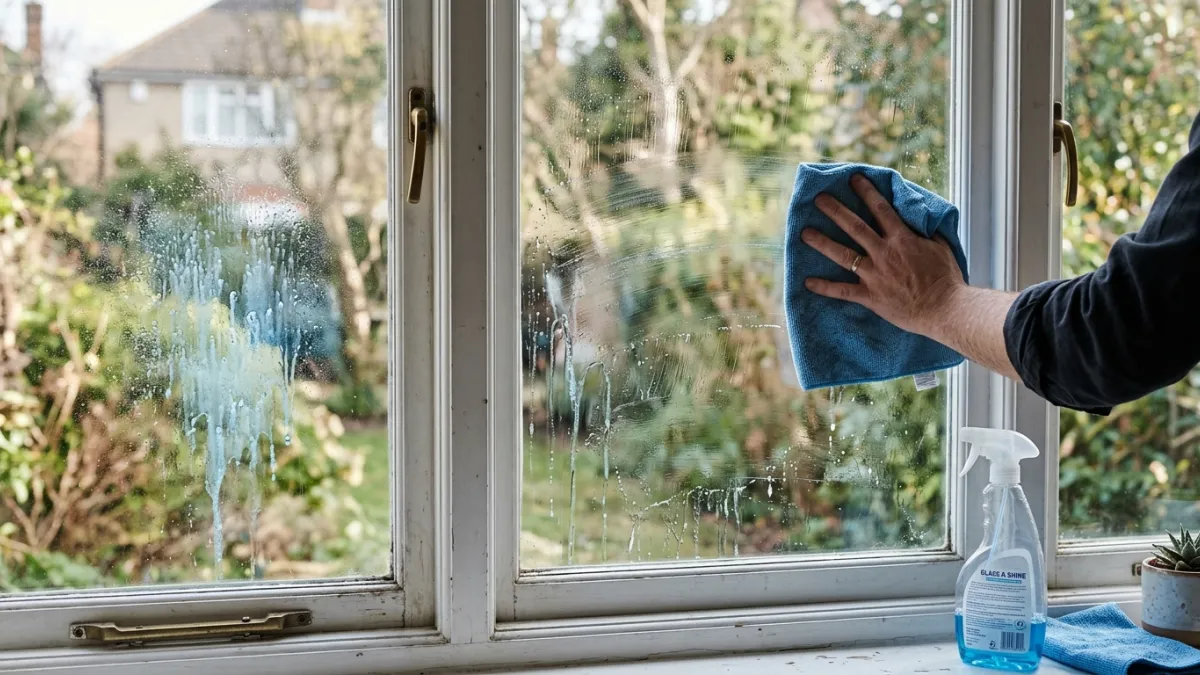
Windex leaves streaks on glass and mirrors primarily due to direct sunlight, over-spraying product, using lint-heavy paper towels, or wiping with microfiber cloths washed in fabric softener. When glass cleaner dries too quickly or mixes with leftover oils and detergent residue, it leaves behind a cloudy film. Fixing Windex streaks requires using a two-cloth microfiber wiping technique, cleaning out of direct heat, and using proper spray amounts to dissolve and lift dirt rather than smearing it around.
The Core Reasons Windex Leaves Streaks
Understanding why glass streaks form helps prevent them before you start wiping. Glass is a completely non-porous surface, meaning liquids, surfactants, and suspended dust particles cannot sink into the material; they sit directly on top. If you do not completely remove the dissolved grime and chemical spray, it dries back onto the glass in visible lines.
1. Cleaning in Direct Sunlight or High Heat
Heat is the single primary enemy of streak-free glass. When you spray Windex onto warm glass or windows exposed to direct sun, the water and alcohol solvents evaporate almost instantly. This leaves concentrated surfactant chemicals and suspended dust baked onto the surface before your towel can absorb them. Always clean windows early in the morning, late in the evening, or on overcast days when surface temperatures are cool.
2. Using Paper Towels or Dirty Cloths
Standard paper towels contain wood pulp fibers, binding adhesives, and added softening lotions. As you wipe, these fibers break down and leave behind fine lint and chemical films that catch light like streaks. Furthermore, using microfiber towels washed with liquid fabric softener coats the micro-fibers in water-repellent wax, transferring oily streaks back onto your clean mirror.
3. Applying Too Much Product
Spraying a heavy deluge of Windex on glass creates an excessive liquid load. Instead of floating dirty particles into your towel, excess liquid creates a wet slurry that gets pushed across the pane. A light misting is significantly more effective than drowning the glass.
4. Heavy Soil and Hard Water Mineral Buildup
Windex and standard spray glass cleaners are formulated to cut light fingerprints, dust, and minor smudges. If a window has heavy exterior dirt, tree sap, or hard water mineral scale, Windex alone will simply wet the debris without removing it fully. Pre-washing heavy dirt with warm soapy water or a vinegar solution is necessary before attempting a final polish.
Comparison of Glass Cleaning Wiping Materials
Choosing the right wiping material plays a major role in achieving a clear finish. The table below compares common glass cleaning tools based on linting risk, absorption capacity, and overall streak potential.
| Wiping Tool | Linting Risk | Absorbs Residue | Streak Potential | Best Use Case |
|---|---|---|---|---|
| Waffle-Weave Microfiber Cloth | Very Low | High | Very Low | Drying and high-shine buffing of windows and mirrors. |
| Flat Glass Microfiber Cloth | None | Moderate | Low | Removing smudges and fine polishing without lint residue. |
| Standard Paper Towels | High | Moderate | High | Quick cleanups, but leaves pulp lint and chemical coating. |
| Squeegee with Rubber Blade | None | N/A (Pushes Liquid) | Low to Moderate | Large outdoor windows when paired with correct technique. |
| Black-and-White Newspaper | Low | Low | Moderate | Traditional budget option, though modern ink formulas vary. |
Step-by-Step Guide to a Streak-Free Finish
Following a systematic two-cloth cleaning routine eliminates residue redistribution and guarantees pristine clarity on every pane.
Step 1: Prep the Glass Surface
Remove heavy dust or cobwebs with a dry duster before applying liquid cleaner. If working on exterior windows with heavy soil, wash the glass down with warm water and a few drops of mild dish soap first, then squeegee dry.
Step 2: Apply Cleaner and Perform First Pass
Professional cleaners rely on a deliberate two-cloth system. Lightly spray Windex either directly on your first microfiber towel or as a fine mist on the glass. Wipe the surface in a continuous "Z" or "S" pattern from top to bottom to lift dirt, skin oils, and smudges.
Step 3: Buff Instantly with a Dry Microfiber
Do not allow the spray liquid to air dry on its own. Immediately take a second completely dry, clean microfiber cloth and buff the glass using circular or vertical strokes. This secondary dry pass absorbs all residual solvents and surfactants before they can dry into streaks.
Step 4: Detail Frames and Edges
Wipe along the window frame edges, rubber gasket seals, and lower corners where moisture collects. Trapped liquid along frame edges frequently bleeds back onto clean glass, forming unsightly vertical drip marks after cleaning.
Pro Tips to Keep Glass Clear Longer
Frequently Asked Questions
Why does my glass look streaky the day after I clean it?
Post-cleaning streaks usually appear because a thin layer of soap or surfactant chemical dried on the glass surface during cleaning. Changing ambient light or morning sunlight illuminates this transparent chemical film, making streaks visible after drying. Buffing the dry surface with a completely dry microfiber cloth removes this leftover surfactant.
Is vinegar and water better than Windex for streak-free glass?
Vinegar mixed with distilled water (1:1 ratio) is an effective natural alternative, especially for cutting hard water mineral spots. However, Windex contains fast-evaporating alcohol solvents and surfactants designed to dissolve skin oils faster. Both methods yield streak-free results when combined with a clean microfiber towel and dry buffing pass.
Can I fix Windex streaks without rewashing the whole window?
Yes. If streaks appear after drying, take a clean, dry lint-free microfiber towel and vigorously buff the streaked areas in firm circular movements. Dry friction breaks up and lifts leftover chemical residue without needing additional spray.
Sources
Looking for the Right Tools?
Check out our verified Top Cleaning Tools & Supplies on Amazon.
As an Amazon Associate, we earn from qualifying purchases.