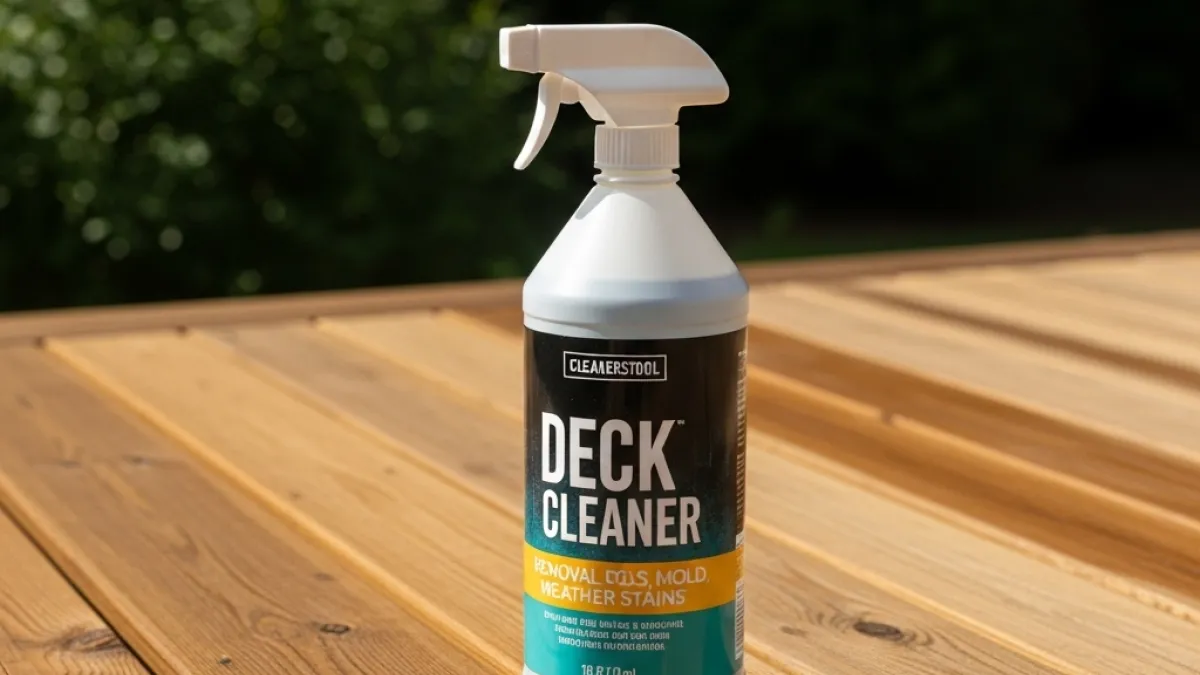
Quick answer: For general wood restoration and mold removal, an sodium percarbonate (oxygen bleach) cleaner diluted at 1 cup per gallon of warm water delivers the safest, most effective results without stripping wood lignin. If you are dealing with severely weathered grey wood, follow up with an oxalic acid brightener (pH 1.5–2.0) to neutralize the surface and restore the wood's natural tone before sealing.
Understanding Deck Cleaning Chemistry and Ingredients
Selecting the right cleaner comes down to understanding the active ingredients and how they interact with different decking materials. Standard household chlorine bleach (sodium hypochlorite) is frequently misused on lumber. While it quickly kills surface mold and whitens the wood, it damages the structural lignin that holds wood fibers together, leaving a washed-out, fuzzy appearance. Instead, professional contractors rely on targeted compounds such as sodium percarbonate, sodium metasilicate, and oxalic acid.
Oxygen bleach, or sodium percarbonate, is the gold standard for routine wood and composite care. When mixed with water, it breaks down into hydrogen peroxide and soda ash. The foaming oxygen bubbles lift dirt, algae, and dead wood fibers to the surface where they can be effortlessly brushed away. Sodium metasilicate acts as a heavy-duty degreaser, making it ideal for stripping old oil-based stains or clearing heavy grease buildup near outdoor grills. For composite decking, mild alkaline cleaners with a pH between 8.0 and 9.5 are recommended by manufacturers like Trex and TimberTech to protect the polymer shell.
Cleaner's tip: Never apply wood brightener to a dry deck, and never let deck cleaners dry on the boards during application. Always keep a misting hose handy to keep the surface wet while the cleaner works its dwell time (typically 10 to 15 minutes). If the cleaner dries prematurely, it leaves white chemical streaks that require aggressive scrubbing and re-washing to remove.
Commercial Deck Cleaners vs. DIY Solutions
Homeowners often debate between purchasing commercial concentrates or mixing DIY formulations. Commercial products like Restore-A-Deck, Defy Wood Cleaner, and Simple Green Oxy Solve are engineered with surfactant packages that help the solution cling to vertical surfaces like railings and stairs. These specialized formulas often cost between $25 and $50 per gallon, treating approximately 700 to 1,000 square feet when properly diluted.
A cost-effective homemade alternative consists of mixing pure powdered sodium percarbonate with warm water and a few drops of dish soap to reduce surface tension. For light maintenance, a solution of warm water, dish soap, and white vinegar can tackle basic surface grime, though it lacks the lifting power needed for deep-seated mold roots. When preparing any homemade mixture, always mix in a clean plastic bucket and use warm water (around 100°F to 120°F) to ensure oxygen bleach powders fully dissolve.
| Cleaner Type | Active Ingredient | Ideal Surface | pH Level | Avg. Cost (2026) |
|---|---|---|---|---|
| Oxygen Bleach Wash | Sodium Percarbonate | Pressure-Treated Wood, Cedar, Redwood | 10.0 - 11.0 (Alkaline) | $20 - $35 / container |
| Heavy-Duty Stripper | Sodium Metasilicate / Hydroxide | Stained Wood, Heavy Grease Areas | 12.0 - 13.0 (High Alkaline) | $30 - $45 / gallon |
| Wood Brightener | Oxalic Acid | Weathered/Tannin-Stained Lumber | 1.5 - 2.0 (Acidic) | $22 - $40 / gallon |
| Composite Maintenance Wash | Biodegradable surfactants | Capped & Uncapped Composites, PVC | 7.5 - 9.0 (Neutral/Mild) | $18 - $30 / gallon |
Step-by-Step Guide to Restoring Outdoor Decking
Achieving a professional-grade finish requires following a systematic process. Rushing through application times or skipping preparation steps leads to uneven patches and shortens the lifespan of subsequent stains or sealers. Make sure to consult detailed floor and outdoor cleaning guidelines before getting started on large-scale exterior restoration projects.
- Prep the Workspace: Clear all furniture, grills, and potted plants off the deck. Cover adjacent garden beds, shrubs, and flowers with canvas tarps, then pre-wet surrounding vegetation with fresh water to dilute any accidental overspray.
- Sweep and Clear Gaps: Thoroughly sweep away leaves, pine needles, and loose surface dirt. Use a putty knife or narrow spacer tool to clear accumulated debris out from between the deck boards to ensure proper water drainage.
- Apply the Cleaning Solution: Using a pump sprayer, apply your chosen cleaner evenly across 3 to 4 boards at a time, working from top to bottom on vertical railings and end-to-end on horizontal decking. Allow a dwell time of 10 to 15 minutes, re-misting with water if necessary to keep the wood wet.
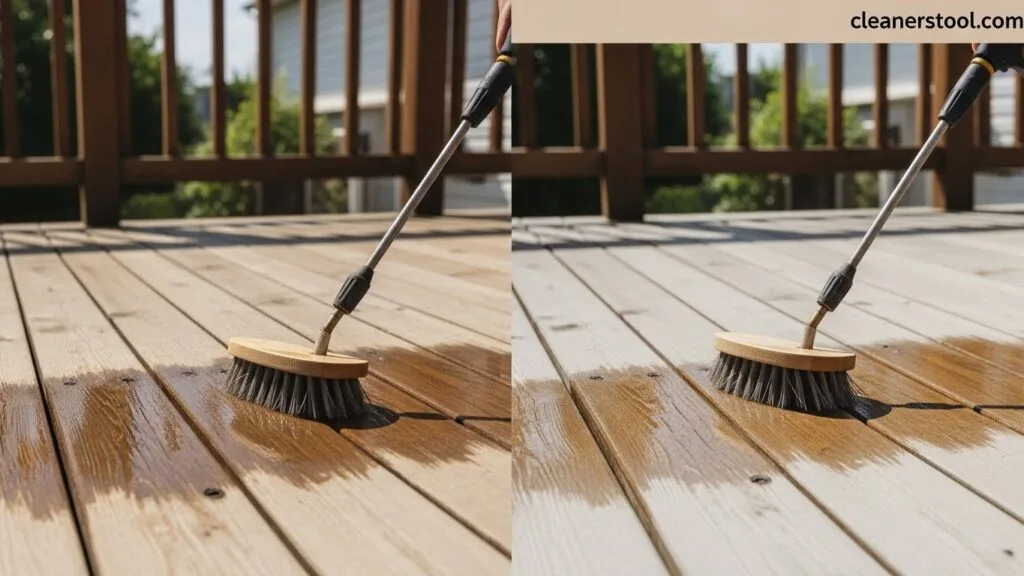
- Scrub the Surface: Use a stiff synthetic bristle deck brush (avoid wire-bristle brushes, which can shed metal fragments that rust and leave dark black spots on wood) to scrub along the grain of the wood.
- Rinse Thoroughly: Rinse the surface completely using a garden hose with a high-pressure nozzle or a pressure washer set to a low pressure of 500 to 800 PSI with a 40-degree wide fan tip. Keep the pressure washer nozzle at least 12 to 16 inches away from the wood to prevent gouging or feathering the soft fibers.
- Apply Brightener (Optional for Wood): If working with real wood, follow up immediately with an oxalic acid wood brightener. Spritz it over the wet surface, let it sit for 5 minutes, and rinse clean to restore the natural golden hues of the lumber.
Safety Considerations and Environmental Care
Safety is paramount when handling chemical washes outdoors. Chemical run-off can harm surrounding lawns, flower beds, and groundwater if not properly controlled. Always wear eye protection, rubber boots, and chemical-resistant gloves when mixing concentrated powders or spraying alkaline or acidic formulations. Direct contact with strong cleaners can cause chemical burns or severe skin irritation.
When working near lawn areas, always saturate the soil and plants surrounding the deck perimeter with freshwater before and after applying chemicals. This pre-saturation prevents plant roots from absorbing concentrated wash runoff. Never mix oxygen bleach or sodium metasilicate with household ammonia or chlorine bleach; doing so creates hazardous chloramine gas that can cause severe respiratory distress. For more safety advice, explore our comprehensive cleaning tools and chemical safety standards.
Choosing the Right Tools: Pressure Washers vs. Manual Scrubbers
While pressure washers are popular for quick outdoor cleanup, improper technique can destroy expensive softwoods like cedar and pine in seconds. A pressure washer rated between 1,500 and 2,000 PSI with a water flow rate of 1.2 to 1.8 GPM (Gallons Per Minute) is suitable for deck washing, but the pressure regulator should be turned down significantly. Water pressure exceeding 1,000 PSI can gouge soft wood, splinter composite decking, and break the protective outer sheath of capped synthetic boards.
Manual scrub brushes equipped with stiff polypropylene bristles attached to an adjustable extension pole offer control and eliminate the risk of surface damage. For large commercial or multi-level residential decks, motorized walk-behind floor scrubbers equipped with soft outdoor nylon brushes provide consistent pressure across thousands of square feet without damaging wood fibers or strain on your back.
Recommended Cleaning Approach
For most homeowners dealing with standard wood or composite decks, the absolute best balance of safety, cost, and restorative power comes from using a dedicated sodium percarbonate (oxygen bleach) cleaner followed by an oxalic acid brightener on natural wood. If you own a composite deck, skip the brightener and use a mild, pH-balanced composite cleaner applied with a pump sprayer and medium-soft bristle brush. Start by clearing all furniture, dampening your plants, and treating small sections at a time to keep the chemical solution moist throughout the dwell time.
Frequently Asked Questions
Can I use a pressure washer on composite decking?
Yes, but you must use extreme caution. Set the pressure washer below 1,500 PSI, use a wide 40-degree fan nozzle, and maintain a minimum distance of 12 to 15 inches from the composite surface to prevent permanent gouging or voiding the manufacturer warranty.
How long should I wait after cleaning my wood deck before applying stain or sealer?
You should wait at least 24 to 48 hours of clear, dry weather for the wood to thoroughly dry out. Using a wood moisture meter to confirm that the moisture content inside the lumber has dropped below 12-15% before staining guarantees optimal stain adhesion.
Is chlorine bleach safe for removing green algae from my deck?
No, chlorine bleach is not recommended for wood decks. While it kills surface algae quickly, it degrades the natural wood lignin, dries out structural wood fibers, and turns the surface an artificial stark white color while harming surrounding vegetation.
How often should I deep clean my outdoor deck?
A full chemical wash and restore routine should be performed once a year, ideally in early spring or late autumn. Light maintenance sweeping and quick rinses with a garden hose should occur monthly to prevent leaf and dirt accumulation.
Sources
- US EPA: Safer Choice Cleaners and Safer Chemical Ingredients
- USDA Forest Products Laboratory: Finishing and Exterior Maintenance of Wood Decks
- Wikipedia: Sodium Percarbonate Properties and Applications
| Type of Cleaner | Pros | Cons | Best For |
|---|---|---|---|
| Best Homemade Deck Cleaner | Eco-friendly, cheap, safe | May require scrubbing | Routine cleaning |
| Best Deck Cleaner (Commercial) | Strong, effective, easy to use | Can be costly, chemical-based | Heavy stains |
| Deck Cleaner Machine | Fast, thorough, professional-grade | Expensive, requires storage | Large decks |
| Deck Cleaner Spray | Convenient, quick, portable | Limited coverage | Spot cleaning |
| Restore A Deck Cleaner | Specialized, restores wood | Requires prep and application | Restoration projects |